
What If an Amazon, FedEx, UPS, or Delivery Truck Hits You in Michigan?
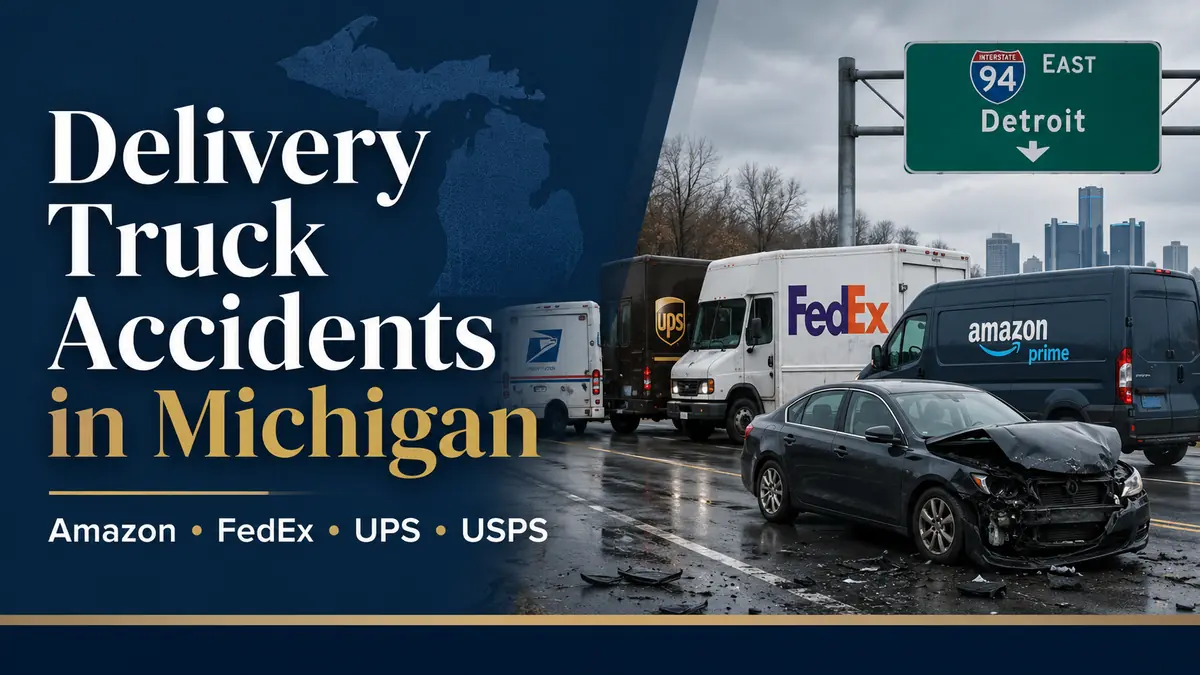
What should you do if an Amazon, FedEx, UPS, or delivery truck hits you in Michigan?
If an Amazon, FedEx, UPS, USPS, courier, mail truck, or delivery van hits you in Michigan, preserve the vehicle and company evidence, get medical care, and do not assume the logo alone decides who is responsible. The claim may involve Michigan No-Fault/PIP benefits and a separate injury claim against the driver, owner, employer, contractor, delivery company, or federal agency if the facts support it.
Why it matters: Delivery records, app data, scanner information, route details, video, vehicle numbers, and contractor records can disappear or become harder to obtain quickly.
Delivery truck accident claims are different from ordinary car crashes because the vehicle is often tied to a route, dispatch system, delivery app, employer fleet, contractor operation, or government delivery service. The injured person may know the logo but not the driver, vehicle owner, operating company, delivery service partner, insurer, or records holder.
For a broader service overview, see Michigan Legal Center's delivery truck accident page. For larger commercial vehicle issues, see our truck accident page.
Why are delivery truck accident claims different from regular car crashes?
A delivery driver is usually working when the crash happens. That can make the investigation more complicated than a police report, insurance exchange, and vehicle photos.
Depending on the facts, the claim may require identifying:
- the driver;
- the driver's employer or contractor relationship;
- the vehicle owner;
- the company or carrier connected to the route;
- the insurance policies that may apply;
- dispatch, route, app, scanner, GPS, telematics, or camera records;
- maintenance and inspection records;
- any incident report created after the crash.
Those records may be held by a company, contractor, app platform, service provider, government agency, insurer, or third-party data vendor. That is why early preservation matters.
Does the delivery company logo decide who is responsible?
No. A company logo, uniform, package, scanner, app, or truck color is important evidence, but it does not answer the full liability question by itself.
Responsibility may depend on who employed or contracted with the driver, who owned the vehicle, whether the driver was working at the time, who controlled the route or schedule, what insurance applied, and what caused the crash. Michigan owner-liability law can also matter in some cases, but ownership, consent, leasing facts, and statutory exceptions must be reviewed before applying it. MCL 257.401.
Is Amazon responsible if an Amazon delivery driver hits you?
Amazon-branded crashes need careful defendant identification. Amazon's Delivery Service Partner program uses independent delivery businesses that hire and develop drivers while Amazon provides infrastructure, technology, and services. That means an Amazon logo, vest, package, van, or delivery app connection should be photographed and preserved, but it should not be treated as the final legal answer.
Important Amazon delivery evidence may include:
- the delivery service partner or other operating company;
- the driver's name and work status;
- the vehicle owner, plate, VIN, and van number;
- Amazon station, route, package, or app information;
- GPS, scanner, dispatch, and delivery records;
- camera footage from the van, nearby homes, businesses, or traffic cameras;
- insurance information for the driver, owner, delivery service partner, or other responsible party.
If an Amazon delivery driver hit your car or injured you, the practical first step is preserving the details that show who was operating the route and what records exist.
What if a FedEx or UPS truck hits your car?
FedEx and UPS crashes can involve package trucks, vans, step vans, box trucks, or other delivery vehicles. The investigation should identify the driver, vehicle owner, operating entity, route records, scanner data, dispatch communications, GPS or telematics data, camera footage, maintenance records, and insurance coverage.
FedEx claims may require separating FedEx Express, FedEx Ground, service-provider businesses, contractors, drivers, and vehicle owners. UPS claims may involve package-car routes, handheld-device data, supervisor or dispatch records, vehicle numbers, and internal incident reports.
If you can do so safely, photograph the truck, logo, vehicle number, plate, crash damage, road position, package or route details, and nearby camera locations before the vehicle leaves.
Are USPS mail truck accidents different?
Yes. A USPS, postal vehicle, or mail truck accident can be different because the vehicle may involve the federal government, so you may have to file an administrative claim with the appropriate federal agency before a lawsuit can be filed. Federal claim rules and timing can be strict and may differ from ordinary Michigan injury claims. 28 USC 2675.
Do not wait to identify whether the vehicle was USPS, a postal contractor, or another mail or parcel vehicle. Save photos of the postal vehicle, plate, vehicle number, location, driver information, witness names, and any paperwork you receive.
Because USPS and postal-vehicle claims can involve federal procedures, the claim path should be reviewed quickly.
What if the vehicle was a local courier or delivery business?
Local courier and delivery vehicle crashes can involve pharmacies, medical suppliers, document couriers, parcel services, retail delivery fleets, subcontractors, and small businesses. A local vehicle may not have the brand recognition of Amazon, FedEx, UPS, or USPS, but the evidence questions can be just as important.
The same preservation rule applies: photograph logos, business names, vehicle numbers, plates, documents, packages, crash damage, and nearby cameras. Those details can help identify the driver, owner, employer, contractor, insurer, and records holder later.
Who may be responsible after a delivery vehicle crash?
Depending on the facts, responsible parties may include:
- the negligent driver;
- the vehicle owner;
- the driver's employer;
- a delivery service partner, contractor, service provider, or carrier;
- a company that controlled the route, delivery schedule, dispatch, or vehicle use;
- a maintenance company;
- a vehicle or parts manufacturer;
- a government entity or federal agency in a postal vehicle case;
- another driver who contributed to the crash.
This list is only a starting point. Employer responsibility, contractor status, route control, vehicle ownership, maintenance, federal procedures, insurance coverage, and Michigan law can change the analysis.
Michigan Legal Center can identify responsible parties, preserve evidence, review the correct No-Fault/PIP priority, and evaluate whether a third-party injury claim is supported. For broader injury-claim background, see our personal injury page.
What evidence should you save after a delivery truck accident?
Delivery vehicle evidence can disappear quickly. Companies may have records the injured person cannot access without attorney involvement, and video or electronic data may be overwritten.
Useful evidence may include:
- driver name, license information, and employment or contractor details;
- vehicle owner, plate, vehicle identification number (VIN), unit number, and logos;
- package, route, dispatch, scanner, app, or delivery records;
- GPS, telematics, braking, speed, or event data if available;
- dashcam, vehicle camera, nearby surveillance, doorbell, or traffic video;
- delivery deadlines, route pressure, or timing records;
- vehicle inspection, repair, and maintenance records;
- driver qualification, hiring, training, or supervision records when applicable;
- company incident reports;
- photos of the scene, damage, road, weather, debris, and injuries;
- police report number;
- witness names and contact information;
- medical records, bills, diagnosis notes, and work restrictions;
- insurance letters, adjuster messages, repair documents, and total-loss documents.
For a deeper evidence overview, see our guide to Michigan truck accident evidence preservation.
How do Michigan No-Fault and injury claims fit together?
Michigan No-Fault/PIP and third-party injury claims are separate but related. PIP may provide benefits such as medical expenses, wage loss, attendant services, and household services after a qualifying motor-vehicle crash, but the responsible PIP insurer can depend on priority rules, policy choices, vehicle status, and residency. MCL 500.3105; MCL 500.3107.
A separate third-party injury claim may be available if the facts and legal standards support it. Potentially responsible parties can include a negligent driver, owner, employer, contractor, delivery company, or other responsible party. For pain and suffering after a Michigan motor-vehicle crash, the injury generally must meet Michigan's threshold of death, serious impairment of body function, or permanent serious disfigurement. MCL 500.3135.
The delivery company logo does not decide PIP priority or third-party liability. The records do. For more on PIP priority, see Michigan Legal Center's article on Michigan car accident medical bills and PIP priority.
If the issue is only that vehicles were damaged, Michigan's mini-tort rules may also matter. See Michigan Legal Center's article on Michigan mini-tort claims for that separate property-damage issue.
What should you avoid after a delivery truck accident?
After a serious crash, do not assume the delivery company's insurer has identified every responsible party or every available policy. Do not rely only on the logo. Avoid giving a recorded statement, signing a release, or accepting a quick settlement before the No-Fault/PIP priority, injury claim, vehicle ownership, employment or contractor facts, and evidence preservation issues are reviewed.
You can help protect the claim by getting medical care, saving photos and paperwork, keeping the police report number, writing down witness names, and preserving every message from insurers, delivery companies, and adjusters.
Talk to Michigan Legal Center About a Delivery Truck Accident
Michigan Legal Center can review crashes involving Amazon, FedEx, UPS, USPS, mail trucks, couriers, and local delivery businesses. Our team can assist with identifying responsible parties, preserving company-controlled records, reviewing No-Fault/PIP issues, and evaluating whether a third-party injury claim is supported.
A Michigan delivery truck accident lawyer can also assist with determining whether the claim involves a company fleet, contractor, service provider, government vehicle, or local delivery business before evidence is lost.
If a delivery vehicle hit you or a family member in Michigan, contact Michigan Legal Center to discuss what evidence should be preserved and what claim path should be reviewed.