
Hit by a U-Haul, Penske, or Rental Truck in Michigan?
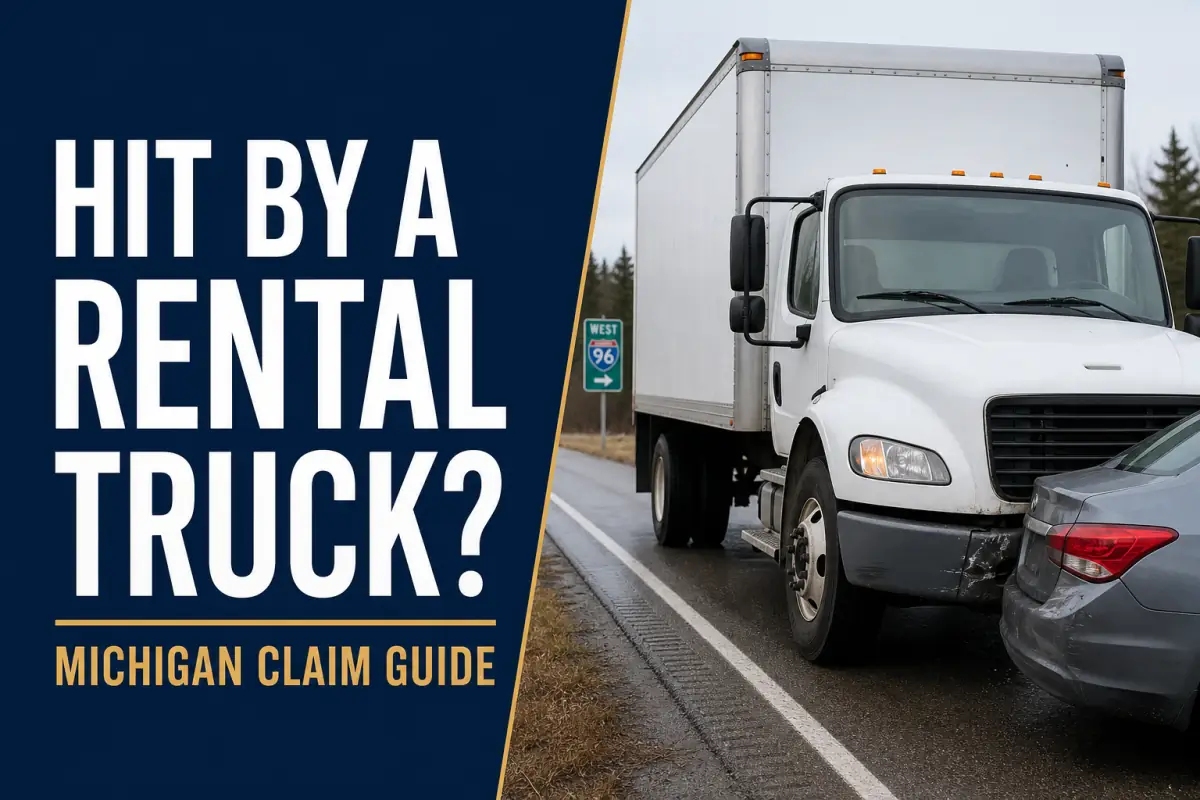
Who is responsible when a customer driving a rental truck causes a Michigan accident?
In Michigan, the negligent driver is usually the first person to consider when determining responsibility. Other parties may be considered for different reasons, such as the renter, an employer, and sometimes the rental company, depending on liability policies. The responsible party may change depending on the agreement, who was allowed to drive, how the truck was being used, the rental period, the company's own conduct and applicable insurance law.
Does the name on the truck make the rental company responsible?
No. U-Haul, Penske, Budget, Enterprise, Home Depot, Lowe's or Ryder may own the truck and provide a good place to begin investigation. But it does not prove who leased the truck, who insured it or which company made a relevant decision.
In some cases, a company logo may appear on a truck even if that company doesn’t own it. The driver and renter may also be different people. The agreement may name additional drivers, restrict who can operate the truck or show that a business rented it for an employee. The vehicle registration, rental agreement and protection documents are more reliable than assumptions based on designs and logos.
Federal law also limits claims based only on ownership. Under the Graves Amendment, 49 USC 30106, a qualifying rental or leasing business generally is not liable merely because it owned the vehicle, as long as the company or its affiliate was not negligent or engaged in criminal wrongdoing.
Michigan’s rental-vehicle owner-liability statute still distinguishes leases of 30 days or less from longer leases. For a short term lease, it depends on the driver’s status under the agreement. For a longer lease, a business lessor generally is not liable for injuries from an accident. When the Graves Amendment applies, it prevents a claim against a rental business based only on ownership.
The agreement and actual rental facts still need review to determine whether federal protection applies and whether the company’s own conduct is at issue.
When can the rental company still be part of the claim?
The Graves Amendment does not protect a rental company from its own negligence or criminal wrongdoing. It also preserves specified state financial-responsibility and insurance requirements. An investigation should ask two different questions:
- Is someone trying to hold the company responsible only because it owned the truck?
- Is there evidence about the company's own conduct or an insurance obligation that requires separate analysis?
Company conduct can matter when evidence supports a recognized negligence claim, such as knowingly renting a truck with a dangerous defect or failing to address a maintenance problem that contributed to the crash. Renting a large truck to a licensed customer does not, by itself, prove negligent entrustment. The relevant facts include what the company or its agent knew, the truck's condition and whether that conduct caused the collision.
Who the renter is may still be important even if someone else was driving. If the trip served an employer or business, the employer and commercial insurance may also need review. A crash involving a truck used for work can raise issues explained in Michigan Legal Center's guide to accidents while working.
Which insurance and rental records should be investigated?
There is no safe universal rule naming one policy or insurer as responsible. These records may reveal different sources of protection:
| Record or coverage source | What it may answer |
|---|---|
| Signed rental agreement and protection election | who rented the truck, who was authorized to drive, the stated use, rental period, selected products and contractual restrictions |
| Rental-company certificates or policies | whether the transaction included third-party liability protection, a damage waiver, cargo protection or another separate product |
| Driver’s and renter’s auto policies | whether personal or commercial coverage applies to this truck, this use and this driver |
| Employer or business policies | whether the trip was within work duties and whether commercial auto, umbrella or other coverage may apply |
| Vehicle registration, title and self-insurance records | who owned or registered the truck and whether an owner, affiliate or another entity maintained applicable security |
| Injured person’s auto policies | whether PIP, uninsured motorist, underinsured motorist or other injury coverage may apply and whether collision coverage applies to damage to an insured vehicle |
A damage waiver for the rented truck is not the same as liability protection for injuries or damage caused to someone else. U-Haul, Penske, Budget and Enterprise Truck Rental describe separate protection products, and availability and exclusions vary. The checkout screen or product name is not enough. The issued certificate, policy and signed agreement control.
Personal auto coverage also cannot be assumed. A policy may define or restrict coverage by vehicle type, size, weight, use, rental status or driver. An insurer's denial letter is part of the investigation, not necessarily the last word on what the policy requires.
How does Michigan no-fault fit with a claim against the at-fault driver?
PIP benefits and a fault-based claim are separate. Under MCL 500.3105, qualifying PIP benefits are payable without regard to fault. Depending on eligibility and the applicable coverage, MCL 500.3107 allows benefits for medical care, wage loss, replacement services and other covered losses.
The correct PIP insurer depends on the injured person’s status and available coverage. The statutory priority rules may involve the injured person’s policy, a household policy, another insurer or Michigan’s assigned-claims process. The company named on the rental truck is not automatically the PIP carrier.
A separate third-party claim may address losses caused by the at-fault driver and any other legally responsible party. For noneconomic damages, Michigan law generally requires death, serious impairment of body function or permanent serious disfigurement. Other damages remain subject to separate statutory rules, policy terms and available evidence.
The broader Michigan commercial truck accident guide explains how the PIP and third-party sides fit together without assuming they use the same insurer.
What deadlines matter after a rental truck crash?
Under MCL 500.3145, a PIP action generally must be started within one year after the accident unless written notice of injury was given to the insurer within that year or the insurer already paid PIP benefits. That is not a universal deadline for every possible claim. A third-party claim, insurance policy condition, government claim or other issue can involve different timing rules.
What evidence should be preserved after a rental truck crash?
Get emergency help and appropriate medical care first. When it is safe, preserve information that can identify the transaction and the truck:
- photos of the truck, plate, unit number, damage, scene and company or dealer markings
- the police report number and contact information for witnesses
- the driver’s name, the renter’s name if different and any employer or business connected to the trip
- the rental agreement, reservation messages, receipt, protection election and claim instructions
- insurance cards, claim numbers, adjuster correspondence, denial letters and recorded-statement requests
- any available inspection, repair, maintenance, dispatch, location or electronic vehicle records
- medical records, work restrictions, receipts and a practical record of how the injuries affect daily life
Do not assume the rental company will keep every record indefinitely or that every truck has the same electronic data. An attorney can send targeted preservation requests after identifying the owner, lessor, local rental location, claims administrator, insurer, renter, driver, and employer. Michigan Legal Center’s truck accident evidence guide explains the preservation process in more detail.
What should you do next?
Before you sign a release, accept a settlement or give a recorded statement, have the rental agreement, insurance documents and available accident records reviewed. A Michigan Legal Center attorney can identify the entities and insurers behind the transaction, review the agreement and policies, request relevant records, preserve evidence and coordinate the PIP and third-party parts of the case.
If you were injured by a rented truck in Michigan, contact Michigan Legal Center to have the accident documents and available coverage reviewed.