
Hit by a Kroger, Meijer, or Food-Delivery Truck in Michigan?
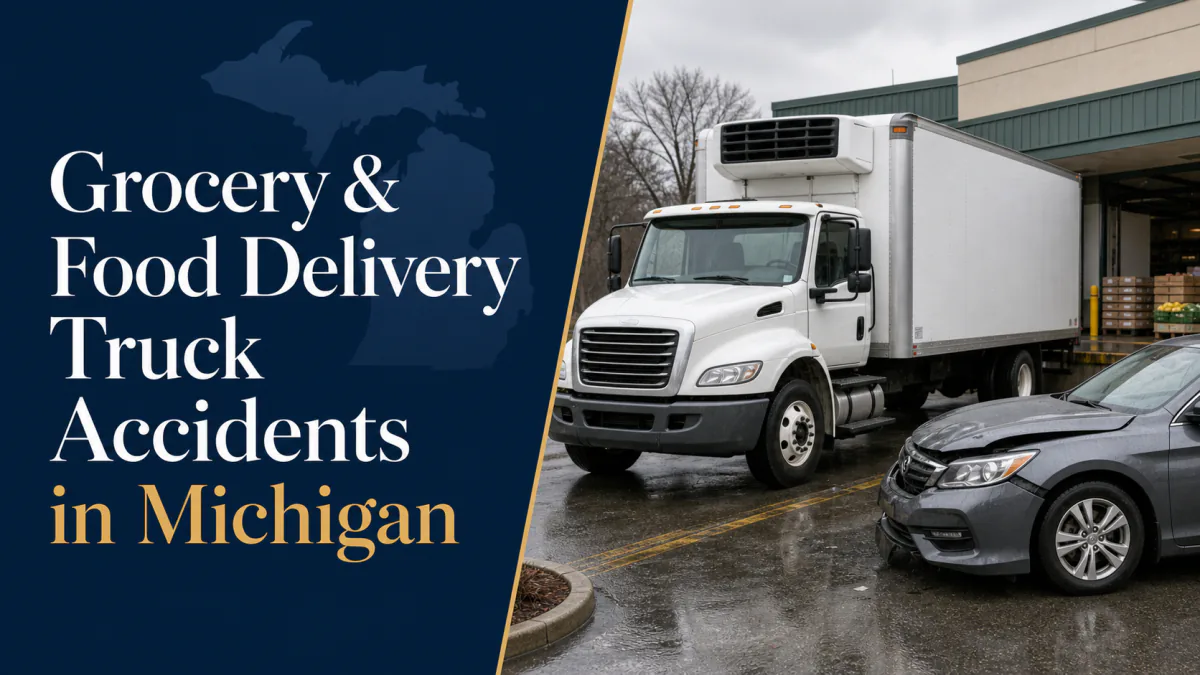
What should you do if a grocery or food-delivery truck hits you in Michigan?
After emergency help and medical care, safely preserve the truck's legal name, identifying numbers, and company markings. A Kroger, Meijer, Gordon Food Service, Sysco, or other logo is important evidence, but it does not by itself identify the motor carrier, employer, vehicle owner, contractor, insurer, or every company that may hold trip records.
Why isn't the logo the final liability answer?
Kroger and Meijer are familiar retail names. Gordon Food Service and Sysco are familiar foodservice distributors. These are representative examples, not a safety comparison or a conclusion about any company.
A food-delivery trip may connect several people and businesses:
- the driver and the driver's employer;
- the motor carrier operating the tractor;
- the owner of the tractor;
- a different owner of the trailer;
- a retailer, distributor, dedicated carrier, or contractor that controlled part of the trip;
- a maintenance or loading company whose work is connected to the crash; and
- insurers providing different types of coverage.
Contracts, dispatch records, employment records, vehicle titles and leases, insurance policies, and evidence from the crash can show the role each company actually had.
Michigan's vehicle-owner statute may apply when its requirements are met, but ownership, permission, leasing facts, and the statute's limitations must be reviewed before assigning liability. MCL 257.401.
Michigan also recognizes that an employer can be responsible for an employee's tort committed within the scope of employment. The actual working relationship and what the driver was doing at the time still matter. Hamed v Wayne County.
What truck identifiers should you save?
Do not step into traffic or approach an unstable vehicle for a photograph. If the scene is safe, save photos or video showing:
- the legal company name printed on the cab;
- the U.S. Department of Transportation number and any motor carrier number;
- the tractor or unit number;
- the trailer number;
- the tractor and trailer license plates;
- store, distributor, subsidiary, or contractor markings;
- the damage and final vehicle positions; and
- visible cameras or equipment on the truck.
The tractor and trailer can have different owners, numbers, and records. Save any dashcam or phone video, witness names and contact information, police incident number, insurance papers, messages, medical records, and work-loss documents you already have.
Michigan Legal Center's guide to truck accident evidence preservation explains the broader process. You do not need to identify every company or send legal demands yourself.
Which food-delivery records can identify who controlled the trip?
Food-delivery routes can create records at the distribution center, inside the truck, and at the customer location. Depending on the crash, an attorney may seek:
- dispatch records, route assignments, and driver assignments;
- delivery schedules, receiving logs, and delivery confirmations;
- bills of lading, manifests, purchase orders, and load paperwork;
- GPS, telematics, applicable electronic logging records, and onboard video;
- tractor and trailer inspection, maintenance, and repair records;
- contracts, leases, insurance policies, and dedicated-carrier agreements; and
- cargo weight, loading, pallet, seal, refrigeration, or temperature records when they help explain the crash.
Federal records may also matter for a covered motor carrier. 49 CFR 390.15 addresses accident-register records, 49 CFR Part 395 addresses driver hours and records, and 49 CFR Part 396 addresses inspection, repair, and maintenance. The federal rules can apply differently depending on the vehicle, carrier, cargo, route, and exemptions.
Truck accident evidence can be lost quickly, including electronic data, video, dispatch records, maintenance records, cargo records, and evidence affected when vehicles or trailers are repaired. Early investigation should identify which organizations control the records and direct preservation work to them.
How do No-Fault PIP benefits and a third-party claim differ?
No-Fault personal protection insurance benefits, commonly called PIP benefits, and third-party bodily injury claims are separate legal tracks.
Michigan PIP benefits may cover medical expenses, wage loss, replacement services, attendant care, medical mileage, and related benefits, depending on the policy, priority rules, and facts. MCL 500.3105 and MCL 500.3107.
A third-party bodily injury claim separately examines liability for the crash and the losses Michigan law permits when the statutory conditions are met. MCL 500.3135. The truck's logo does not decide PIP priority or third-party liability.
Michigan Legal Center's articles about medical bills and PIP priority and commercial truck accident claims explain those broader questions.
How can Michigan Legal Center investigate the crash?
Michigan Legal Center can use vehicle identifiers and police materials to begin identifying responsible parties and records holders. Our attorneys can preserve truck data and video, review corporate and carrier records, examine contracts and insurance documents, and determine which companies controlled the driver, equipment, route, or evidence.
If a grocery or food-distribution truck injured you or a family member, contact Michigan Legal Center's Michigan truck accident lawyers. Our attorneys can review the available insurance, evidence, liability, and deadlines for the specific Michigan claim.