
Michigan Semi-Truck Accident Claims: PIP, Liability and Evidence
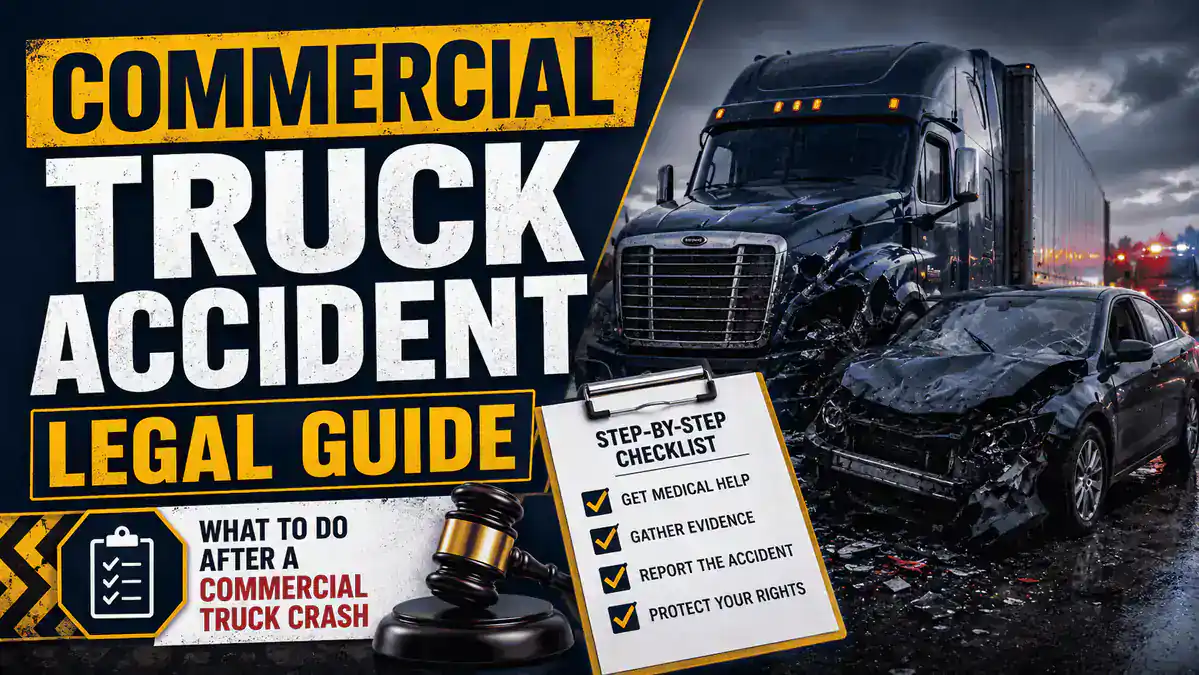
Yes. Depending on the facts, you may be able to pursue more than one type of claim after a semi-truck, tractor-trailer, 18-wheeler, or big-rig accident in Michigan. Being injured in a truck accident does not automatically mean you have a lawsuit.
A semi-truck accident claim may involve no-fault Personal Injury Protection (PIP) benefits and a separate third-party bodily injury claim. Michigan's PIP priority rules determine which insurer, if any, is responsible for paying no-fault benefits. Liability for pain and suffering, excess medical expenses, excess wage loss, and other damages outside the no-fault system depends on fault and the governing law.
This guide focuses on heavy interstate or intrastate trucking operations involving semis, tractor-trailers, 18-wheelers, big rigs, motor carriers, and trucking-company liability. The tractor, trailer, driver, carrier, owner-operator, lessor, maintenance provider, cargo party, or insurer may have different roles.
If a package-route cargo van, step van, delivery box truck, or courier was involved, use our Michigan delivery truck accident page. If the crash involved a company car, work or service van, employer vehicle, non-semi retail fleet, utility truck, contractor, garbage truck, or municipal vehicle, use our Michigan commercial vehicle accident page.
These cases are not just larger car accident claims. The truck, trailer, driver, route, cargo, maintenance, dispatch records and insurance coverage may be tied to different companies.
Michigan Legal Center can help you review the facts of the case and determine which claims or lawsuits fit your situation.
Why are semi-truck claims different from ordinary car accident claims?
Semi-truck claims are different because important evidence is often controlled by a motor carrier, trucking company, vendor, insurer, or another third party, not the injured person. The evidence can also be time sensitive because electronic records, logs, and other data can be overwritten, lost, repaired over, or archived.
Federal rules may apply directly to covered interstate operations, while Michigan applies adopted motor-carrier safety rules to covered intrastate operations, subject to statutory scope, modifications, and exceptions under MCL 480.11a and MCL 480.15. An injured person may want to identify hours-of-service records, driver records, inspection records, repair and maintenance schedules, and other documents. Hours-of-service rules, inspection, repair and maintenance rules, and accident-register requirements are addressed in 49 CFR Part 395, 49 CFR Part 396, and 49 CFR 390.15. Those rules do not apply the same way to every vehicle or route, but they can help identify evidence that may need preservation.
What are the two main claims after a Michigan truck accident?
Most Michigan truck accident cases start with two separate questions.
No-fault Personal Injury Protection (PIP) benefits may help with economic losses from the crash addressed in MCL 500.3107. This could include medical expenses, wage loss, replacement services and more.
PIP priority, benefits, limits and coordination rules are not always the same and can vary depending on the facts of the case and the policies in effect at the time.
A third-party bodily injury claim may be filed against an at-fault driver, company or other responsible party. This is a separate type of claim from PIP and does involve proving fault.
A third-party claim may seek pain and suffering or other noneconomic damages if the injured person suffered death, serious impairment of body function or permanent serious disfigurement. It may also seek excess economic losses when Michigan law allows recovery outside available no-fault benefits.
Depending on the facts of the case, a third-party claim may involve the truck driver, trucking company, motor carrier, owner, maintenance vendor, cargo-related company, manufacturer, another driver or another defendant.
Who may be liable for a Michigan semi-truck accident?
Determining liability depends on evidence, ownership, employment relationships, contracts, vehicle condition, cargo facts and what caused the crash. Potentially responsible parties may include:
- the truck driver
- the trucking company or motor carrier
- the truck owner, trailer owner or leasing company
- a maintenance or repair company
- a cargo loader, warehouse, shipper, broker or other cargo-related company
- a truck, trailer, tire, brake, steering, underride guard, coupling, lighting or component manufacturer
- a government entity, public vehicle operator, road contractor or another driver
This list is only a starting point. Determining who may be legally responsible depends on the specific facts of the case, including contracts, control over the work, federal regulations, how the cargo was loaded, carrier selection, vehicle ownership, and each party's actual role. Claims involving a government entity may be subject to governmental immunity and strict notice requirements. Likewise, a broker or shipper is not automatically liable simply because it was involved in arranging or handling the shipment.
What evidence should be preserved quickly after a truck accident?
Commercial truck evidence should be preserved as soon as possible. Some records are retained for limited periods, changed during repairs, overwritten by routine systems or controlled by companies with their own legal and insurance interests.
Important evidence may include:
- engine control module, black box, event data recorder, electronic logging device, GPS and telematics data
- dashcam, onboard camera, traffic camera, business surveillance and nearby video
- driver logs, records of duty status, supporting documents, route records, dispatch records and company communications
- driver qualification, training, hiring, supervision, medical certification, prior crash and disciplinary records
- inspection, repair, maintenance, brake, tire, lighting, steering, coupling, suspension, trailer and out-of-service records
- cargo records, bills of lading, weight tickets, seal records, loading instructions, load photos, warehouse records and delivery documents
- post-accident testing records
- accident register and crash history records
- police reports, witness names, scene photos, medical records, insurance letters, repair records and tow records
If the crash involved falling cargo, the cargo itself and how it was secured may be important evidence. The Federal Motor Carrier Safety Administration has cargo securement rules for covered commercial vehicles, including rules about immobilizing or securing cargo. If you are looking for more information about cargo, debris or an unsecured load that caused the crash, read our article on cargo falling from a truck in Michigan.
Do not rely only on a police report or an insurance investigation to preserve company-controlled records. Michigan Legal Center can send preservation notices, request records and investigate before important evidence disappears.
How do Michigan no-fault PIP benefits work after a truck accident?
Michigan no-fault PIP benefits are separate from any claim against the at-fault driver or other liable parties. PIP benefits may help with allowable medical expenses, wage loss, replacement services, attendant care, medical mileage and related benefits after a covered motor vehicle crash.
Determining which insurer pays PIP benefits depends on Michigan priority rules and the injured person's role in the crash. The exact PIP benefits available can change depending on whether the injured person was a vehicle occupant, pedestrian, bicyclist, motorcyclist, rideshare passenger, employee in an employer-owned vehicle or person with policy exclusions or opt-out issues.
If no applicable PIP coverage can be identified, or if an insurer dispute prevents the responsible insurer from being determined, the Michigan Assigned Claims Plan under MCL 500.3172 may be needed to pursue benefits.
The at-fault truck driver's liability insurer is not automatically responsible for paying your PIP benefits. Our article on who pays medical bills after a Michigan car accident explains PIP medical bills in more detail.
Can you sue for pain and suffering or excess losses after a truck accident?
Yes. Depending on the facts of the case, you may be able to file a claim if you suffered a severe injury. A third-party claim may seek noneconomic damages or excess economic damages when Michigan's motor vehicle tort rules are met.
A third-party claim for noneconomic damages after a motor vehicle accident generally requires death, serious impairment of body function or permanent serious disfigurement. Serious impairment is defined as an objectively manifested impairment of an important body function that affects the person's general ability to lead a normal life.
That does not mean every painful injury qualifies. The analysis depends on medical evidence, the body function affected, how the injury changed the person's normal life and how the person's life compares before and after the crash.
Third-party claims can apply to excess economic loss when medical costs, wage loss, future care or earning losses exceed available no-fault benefits or applicable limits.
Comparative fault can reduce or limit recovery. If an injured person is more than 50% at fault, Michigan law may bar noneconomic damages in a motor vehicle tort claim. Economic loss issues can still need separate review, so partial fault should not be treated as ending every issue. Do not assume a ticket, early fault allegation or the first version of the police report determines the result of a case.
What deadlines and special issues can affect a truck accident claim?
Different deadlines can apply to different aspects of a truck accident case. For many Michigan injury or wrongful death claims, the general limitations period is three years after the injury or death, subject to important exceptions and claim-specific rules under MCL 600.5805. But the general injury deadline does not protect every related claim, notice issue or insurance deadline.
PIP timing is separate. Under MCL 500.3145, a no-fault claim may involve a one-year accident deadline, written notice rules, payment history, tolling issues and limits on how far back benefits can be recovered. An injured person should not assume the truck accident injury deadline and the PIP deadline are the same.
Other timing or notice issues may arise if the crash involves a government vehicle, road defect, public bus, road commission vehicle, fatal injury, estate, product defect, out-of-state defendant, insurer dispute, UM/UIM coverage or contractual policy notice requirements.
If the injured person was working when the crash happened, workers' compensation may also be a separate issue. That does not erase a possible third-party claim against someone other than the employer, but the benefit and lien issues should be reviewed before releases are signed.
What should you do after being hit by a semi-truck in Michigan?
After medical care and making sure the scene is safe, focus on preserving what you can. Do not sign early releases or broad statements before the claim path is understood.
Useful steps include:
- get medical care and follow discharge instructions
- get the police report number and identify the investigating agency
- photograph the truck, trailer, company markings, USDOT number, license plate, trailer number, cargo, skid marks, debris, injuries, vehicles, roadway, traffic controls and weather conditions
- save the truck driver's name, employer, vehicle owner, trailer owner, company information, witness names and any messages from insurers or adjusters
- keep medical bills, discharge papers, mileage records, wage loss records, replacement service notes, repair documents, tow records and insurer correspondence
- contact Michigan Legal Center before a trucking company, insurer or vendor claims records are unavailable or asks for a broad release
If the crash involved a delivery vehicle, our Michigan delivery truck accident lawyers page explains that related path. For broader serious truck crash help, start with our Michigan truck accident lawyers page.
Talk to Michigan Legal Center about a semi-truck accident
If you were injured in a semi-truck, tractor-trailer, 18-wheeler, or big-rig accident, contact Michigan Legal Center before trucking-company evidence becomes harder to obtain or deadlines are missed.
Michigan Legal Center is the Law Offices of Christopher J. Trainor & Associates. Our attorneys can review PIP priority, potential defendants, insurance coverage, preservation needs, comparative fault, deadlines and whether the facts support a claim for pain and suffering or excess economic loss.
For the evidence side of the claim, read What Evidence Must Be Preserved After a Michigan Truck Accident?. To talk with the firm about a crash, contact Michigan Legal Center.