
Michigan speeding accidents: Proving speed and fault
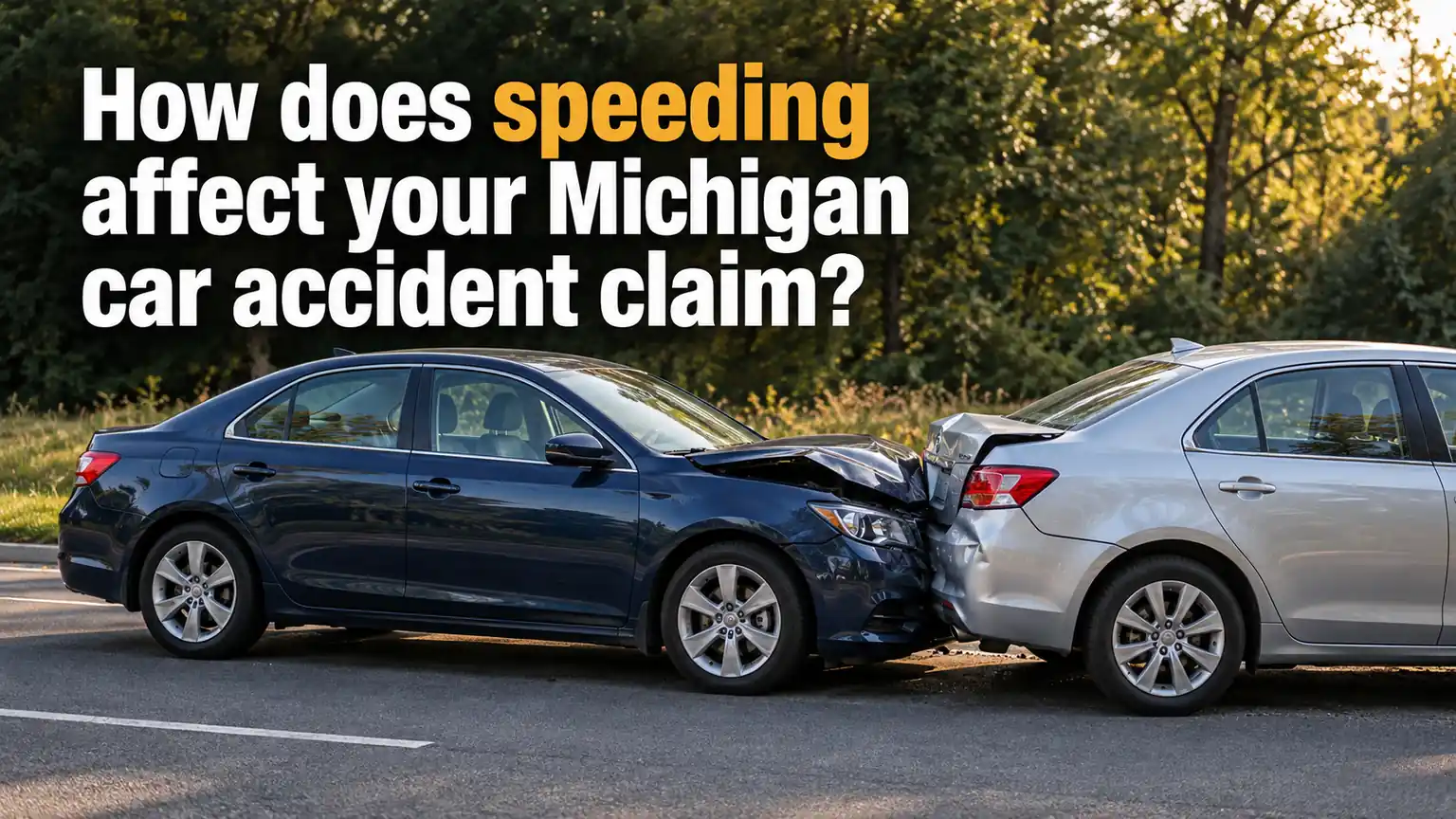
A speeding ticket isn't proof of fault in a crash, but if the speed contributed to an accident, it could support a claim against the at-fault driver.
When does a driver's speed matter?
Speeding is only relevant as evidence if it contributed to the crash or made it worse. A driver who was over the limit on a clear road and was hit by someone running a red light may bear little or no fault. A driver going too fast to stop for slowing traffic may be at fault.
Michigan law recognizes two kinds of unsafe speed, meaning a driver can violate Michigan's speed law even driving under the posted limit. Driving over the speed limit is, of course, a violation, but so is driving too fast for the conditions.
Under Michigan's basic speed law, a driver has to be careful and moderate their speed reasonably for conditions like traffic, the road surface, the width of the highway and others.
Drivers are also expected to be able to stop within the clear distance they can see ahead. So, a driver can be at or below the speed limit and still be driving unsafely if there is heavy rain, fog, traffic that keeps stopping or anything else that limits visibility or movement.
How do PIP benefits and an injury claim differ?
Personal injury protection (PIP) benefits apply to most Michigan auto accidents regardless of fault. They cover medical expenses and part of your lost wages, to a limit. This means anyone with the proper coverage injured in a crash can qualify for PIP benefits even if they were speeding.
Speeding is relevant mostly when proving who is at fault for a crash. A claim for pain and suffering only applies if the injury meets Michigan's injury threshold of death, serious impairment of body function or permanent serious disfigurement. Michigan Legal Center's Michigan car accident lawyers page explains how the PIP claim and the injury claim work together.
Does a speeding ticket prove fault?
No. A ticket is an officer claiming you broke a traffic law. It doesn’t mean that speeding contributed to the crash or any injuries. A speeding ticket finding or traffic conviction generally can't be used as evidence in the injury case.
Even if the driver pays the ticket or is found responsible, that doesn’t make them legally responsible for causing an injury. Michigan law makes evidence of traffic convictions or civil infraction determinations inadmissible in civil actions.
What matters is proof that the driver was speeding, since evidence showing a driver was breaking the law during the crash can create a presumption of negligence according to the Michigan Supreme Court. The driver can refute that presumption, and you still have to show the speed helped cause the crash.
How can you prove a driver was speeding?
Speed is usually proven by combining several kinds of evidence, and some of it needs to be preserved before it is lost or overwritten. If you can, make sure your vehicle isn’t repaired, sold or scrapped until it has been evaluated. Let Michigan Legal Center's attorneys know where it is stored and where cameras may have recorded the crash.
Some vehicles have a recorder that may store data from just before the crash.
Footage from traffic cameras, businesses, doorbells and dash cameras can show how fast a vehicle covered a known distance.
Scene and damage evidence such as skid marks, final resting spots and vehicle damage can help a reconstruction expert estimate speed.
Witness speed estimates can vary widely, and the report reflects what the officer learned at the scene.
Recorded vehicle data varies, and downloading it takes the right equipment and permission. Many camera systems record over older footage, so video needs to be preserved fast.
You don't have to collect outside evidence yourself. Michigan Legal Center's attorneys can send preservation requests and arrange for the vehicle data to be saved.
Learn how traffic camera footage can be preserved after a Michigan crash and what to do if the police report is wrong about the speed or the order of events.
What if the driver faces reckless driving charges?
A reckless driving charge is a criminal case between the state and the driver. An injury claim is a separate civil claim for recovering losses and doesn't require a conviction.
A conviction for a traffic offense generally can't be used as evidence in your civil case, just like a ticket finding.
The criminal case can still help, since those cases involve collecting a lot of evidence which could be relevant to the civil case. Police investigators may complete a reconstruction or a supplemental report that is relevant to the civil case.
Don't put your claim on hold while the criminal case plays out. Evidence can disappear while you wait. If the driver caused the crash on purpose, that can affect whether and which insurance pays. Read what to do if you're injured by a road rage driver.
How does your own speeding affect the claim?
If you were speeding, you might be considered partially at fault, which can reduce your recovery, but doesn't automatically end the claim. In a Michigan car crash claim for noneconomic loss, damages are based on comparative fault. If you are 20% at fault, those damages are reduced by 20%. If you are found more than 50% at fault, you can't recover anything for pain and suffering.
Your share of fault also reduces other damages you recover from the at-fault driver, such as medical expenses or wage loss beyond applicable PIP limits, under Michigan's general comparative fault rule. Fault percentages are decided on the evidence, or by a jury or judge if the evidence could support more than one reasonable view.
The insurer's claim that you were speeding does not by itself cut off your PIP benefits, which are due without regard to fault. Be careful about estimating your speed to an insurance adjuster. A guess in a recorded call can be used later, even if the vehicle data shows something different. Before you give one, read about recorded statements after a Michigan car accident.
Claims against a vehicle owner or employer
You may have a claim against the vehicle's owner as well as the driver. Under Michigan's owner liability law, a vehicle owner can be liable when the vehicle is driven negligently with the owner's consent, including negligence that breaks a traffic statute. The law has exceptions, and whether an employer is also responsible depends on the job and the facts of the case.
Speed limits for larger trucks and school buses
Larger trucks and school buses can also have a lower speed limit than the cars around them. On limited access freeways and state trunk line highways with posted limits above 65 mph, school buses and trucks with a gross weight of 10,000 pounds or more are limited to 65 mph. Trucks and fleet vehicles may also carry speed and location records beyond an event data recorder.
Michigan Legal Center's attorneys can request that the company preserve them. See what evidence matters after a Michigan truck crash and how Michigan Legal Center's commercial vehicle accident lawyers handle company vehicle claims.
Talk to Michigan Legal Center after a speeding crash.
Gather what you already have, including the crash report number, your photos, witness names and where your vehicle is being stored. Note any nearby businesses or homes that may have cameras. Avoid guessing speeds in conversations with insurers.
Michigan Legal Center can act quickly to request preservation of vehicle data and video before they disappear and evaluate fault, insurance coverage and deadlines. If you were hurt by a speeding or reckless driver in Michigan, contact Michigan Legal Center for a free case review.