
Can I sue for pain and suffering after a Michigan car accident?
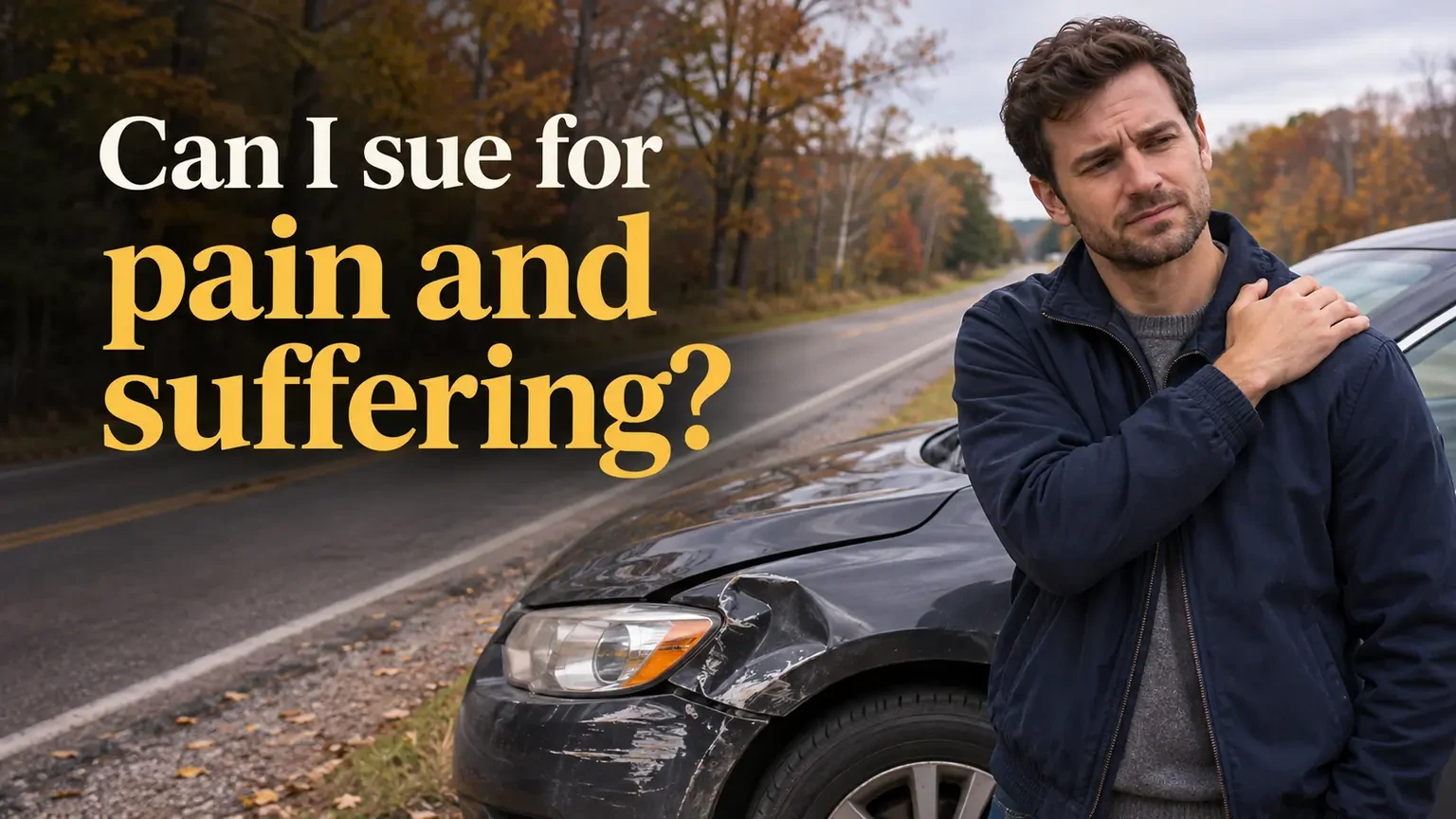
Yes. Pain and suffering is a category of third-party claims. When an injury is so severe that it has an ongoing negative impact on a person’s life, this type of claim might become necessary if they can’t get the money they need from insurance claims.
For a claim like this to succeed, there needs to be proof that someone’s actions led to the crash, someone has to be at fault, and they are the ones on the hook for the settlement. Third-party claims apply primarily to noneconomic damages, meaning it’s less about the money that was lost cause of the crash and more about how the injury has affected your life. Ongoing pain, anxiety, loss of independence, missing your life and having to rearrange everything around your injury can hurt your wellbeing.
What is pain and suffering and how is it different from no-fault benefits?
Personal injury protection (PIP) benefits are part of no-fault insurance, which is required for Michigan drivers. PIP is meant to pay for economic damages related to crash injuries like medical bills, lost wages or replacement services, subject to statutory limits and exceptions.
How much money one person can get from PIP depends on what options they chose when signing up for insurance and the state’s no-fault rules. It has nothing to do with who caused the crash. Even if it was 100% your fault, you can still get PIP benefits in most cases.
Most PIP disputes focus on coverage, which insurer must pay first, medical treatment, wage loss, replacement services and whether claimed expenses are reasonable, necessary and related to the crash.
Third-party claims are different. You’re filing a claim against another person or organization because their actions caused your injury. Their liability insurer may handle and pay the claim. This means that you have to prove they were at least partially at fault.
A third-party pain-and-suffering claim is also separate from vehicle damage claims, including Michigan mini-tort claims.
For a deeper explanation of medical bills and PIP, read Michigan Legal Center's guide to who pays medical bills after a Michigan car accident.
When can you sue for pain and suffering in Michigan?
Pain and suffering lawsuits require a threshold that the injured person needs to meet explained in MCL 500.3135.
This statute allows tort liability for noneconomic loss only when the injured person has suffered from one of the following:
- serious impairment of body function
- permanent serious disfigurement
- death
To establish a serious impairment of body function, you need proof of an objectively manifested impairment of an important body function that affected your general ability to lead your normal life.
What does serious impairment of body function mean?
Under MCL 500.3135, an impairment is objectively manifested when someone other than the injured person can observe or perceive it through actual symptoms or conditions.
Cases involving serious impairment of body function often depend on medical proof and before-and-after evidence. It doesn’t matter if the injury causes pain, the important factor is whether or not the injury can be seen or measured by other people, whether it affects an important body function and affects the person's general ability to live their normal life.
What evidence helps support a pain-and-suffering claim?
Michigan also applies comparative fault rules. If someone is more than 50% at fault, then that means they are more at fault than everyone else combined. That would prevent them from recovering any noneconomic damages, but they could still pursue economic damages through other kinds of third-party claims. So evidence is very important because the claim usually must prove both fault and injury impact.
Helpful evidence may include:
- medical records
- diagnostic imaging
- specialist referrals
- physical therapy records
- work restrictions
- surgery or procedure records
- photos of injuries
- scar or disfigurement documentation
- pain and symptom notes
- missed work records
- family or witness observations
- before-and-after activity changes
- crash report and fault evidence
No one piece of evidence automatically proves a case because the threshold analysis is case specific. Together, though, records like these can help show what happened, what changed and whether the injury meets Michigan's threshold.
Why do insurance companies dispute pain-and-suffering claims?
Insurance companies may dispute a third-party car accident claim in a number of different ways.
They could argue that the injured person is at fault, at least partially. This would be dependent on the evidence available. They could also argue that the injury wasn’t severe enough to clearly change a person’s life.
Gaps in treatment, prior medical conditions, unclear imaging results, surveillance, social media posts or other records could be used to downplay the seriousness of the injury. That is why medical documentation, consistent treatment and careful claim handling are important.
What should I avoid before talking to an attorney?
Before getting legal advice, a person should avoid steps that can damage the pain-and-suffering claim or confuse it with the PIP claim such as:
- giving a recorded statement to another driver’s insurer without legal advice
- signing a release without legal advice
- minimizing symptoms to doctors
- skipping medical care
- posting details about the crash or injuries online
- assuming PIP benefits are the same as pain-and-suffering compensation
Other rules may also affect recovery, including whether the injured person was operating their own uninsured vehicle at the time of the crash.
Filing and notice deadlines can depend on the claim and the facts of the case. Legal advice can be obtained while medical treatment is still ongoing.
How can a Michigan car accident attorney help?
A Michigan Legal Center attorney can do the work that most injured people can’t realistically handle while medical treatment is ongoing.
An attorney can:
- separate the PIP claim from the third-party claim
- review whether the injuries may meet Michigan's threshold
- gather medical and fault evidence
- preserve records
- handle insurer communication
- evaluate pain and suffering, medical expenses and lost income beyond applicable no-fault limits and related damages
- determine whether the facts support bringing a claim or filing a lawsuit
Michigan Legal Center's personal injury lawyers review these issues for injured people across Michigan.
What should I do next?
If you were hurt and want to know whether you can sue for pain and suffering after a Michigan car accident, get legal advice before giving statements, signing releases or assuming the no-fault claim covers everything.
Michigan Legal Center: the Law Offices of Christopher J. Trainor & Associates can review the crash facts, medical records, no-fault issues and third-party claim to help protect you from overlooking a separate claim for pain and suffering. Contact Michigan Legal Center for a free consultation.
This is general information, not legal advice. Whether an injury qualifies depends on the facts of the case, medical proof, insurance issues and Michigan law.
FAQ
Can I sue for pain and suffering if PIP is paying my medical bills?
Yes, if another person was legally at fault and your injuries meet Michigan’s threshold. PIP benefits and pain-and-suffering claims are separate.
Is pain and suffering automatic after a Michigan car accident?
No. Michigan law limits noneconomic loss claims. The injured person generally must show death, permanent serious disfigurement or serious impairment of body function under MCL 500.3135.
Does a broken bone meet the Michigan serious impairment threshold?
No, not automatically. The analysis depends on the medical evidence, the body function affected and how the injury changed the person's general ability to live their normal life.
Can I still recover pain and suffering if I was partly at fault?
Yes, if you were 50% or less at fault and the other requirements for the claim are met. Michigan uses comparative fault rules in car accident cases. If an injured person is partly at fault, that can reduce the amount recovered. If the person is more than 50% at fault, they generally cannot recover noneconomic damages such as pain and suffering.
Can a passenger sue for pain and suffering after a Michigan car accident?
Yes, if another person was legally at fault and the passenger’s injuries meet Michigan’s tort threshold. The claim may depend on who caused the crash, the available insurance and the seriousness of the passenger’s injuries.
What if I did not feel pain right away after the crash?
Delayed symptoms can happen, but waiting too long to get medical care may make the claim harder to prove. Insurance companies may argue that treatment gaps weaken the connection between the crash and the injury. Medical documentation can help show when symptoms started, how they progressed and how they affected daily life.
Can I sue for pain and suffering if I was driving my own uninsured vehicle?
No, if you were operating your own vehicle without the insurance required by law when you were injured. Michigan law bars pain-and-suffering recovery in that situation. A lawyer should review the insurance status, vehicle ownership and facts of the crash before assuming a claim is available.