$5.2M
Teacher rear-ended by a city work van
A teacher suffered brain and spinal injuries when a Detroit city van hit his stopped car. The City offered $25,000 before trial; a Wayne County jury awarded $5.2 million.

Marquette office · Serving the Upper Peninsula
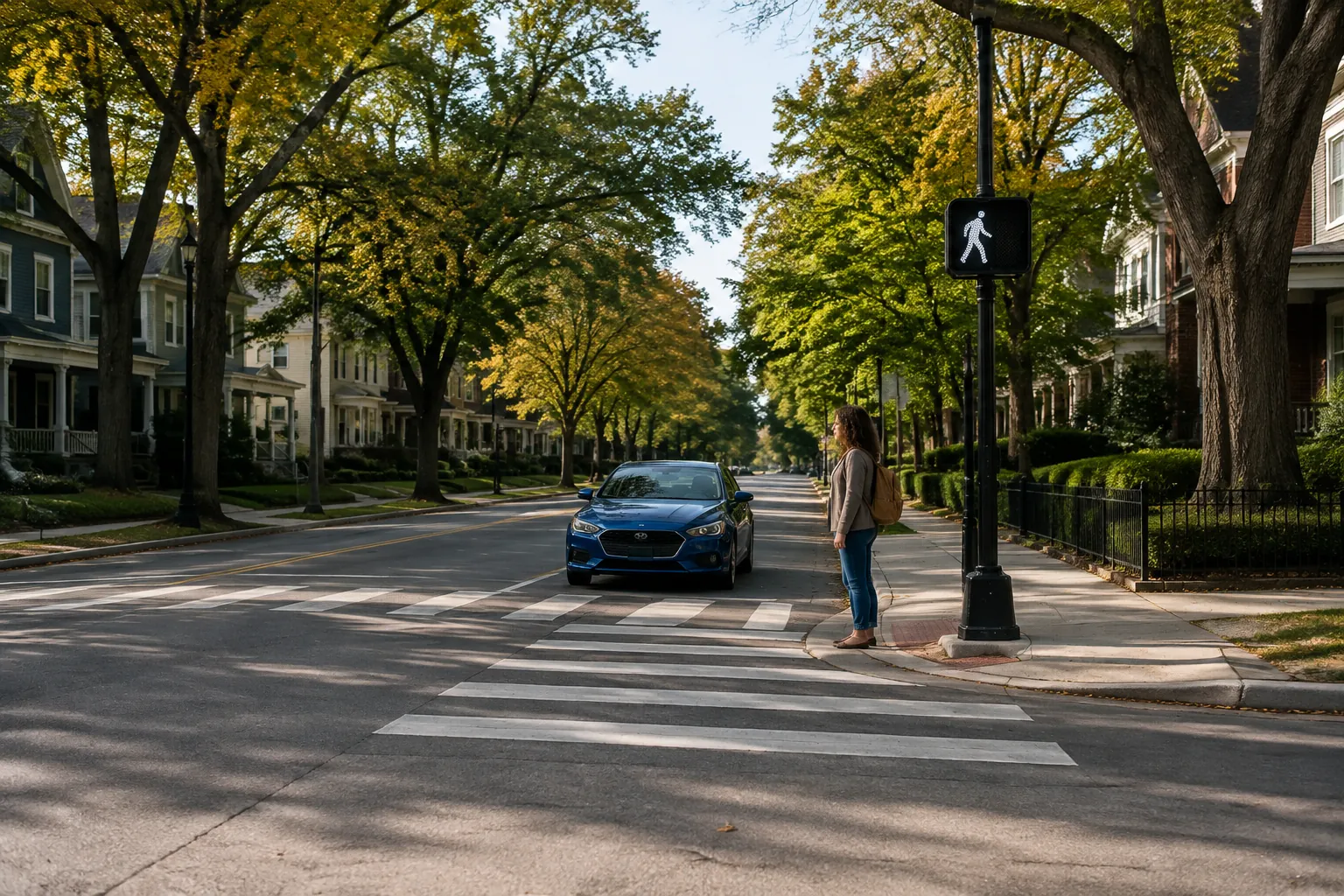
Hit while walking? Get help with medical bills, missed work, and questions about the driver or available insurance. Start with a free review of what happened in Marquette.
Start with what you know: when and where it happened, how you were affected, and any reports or messages you have. You do not need a complete file before contacting us. We can explain what else may matter, which records to look for, and whether we can help.
Call about a Marquette matter when a driver hit a person in a crosswalk, roadway, parking lot, driveway, bus stop, school area, or hit-and-run and medical care or disputed fault followed. The first Marquette review identifies the correct PIP priority or assigned-claims path, driver and vehicle-owner responsibility, hit-and-run and UM/UIM coverage, traffic-control proof, comparative fault, and serious-impairment evidence. The Michigan pedestrian accident guide explains the statewide law and how it may apply to your situation.
Crosswalk and signal timing, business and vehicle video, lighting, sight lines, parked cars, braking, phone use, route data, witness locations, and the vehicle’s condition can change quickly.
Read the legal detailsIt costs nothing to learn where you stand. Call (800) 961-8477 or start a free case review.
The cases. The work.
The difference it made.
$5.2M
A teacher suffered brain and spinal injuries when a Detroit city van hit his stopped car. The City offered $25,000 before trial; a Wayne County jury awarded $5.2 million.
$1.25M
A speeding driver struck the vehicle from behind. The wrongful-death recovery included the available underinsured motorist policy limits.
$220K
The crash left Eva with neck and back injuries that worsened over time, required surgery and disrupted her ability to work. We secured a $220,000 settlement.
Police and road agencies, platforms, drivers, passengers, vehicle owners, private camera holders, transit or parking systems, insurers, and medical providers may each hold a different part of the record.
US-41, US-2, M-28, Marquette downtown streets, Lake Superior routes, and remote U.P. highways can all matter. Signals and timing, markings, stop lines, lighting, sight lines, parked vehicles, bus stops, school conditions, road surface, weather, measurements, and camera locations can test the driver's and pedestrian's opportunities to see and react.
We preserve road, weather, EMS, hospital-transfer, employer, vehicle, recreational, and government records across a broad Upper Peninsula service area. Speed, braking, phone use, impairment, distraction, work or app status, event data, damage, ownership, insurance, witness identification, and hit-and-run investigation records may come from different holders.
Records from UP Health System-Marquette, Bell Hospital, regional critical access hospitals, and transfer providers, rehabilitation, employers, family, and later providers should document diagnosis, surgery, brain or orthopedic injury, scarring, function, work loss, care, and future needs.
Marquette City Police, Northern Michigan University Police, the Marquette County Sheriff, Michigan State Police, dispatch, and the actual investigating agency. Signal, road, transit, construction, and property evidence may instead be controlled by MDOT, City of Marquette, Marquette County Road Commission, NMU, Marq-Tran, trail or park managers, utilities, and contractors. A report request does not reach every public or private custodian.
| Evidence | Possible holder | Why it may matter |
|---|---|---|
| Crash or incident report, 911, dispatch, scene photographs, witnesses, citations, and hit-and-run investigation | Marquette City Police, Northern Michigan University Police, the Marquette County Sheriff, Michigan State Police, dispatch, and the actual investigating agency | Provides the first official record and vehicle-identification leads, but it may not include every signal, video, witness, or private record. |
| Signal timing, markings, stop lines, lighting, bus-stop, construction, maintenance, and road-control material | MDOT, City of Marquette, Marquette County Road Commission, NMU, Marq-Tran, trail or park managers, utilities, and contractors | Can test which controls applied and what a driver or pedestrian could see without assuming the road agency is liable. |
| Business, residence, transit, campus, parking, event, dashcam, delivery, rideshare, doorbell, or phone video | Marq-Tran vehicles, NMU facilities, downtown businesses, hospitals, parking structures, residences, vehicles, waterfront properties, and winter-maintenance systems | May preserve the signal cycle, approach paths, visibility, impact, vehicle identity, witnesses, and post-crash conduct. |
| EMS, hospital, surgery, rehabilitation, work, school, function, scarring, brain-injury, and future-care records | UP Health System–Marquette, EMS, regional or downstate transfer, rehabilitation, travel, work, school, and family records may be needed to show the complete impact. | Connects the event to diagnosis, treatment, restrictions, wage loss, daily-life change, and future needs. |
The exact scene helps identify where to look for reports, video, witnesses, and other records.
Downtown crossings, NMU approaches, waterfront paths, transit stops, hospital areas, snowbanks, darkness, and winter surfaces require event-date photographs and visibility proof. The Marquette investigation should reconstruct the pedestrian and vehicle paths, signal or right-of-way evidence, lighting, sight lines, video, driver conduct, PIP priority, hit-and-run coverage, and injury record before a fault percentage is accepted.
US-41, M-28, Washington Street, Front Street, Third Street, Wright Street, Lakeshore Boulevard, campus streets, hills, and remote regional roads. For the Marquette event, document the signal phase, countdown, crosswalk or crossing point, stop line, curb, bus stop, driveway, parking aisle, lighting, weather, sight lines, traffic, parked vehicles, and camera positions.
In the Marquette file, speed, braking, phone use, impairment, work or app status, vehicle data, damage, ownership, insurance, witnesses, and hit-and-run leads may sit with different holders. Marq-Tran vehicles, NMU facilities, downtown businesses, hospitals, parking structures, residences, vehicles, waterfront properties, and winter-maintenance systems may preserve the clearest view.
For a Marquette pedestrian claim, household PIP, non-occupant priority, assigned claims, UM/UIM, driver and owner liability, comparative fault, and serious impairment are distinct questions. UP Health System–Marquette, EMS, regional or downstate transfer, rehabilitation, travel, work, school, and family records may be needed to show the complete impact. Marquette County courts and any campus, state, federal, or out-of-county proceeding should be tied to the actual parties and event.
These are possible legal paths, not automatic claims. The answer depends on the event, defendant, policy, injuries, forum, and current law.
A pedestrian injured by a motor vehicle may have No-Fault rights, but household coverage, the involved vehicle, and assigned-claims facts should be checked before identifying the benefit source.
Traffic duties, fault, vehicle-owner responsibility, employer or platform evidence, serious impairment, comparative fault, and damages form the third-party claim.
UM/UIM terms, efforts to identify the vehicle, assigned claims, traffic-control evidence, road-agency duty, and any public notice issue require separate factual and legal support.
Answer five short questions to organize the timing, harm, possible claims, evidence risk, and current status. There is no sign-up and no dollar estimate. Your answers are included only if you submit the free case review below. The result is general information, not legal advice.
Question 1 of 5
The rules below explain how a claim may work. The deadlines, available insurance and responsibility for an injury still depend on the facts of your case.
Michigan statutes address signal indications and pedestrian roadway conduct. The full intersection, signal, crosswalk, traffic, visibility, and driver-duty record still controls fault.
Household coverage, non-occupant priority, involved vehicles, and assigned-claims eligibility should be checked before assuming which insurer pays.
Serious impairment, comparative fault, general injury timing, and a possible defective-highway theory use different legal tests and clocks.
Document signals, timing, markings, lighting, sight lines, traffic, parked vehicles, road surface, weather, camera positions, witnesses, and the pedestrian's and vehicle's paths.
Map household and vehicle policies, assigned-claims eligibility, UM/UIM, ownership, work or platform use, and hit-and-run investigation steps without waiting for fault to be conceded.
We preserve road, weather, EMS, hospital-transfer, employer, vehicle, recreational, and government records across a broad Upper Peninsula service area. Compare physical evidence, video, signals, route data, driver conduct, witnesses, and pedestrian conduct rather than accepting the first report or insurer percentage.
Connect care from UP Health System-Marquette, Bell Hospital, regional critical access hospitals, and transfer providers and follow-up providers to trauma, surgery, rehabilitation, function, work, care, scarring, and future treatment before resolution.
In their own words. Read what clients and families say about working with our team.
When I was hit by a stolen car and reached out to other firms. Christopher Trainor and Associates was the only ones who contacted me immediately. The communications from my attorney was amazing. He made me feel like family and that is why I will ALWAYS recommend this law firm. They actually care about u, not just winning the case.
I loved everything about my experience!!! From start to finish I was always in communication with staff & any concerns or questions I had were handled adequately! Thank you so much for everything. Car accidents are scary but you all made this process so easy & fought hard for me to get paid
Christopher Trainor & Associates represented my mother in an extremely tragic car accident. The insurance company was resistant on paying out her law suit, and the team won our case! Thank you so much for your representation!!
Send the basics. We will check the facts, coverage, deadlines, evidence, and whether hiring us makes sense. No obligation.
Serving Marquette, Ishpeming, Negaunee, Gwinn, Munising, Escanaba, Iron Mountain, Houghton, and Sault Ste. Marie.
Call before visiting so the team can confirm the right meeting location and time.
Every case at Christopher Trainor & Associates is a team effort. Our attorneys collaborate on strategy, discovery, and litigation so you get the full strength of the firm behind you—not just a single lawyer. We have built our practice on this collaborative model since 1989.
Meet Our Attorneys