$5.2M
Teacher rear-ended by a city work van
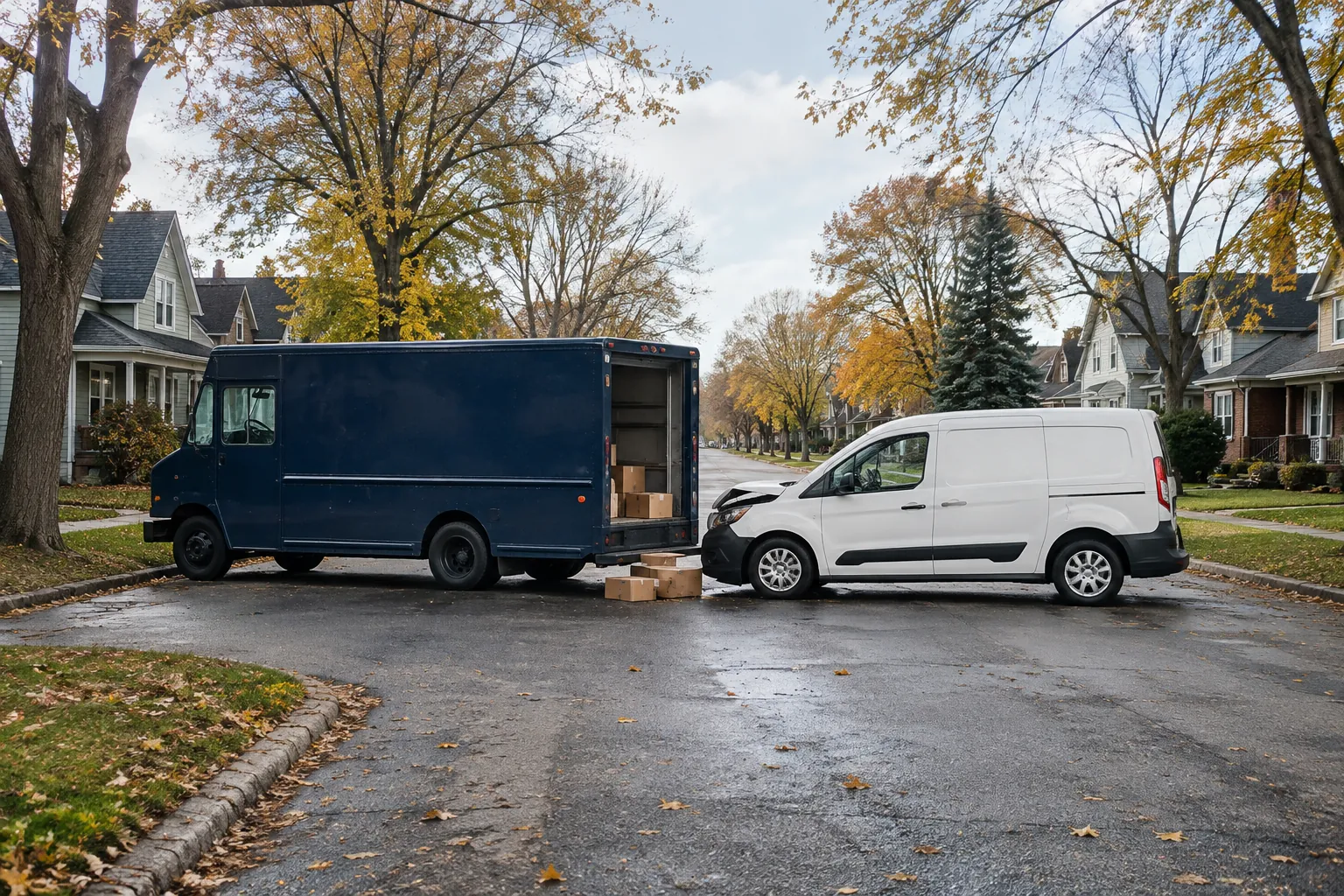
A teacher suffered brain and spinal injuries when a Detroit city van hit his stopped car. The City offered $25,000 before trial; a Wayne County jury awarded $5.2 million.

Kalamazoo office · Serving southwest Michigan
Hurt by a grocery or food-distribution truck? Get help with medical bills, company records, and insurance questions. Start with a free review of what happened in Kalamazoo.
Start with what you know: when and where it happened, how you were affected, and any reports or messages you have. You do not need a complete file before contacting us. We can explain what else may matter, which records to look for, and whether we can help.
Call if a grocery, restaurant-supply, refrigerated, wholesale-food, or institutional-delivery truck crash caused medical care, missed work, serious injury, death, or a dispute about the companies involved. Michigan Legal Center can preserve local and receiving evidence, identify the driver, carrier, tractor and trailer owners, review No-Fault personal protection insurance (PIP), and evaluate a third-party claim. For the statewide commercial-vehicle framework, see our Michigan commercial vehicle accident page, truck evidence preservation guide, and PIP priority guide.
Receiving video and logs, route and dispatch data, manifests, telematics, onboard video, tractor and trailer records, and maintenance material may be controlled by different businesses and retained for different periods.
Read the legal detailsIt costs nothing to learn where you stand. Call (269) 447-2200 or start a free case review.
The cases. The work.
The difference it made.
$5.2M
A teacher suffered brain and spinal injuries when a Detroit city van hit his stopped car. The City offered $25,000 before trial; a Wayne County jury awarded $5.2 million.
$550K
$1.2M
The client sustained injuries to the back, neck and head in a commercial truck accident.
Keep copies of what you already have. The local records map below explains who may hold additional evidence and what we still need to confirm.
Receiving records, access logs, incident reports, and nearby video may help explain what happened at a store, restaurant, institution, or loading area.
Dispatch messages, manifests, trip records, and driver files may help identify the distributor, carrier, and other businesses involved.
Vehicle, trailer, loading-equipment, and maintenance records may help explain the incident. The detailed map separates the possible record holders.
Kalamazoo street-design materials provide public context, while the actual customer, route, vehicle, and operating relationships require incident-specific proof.
| Evidence | Possible holder | Why it may matter |
|---|---|---|
| Alley, curb, parking, construction, lane, and traffic-control records | City of Kalamazoo, parking or project office, contractor, responding agency, or adjacent property | Can show the date-specific public setting and possible independent video or witnesses. |
| Customer appointment, rear-entry instruction, delivery receipt, and premises video | Restaurant, grocery, institution, warehouse, landlord, tenant, or property manager | May establish where and when the truck was expected and how it entered or left the receiving area. |
| Route, dispatch, manifest, driver, GPS, telematics, and onboard footage | Distributor, motor carrier, employer, logistics company, or system vendor | Can connect the driver, vehicle, cargo trip, communications, and movement. |
| Trailer, refrigeration, liftgate, brake, mirror, warning, inspection, and repair file | Equipment owners, carrier, lessor, maintenance vendor, refrigeration provider, or repair shop | May test backing visibility, braking, equipment operation, and maintenance without presuming a defect. |
The exact scene helps identify where to look for reports, video, witnesses, and other records.
Kalamazoo food-service and grocery vehicles use downtown alleys, curb spaces, institutional docks, commercial corridors, neighborhood stores, and warehouse approaches. Street design, temporary work, and receiving instructions should be matched to the event date.
Streets for All materials explain broader city work, but the relevant questions are the lane, signs, markings, traffic control, construction stage, loading restriction, and sight line present when the crash happened.
An alley, curb, sidewalk crossing, or rear entrance may be used by pedestrians, workers, other tenants, and multiple vehicles. Cameras, delivery windows, curb rules, and witness positions can be spread across properties.
A truck can display a food brand while operating under a separate carrier, lease, or logistics arrangement. Identifiers, bills, dispatch, contracts, driver status, and insurance should be traced rather than inferred.
No-Fault PIP and a third-party claim are separate. Driver, carrier, distributor, tractor, trailer, customer, commercial-coverage, work, and federal-rule issues depend on the actual relationships and operation.
PIP priority and benefits depend on the injured person, vehicles, household or occupational policies, and assigned-claims facts—not the food brand, customer, or liability carrier.
Fault, ownership, permissive use, employment, contractor status, carrier control, insurance, causation, threshold, and damages require separate proof.
Premises evidence, work benefits, maintenance or equipment issues, and federal motor-carrier requirements matter only when the verified facts and governing definitions support them.
Answer five short questions about the truck and operation, timing, injuries, possible benefits or claims, company identity, insurance, and evidence risk. There is no sign-up and no dollar estimate. Your answers are included only if you submit the free case review below. The result is general information, not legal advice.
Question 1 of 5
PIP, liable parties, commercial coverage, deadlines, and conditional federal duties depend on the injured person, driver, carrier, tractor and trailer, customer, company relationships, and actual operation.
Michigan PIP priority and timing are separate from vehicle-owner liability, company responsibility, the motor-vehicle threshold, comparative fault, and damages. A distributor or grocery logo does not identify the PIP insurer or establish control.
The seller, distributor, logistics provider, motor carrier, driver employer, tractor owner, trailer owner, customer, and maintenance provider can be different. Title, registration, carrier, dispatch, contract, employment, and insurance records should establish each role.
Commercial-motor-vehicle definitions, hours requirements, short-haul provisions, cargo rules, and maintenance duties do not apply to every food-delivery vehicle in the same way. The truck, weight, configuration, carrier, cargo, route, and exceptions must be confirmed.
Document the curb, dock, driveway, access point, traffic control, vehicle position, cameras, witnesses, receiving appointment, incident record, and medical response.
Identify the customer, distributor, logistics provider, motor carrier, driver employer, route controller, tractor and trailer owners, maintenance providers, and insurers.
Target manifests, route and dispatch material, communications, GPS or telematics, onboard video, driver, inspection, equipment, maintenance, contract, and insurance files.
Coordinate PIP, liability coverage, UM/UIM, work benefits, medical causation, functional loss, wage loss, household services, liens, and future needs.
In their own words. Read what clients and families say about working with our team.
I had a rear end collision with a driver in a Ford F-150 pick up truck and I had multiple surgeries and quite a few medical bills that Ryan Ford worked with multiple providers to ensure the medical bills were paid for.
I loved everything about my experience!!! From start to finish I was always in communication with staff & any concerns or questions I had were handled adequately! Thank you so much for everything. Car accidents are scary but you all made this process so easy & fought hard for me to get paid
Christopher Trainor & Associates represented my mother in an extremely tragic car accident. The insurance company was resistant on paying out her law suit, and the team won our case! Thank you so much for your representation!!
Send the basics. We will check the facts, coverage, deadlines, evidence, and whether hiring us makes sense. No obligation.
Serving Kalamazoo, Portage, Battle Creek, Vicksburg, Paw Paw, Mattawan, Three Rivers, Sturgis, and Oshtemo.
Call before visiting so the team can confirm the right meeting location and time.
Every case at Christopher Trainor & Associates is a team effort. Our attorneys collaborate on strategy, discovery, and litigation so you get the full strength of the firm behind you—not just a single lawyer. We have built our practice on this collaborative model since 1989.
Meet Our Attorneys