$1M+
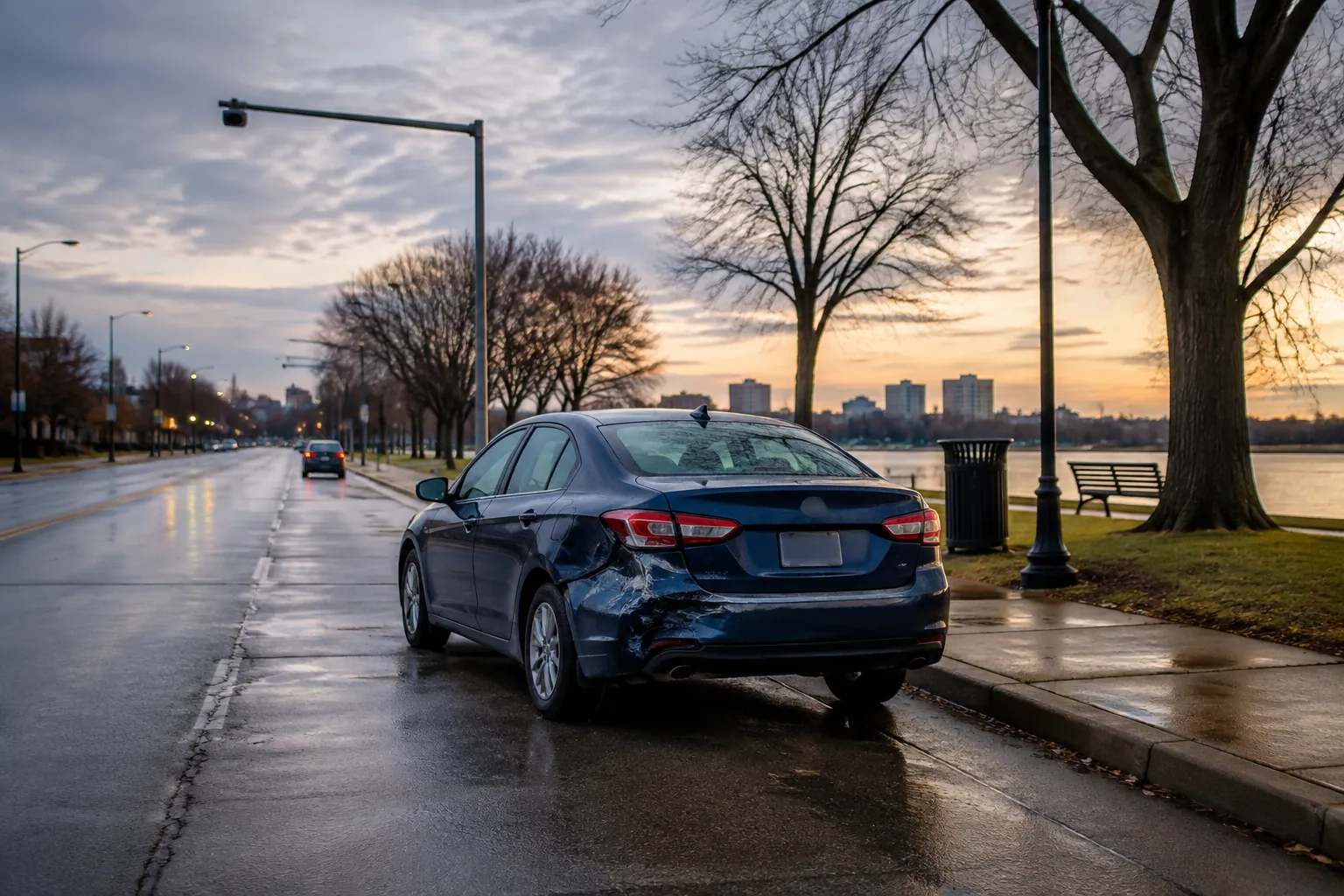
Hit-and-run recovery with lifetime PIP benefits
The recovery includes entitlement to lifetime Personal Injury Protection (PIP) benefits for our client.

Southfield office · Serving Detroit and Wayne County
Hurt by a driver who left? Get help preserving camera and witness information and reviewing possible insurance coverage. Start with a free review of what happened in Detroit.
Start with what you know: when and where it happened, how you were affected, and any reports or messages you have. You do not need a complete file before contacting us. We can explain what else may matter, which records to look for, and whether we can help.
Call about a Detroit matter when the crash caused medical care, missed work, a serious injury, death, disputed fault, an unidentified driver, or uncertainty about No-Fault and liability coverage. The first Detroit review identifies the exact crash sequence, local record holders, PIP priority, every responsible driver or owner, UM/UIM, serious-impairment proof, comparative fault, and any special notice issue. The Michigan hit-and-run accident guide explains the statewide law and how it may apply to your situation.
Public and private video, partial plates, witness memory, debris, paint, vehicle damage, tow and repair records, and insurer notice can become harder to obtain quickly.
Read the legal detailsIt costs nothing to learn where you stand. Call (248) 886-8650 or start a free case review.
The cases. The work.
The difference it made.
$1M+
The recovery includes entitlement to lifetime Personal Injury Protection (PIP) benefits for our client.
$5.2M
A teacher suffered brain and spinal injuries when a Detroit city van hit his stopped car. The City offered $25,000 before trial; a Wayne County jury awarded $5.2 million.
$220K
The crash left Eva with neck and back injuries that worsened over time, required surgery and disrupted her ability to work. We secured a $220,000 settlement.
Keep copies of what you already have. The local records map below explains who may hold additional evidence and what we still need to confirm.
Keep the report number, photos, witness contacts, and anything identifying the vehicle or driver. Emergency calls and dispatch records may add to the timeline.
Nearby property, transit, and vehicle cameras may provide useful evidence. A possible camera location does not establish that a recording exists.
Damage, vehicle data, towing records, and the full insurance policy may help explain the crash and available coverage.
Detroit Police, Michigan State Police, city departments, MDOT, Wayne County, DDOT, QLINE, and private parking or property operators may hold different parts of the record. The departure route, partial plate or vehicle description, paint or debris, tow and repair activity, and prompt video requests can be more probative than the first label assigned to an unknown driver.
| Evidence | Possible holder | Why it may matter |
|---|---|---|
| 911, dispatch, report, photographs, and witness information | Detroit Police, Michigan State Police, city departments, MDOT, Wayne County, DDOT, QLINE, and private parking or property operators may hold different parts of the record. We identify DPD, MSP, Detroit Fire and EMS, Wayne County, business-camera, vehicle, employer, medical, court, and insurance records that fit the actual incident instead of relying on one report or one agency account. | These records can establish the first Detroit timeline, reported descriptions, responder observations, and additional leads without making the report conclusive. |
| Public, transit, business, residential, and vehicle video | DDOT or QLINE vehicles, downtown and neighborhood businesses, parking systems, event districts, hospitals, residences, dashcams, and doorbell cameras; likely locations must be mapped against I-75, I-94, I-96, M-10, M-39, Woodward Avenue, Gratiot Avenue, Michigan Avenue, Jefferson Avenue, and Detroit neighborhood streets | Footage may show approach, impact, attention, signal, or departure evidence. I-75, I-94, I-96, M-10, service drives, major arterials, and neighborhood grids create many departure routes and agency boundaries. Availability for the exact Detroit place and time must be confirmed. |
| Vehicle, device, app, repair, tow, and insurance material | Drivers, owners, employers, platforms, carriers, repair or tow facilities, and insurers tied to travel among Detroit, Highland Park, Hamtramck, Dearborn, Redford Township, Grosse Pointe communities, and surrounding Wayne County, subject to consent and lawful process | The material may help identify a vehicle, reconstruct movements, evaluate attention, or map coverage. Detroit cases can involve dense freeway traffic, neighborhood intersections, city and county agencies, commercial fleets, public transportation, local businesses, and evidence spread across several Detroit and Wayne County record systems. |
| Traffic-control, roadway, construction, and maintenance records | The entity controlling the exact segment among the agencies serving Wayne County, Detroit and Wayne County, and the corridors along I-75, I-94, I-96, M-10, M-39, Woodward Avenue, Gratiot Avenue, Michigan Avenue, Jefferson Avenue, and Detroit neighborhood streets | Ownership and control determine which plans, timing data, work records, notices, and preservation requests are relevant. Wayne County Third Circuit Court, Wayne County Probate Court, Detroit district courts, and the U.S. District Court for the Eastern District of Michigan may handle a later claim, but court geography does not establish roadway control. |
The exact scene helps identify where to look for reports, video, witnesses, and other records.
I-75, I-94, I-96, M-10, service drives, major arterials, and neighborhood grids create many departure routes and agency boundaries. Detroit Police, Michigan State Police, city departments, MDOT, Wayne County, DDOT, QLINE, and private parking or property operators may hold different parts of the record. Detroit cases can involve dense freeway traffic, neighborhood intersections, city and county agencies, commercial fleets, public transportation, local businesses, and evidence spread across several Detroit and Wayne County record systems.
The service area includes Detroit, Highland Park, Hamtramck, Dearborn, Redford Township, Grosse Pointe communities, and surrounding Wayne County. Detroit Medical Center hospitals, Henry Ford Hospital, Corewell Health Dearborn Hospital, rehabilitation providers, and the Wayne County Medical Examiner may document the medical sequence. Potential courts include Wayne County Third Circuit Court, Wayne County Probate Court, Detroit district courts, and the U.S. District Court for the Eastern District of Michigan; the Detroit venue and parties still must be verified.
The departure route, partial plate or vehicle description, paint or debris, tow and repair activity, and prompt video requests can be more probative than the first label assigned to an unknown driver. Local corridors include I-75, I-94, I-96, M-10, M-39, Woodward Avenue, Gratiot Avenue, Michigan Avenue, Jefferson Avenue, and Detroit neighborhood streets. We identify DPD, MSP, Detroit Fire and EMS, Wayne County, business-camera, vehicle, employer, medical, court, and insurance records that fit the actual incident instead of relying on one report or one agency account.
Potential video includes DDOT or QLINE vehicles, downtown and neighborhood businesses, parking systems, event districts, hospitals, residences, dashcams, and doorbell cameras. I-75, I-94, I-96, M-10, service drives, major arterials, and neighborhood grids create many departure routes and agency boundaries. Detroit requests should identify a narrow place and time and should not imply that any listed system recorded the crash.
Michigan No-Fault PIP, third-party liability, UM/UIM, owner or employer responsibility, and any public-road issue use different proof across Detroit, Highland Park, Hamtramck, Dearborn, Redford Township, Grosse Pointe communities, and surrounding Wayne County. Detroit Medical Center hospitals, Henry Ford Hospital, Corewell Health Dearborn Hospital, rehabilitation providers, and the Wayne County Medical Examiner can document different stages of care.
Potential courts include Wayne County Third Circuit Court, Wayne County Probate Court, Detroit district courts, and the U.S. District Court for the Eastern District of Michigan; that Detroit court list does not determine which insurance path applies.
These are possible legal paths, not automatic claims. The answer depends on the event, defendant, policy, injuries, forum, and current law.
PIP priority and available benefits depend on the injured person, vehicles, household or occupational policies, and assigned-claims facts—not simply the driver alleged to be at fault.
Driver conduct, owner or employer responsibility, causation, Michigan’s motor-vehicle threshold, comparative fault, insurance, and damages require separate proof.
Unknown or uninsured vehicles, employers, platforms, products, road authorities, or property actors matter only when the policies and verified evidence support that path.
Answer five short questions to organize the timing, harm, possible claims, evidence risk, and current status. There is no sign-up and no dollar estimate. Your answers are included only if you submit the free case review below. The result is general information, not legal advice.
Question 1 of 5
The rules below explain how a claim may work. The deadlines, available insurance and responsibility for an injury still depend on the facts of your case.
The duties and penalties vary with the crash and injury facts. A violation or criminal case does not by itself establish every civil element or coverage issue.
PIP priority, assigned claims, policy-specific UM/UIM notice and proof, and vehicle-identification efforts must be reviewed separately.
A third-party claim requires injury, causation, serious-impairment where applicable, and comparative-fault analysis even when the other driver left.
Record the precise location, movements, impact, departure or stopping points, calls, responders, witnesses, cameras, tow destination, treatment, and insurer contacts.
Target the actual agencies, properties, vehicles, accounts, businesses, road authorities, and insurers using a narrow time and location rather than a generic demand.
A prompt police report can support investigation and coverage notice, but it does not guarantee identification or payment. UM/UIM and No-Fault coverage depend on the policy terms and eligibility requirements that apply to the injured person. Michigan Legal Center serves Detroit through its Southfield office. The firm has no physical Detroit office.
Coordinate PIP, liability, UM/UIM, medical and wage evidence, potential public actors, and claim-specific notices or deadlines for the Detroit facts.
In their own words. Read what clients and families say about working with our team.
When I was hit by a stolen car and reached out to other firms. Christopher Trainor and Associates was the only ones who contacted me immediately. The communications from my attorney was amazing. He made me feel like family and that is why I will ALWAYS recommend this law firm. They actually care about u, not just winning the case.
I loved everything about my experience!!! From start to finish I was always in communication with staff & any concerns or questions I had were handled adequately! Thank you so much for everything. Car accidents are scary but you all made this process so easy & fought hard for me to get paid
Christopher Trainor & Associates represented my mother in an extremely tragic car accident. The insurance company was resistant on paying out her law suit, and the team won our case! Thank you so much for your representation!!
Send the basics. We will check the facts, coverage, deadlines, evidence, and whether hiring us makes sense. No obligation.
Serving Detroit, Highland Park, Hamtramck, Dearborn, Redford Township, Grosse Pointe communities, and surrounding Wayne County.
Call before visiting so the team can confirm the right meeting location and time.
Every case at Christopher Trainor & Associates is a team effort. Our attorneys collaborate on strategy, discovery, and litigation so you get the full strength of the firm behind you—not just a single lawyer. We have built our practice on this collaborative model since 1989.
Meet Our Attorneys