
What Kind of Cases Do Personal Injury Lawyers Handle in Michigan?
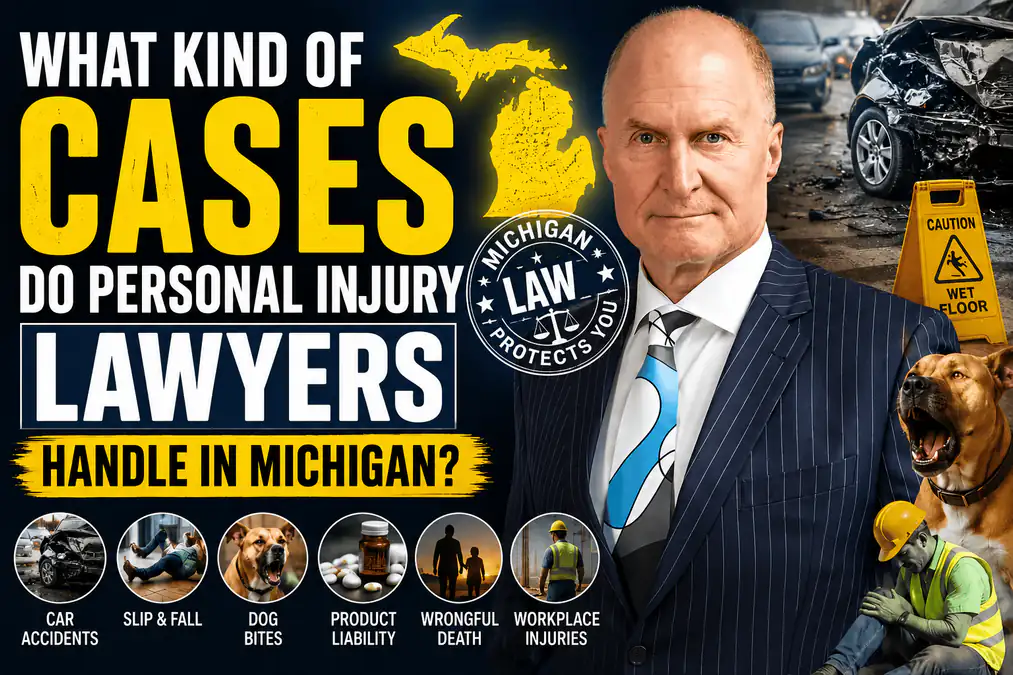
Personal injury lawyers help people who were hurt because of another person or entity. This can include many types of cases and injuries, such as crashes, falls, dog bites, wrongful death, serious injury claims, product-related injuries and some workplace-related third-party claims. The facts of the case, the type of injury, the insurance companies involved and the legal deadlines can all complicate these claims, which is why legal review is often necessary.
What Is Personal Injury?
Personal injury refers to harm to a person, which the law treats differently from damage to property alone. For more on how a personal injury lawyer can help, see Michigan Legal Center's guide to what a personal injury lawyer does. The effects of a personal injury can show up as physical injuries, medical bills, lost income, pain and suffering where legally available, and the practical disruption an injury causes.
What Types of Personal Injury Cases Are Most Common?
The types of personal injury cases a lawyer may review usually fall into a few broad categories, such as:
- car crashes
- truck, motorcycle, bicycle, pedestrian and bus accidents
- slip and fall or dangerous property claims
- wrongful death claims
- serious injury claims and catastrophic injury claims
- workplace-related third-party injury claims
- intentional harm or assault-related civil claims in some cases
- dog bite and animal attack injuries
- product-related injuries The correct category matters because each type of case revolves around different evidence, defendants, insurance questions and deadlines.
Do Personal Injury Lawyers Handle Car and Truck Accidents?
Yes. Vehicle accidents are one of the main types of cases a personal injury lawyer handles. In Michigan, motor vehicle crashes can involve both insurance-benefit issues and claims against an at-fault party. For auto crash cases, personal injury lawyers can help victims claim first-party no-fault benefits for things like work loss, allowable expenses and replacement services. These and other qualifying economic losses are described in Michigan law at MCL 500.3107. Another Michigan law, MCL 500.3135, explains a separate type of claim that can be made for noneconomic losses such as pain and suffering or death. The outcome of these cases can depend on crash reports, photos, video, medical records, insurance documents, witness information, vehicle damage and prompt evidence preservation.
Do Personal Injury Lawyers Handle Slip and Fall Cases?
Many personal injury lawyers handle slip and fall, trip and fall and other dangerous property cases. These cases usually involve stores, landlords, apartment complexes, restaurants, parking lots, sidewalks, stairs, job sites or public property. Simply being hurt in a fall is not enough to prove a claim. A claim's success may depend on what caused the fall, who controlled the property, whether the hazard should have been addressed, what evidence still exists and whether any fault arguments may apply. In many cases, if an injured person is partially at fault, that share of responsibility can affect the outcome of the claim, and damages may be reduced by their own percentage of fault. Under MCL 600.2959 this is called comparative fault, and it can be shown using photos, reports, witness names, video, maintenance records and medical documentation. In some cases, a finding that the injured person was more at fault than all other responsible parties combined may prevent recovery of noneconomic damages. In Michigan, dangerous-property cases may also involve arguments about whether a condition was open and obvious. After the Michigan Supreme Court's 2023 decision in Kandil-Elsayed v F & E Oil, Inc., the open-and-obvious nature of a hazard is generally treated as part of breach and comparative fault. This means it can affect how much an injured person is considered at fault, but it does not automatically dismiss the case. That issue may still affect liability, fault allocation, damages, and whether the claim can proceed, depending on the facts.
Do Personal Injury Lawyers Handle Dog Bites?
Yes, dog bites are a common type of personal injury case. There are many issues that can affect the outcome of these cases, which is why these claims should be reviewed carefully. Claims may involve statutory liability, lawful presence, provocation issues, homeowner insurance, medical records, scarring, infection, nerve injury and psychological harm. Michigan's dog bite statute, MCL 287.351, covers liability when a dog bites a person. It generally focuses on whether the bite occurred without provocation and whether the injured person was on public property or lawfully on private property. Animal-related injuries that do not involve dogs may require a different legal analysis, because the statute applies only to dog bites.
Do Personal Injury Lawyers Handle Wrongful Death Cases?
Some personal injury lawyers handle wrongful death claims, which may arise when negligence, misconduct or a dangerous condition causes someone's death. These are not ordinary injury cases, in part because the person who died is no longer able to describe what happened. The claim is generally brought by the personal representative of the deceased person's estate. These cases may involve the estate or eligible family members seeking damages for medical costs, funeral expenses, lost support and loss of society and companionship. Wrongful death deadlines can depend on the type of claim, the responsible party, and whether an estate or personal representative must be involved. Families should seek legal review early instead of assuming one general deadline applies.
What About Workplace Injuries?
Workplace injuries can involve more than one type of claim. One is workers' compensation, which generally applies when a person is injured in the course of their employment. A separate personal injury claim may exist if a third party outside the employment relationship caused or contributed to the injury. Examples of third-party claims include a negligent driver hitting a worker, a subcontractor causing a jobsite injury, defective equipment, unsafe property controlled by someone other than the employer, or another responsible party outside the employment relationship. Whether an injury supports a third-party claim depends on whether someone other than the employer may be legally responsible. Generally, workers' compensation is an employee's only claim against an employer. Because employment status, work duties, insurance, contracts and the facts of the accident can all matter, these claims should be reviewed before anyone assumes only one claim is available.
Do Personal Injury Lawyers Handle Product Liability Cases?
Some personal injury lawyers handle product-related injury claims. These cases are often affected by whether the product was altered, misused, repaired, discarded, returned or damaged. These cases may involve:
- defective vehicles
- unsafe machinery
- dangerous consumer products
- missing warnings
- design issues
- manufacturing issues
- failure to give adequate safety information In cases like these, a lawyer will look at the product, instructions, warnings, maintenance history, prior incidents, expert issues and whether the product can be preserved for inspection. The product itself should not be repaired, discarded, altered or returned without legal review, because it may be considered evidence. More information about Michigan product liability terminology and product- and manufacturer-related concepts can be found in MCL 600.2945.
What Cases Need Special Review?
Some issues may look like personal injury claims but need special handling. That does not mean the claims are invalid; it means they should not be treated like ordinary accident claims. Special-review situations may include:
- medical malpractice or nursing-home negligence
- defamation or reputation-harm claims
- assault, battery or other intentional harm
- government property, public vehicles, schools or public agencies
- workplace injuries with workers' compensation issues
- civil rights or police misconduct claims
- claims involving minors, estates or wrongful death For example, an assault can create both a criminal case and a civil claim. The criminal case does not automatically compensate the injured person, and civil deadlines can still matter. Government-related injuries can also create strict notice requirements.
What Is the Personal Injury Claim Process?
The personal injury claim process usually starts with a consultation and fact review. A lawyer will ask what happened, what injuries were diagnosed, what medical care occurred, what evidence exists and whether insurance or deadline issues need immediate attention. After that, a lawyer may:
- preserve evidence
- request records
- gather medical documentation
- identify responsible parties
- review insurance issues
- communicate with insurers
- calculate damages supported by records
- negotiate a settlement
- file a lawsuit if needed The Michigan civil case process can include a complaint, an answer, discovery, settlement efforts and trial if the case does not resolve earlier. Filing a personal injury lawsuit is only one possible step in personal injury litigation. Many cases require investigation and negotiation before a lawsuit is filed.
What Evidence Should You Save?
Save any evidence you have or can obtain, including:
- photos
- videos
- documents
- messages
- witness names
- medical papers
- insurance letters
- damaged products
- product packaging
- other records you already have Important evidence can quickly be erased or lost, including video, records, social media posts, damaged property, vehicle evidence and witness memories. Do not worry if you do not have everything. The point is to preserve what you can and let an attorney identify what else should be requested.
How Long Do You Have to File a Personal Injury Claim in Michigan?
There is no single deadline that applies to every Michigan injury case. Some claims may have a three-year limitations period, while others may involve shorter deadlines, special notice requirements, or other rules. Auto No-Fault claims, claims against government entities, medical-malpractice claims, defamation claims, assault-related claims, wrongful-death claims, and claims involving minors or estates can all require separate deadline review. The safest approach is to have the deadline reviewed as early as possible.
Talk to a Michigan Personal Injury Lawyer
If you or a family member was hurt, you can contact Michigan Legal Center to have your situation, the responsible parties, the insurance issues and any deadlines reviewed.