
Car Went Under a Semi-Trailer in Michigan: Rear vs. Side Underride
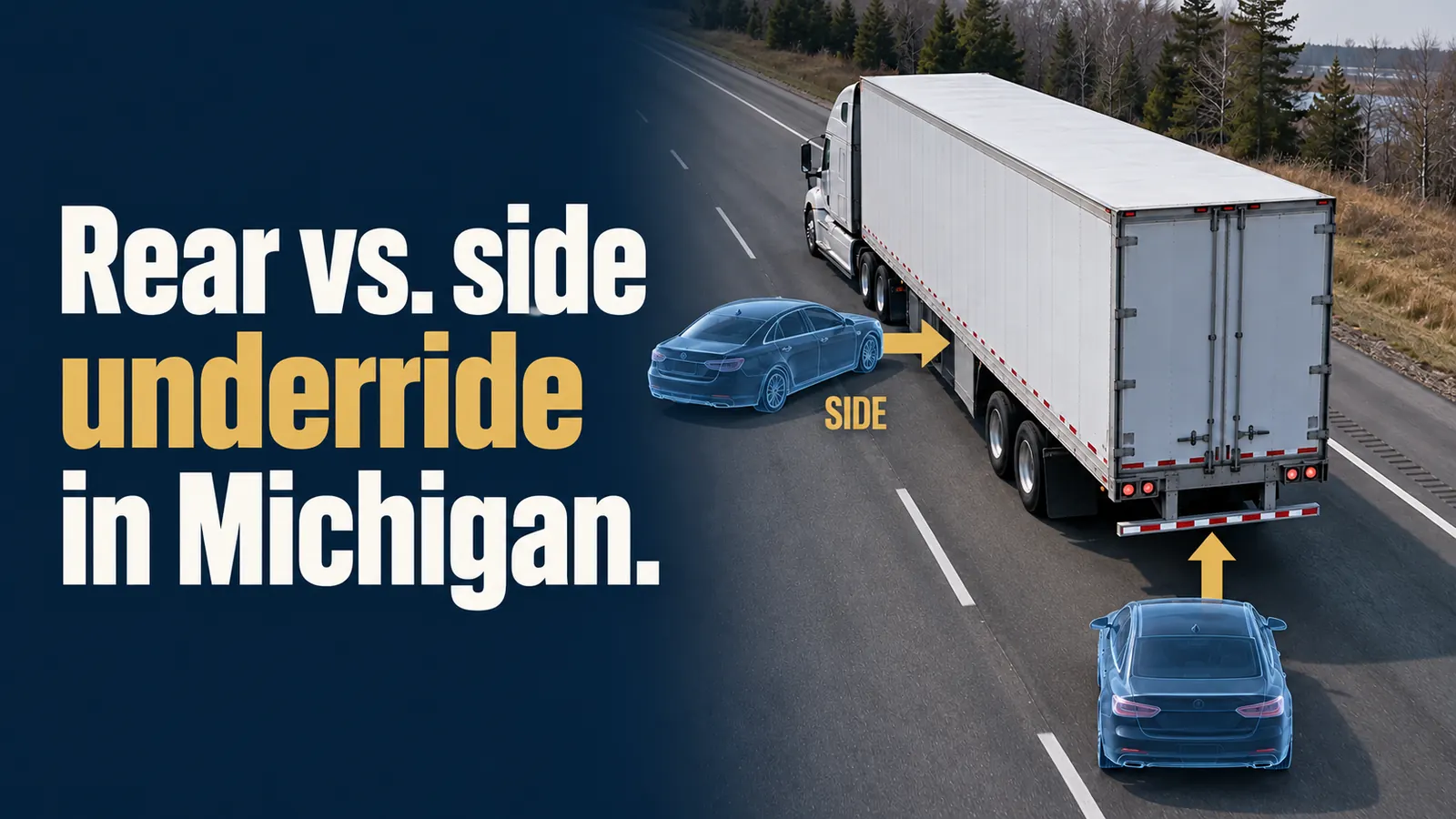
When a car slides beneath a semi-trailer, the facts of the case can change which rules and standards apply. The common distinction is between rear impacts and side impacts, which involve different equipment rules and require different kinds of evidence.
Just because a crash involved sliding beneath the trailer doesn’t prove that anyone is responsible or that there was any negligence involved.
Did the car strike the back or the side of the trailer?
The first point of contact is important because it can identify the type of crash and what equipment issues are relevant. The outcome of a rear impact case can depend in part on the state of the trailer’s rear guard and rear-impact protection. A side impact raises different questions about the trailer’s side structure and any equipment that may have affected the crash. Federal rear-guard rules don’t apply to every case.
A crash report and photographs of the scene may be important evidence to show how the car went under the trailer but may not, by themselves, show whether equipment failed.
Do the same underride-guard rules apply to every trailer?
No. Each trailer could have different requirements for the underride guard depending on the type of trailer, the laws in effect at the time and other info such as the trailer’s type, weight rating, build date and applicable exceptions.
For example, 49 C.F.R. § 393.86(a)(1) covers certain trailers and semitrailers with a gross vehicle weight rating of 10,000 pounds or more, manufactured on or after January 26, 1998. The rear guard must meet Federal Motor Vehicle Safety Standard (FMVSS) No. 223, and the trailer with the guard installed must meet the standards of FMVSS No. 224. There are exceptions based on the trailer’s exact configuration.
In an April 2025 notice, the National Highway Traffic Safety Administration denied a petition to open a defect investigation into van-type semitrailers without side guards, explaining that the agency considered the issue better addressed through related rulemaking. That decision didn’t determine whether a particular trailer’s condition caused or worsened injuries in a particular crash. The absence of a side guard alone does not establish a violation of a federal side-guard safety standard.
What trailer and guard details can investigators check?
Trailer identification and build information can help identify which requirements to examine. Depending on what is available, useful details may include the trailer’s make, model, weight rating, configuration and manufacture date, along with the guard’s identity, condition, installation and repair history. Investigators may compare those facts with the crash damage, contact point, impact angle and available visibility, lighting, roadway and vehicle-position evidence.
For your safety, preserve any crash photos and trailer identifiers already available to you. Don’t approach or inspect the trailer or enter private property to get them. For broader truck-crash records and preservation steps, see the Michigan truck evidence-preservation guide.
When can guard evidence matter to a claim?
Guard evidence may help evaluate whether a specific equipment condition or design caused or worsened the injuries. The answer depends on the actual trailer and guard, the applicable rule, the collision evidence and causation. An underride crash alone does not establish that a guard was defective or that a manufacturer, carrier or other party is legally responsible.
For broader questions about potential parties and claims, see the Michigan semi-truck claims guide.
Overlooking a trailer’s build information or guard condition can leave a possible equipment issue unexamined. Michigan Legal Center can help you identify the trailer and guard facts that may matter to your claim.