$5.2M
Teacher rear-ended by a city work van
A teacher suffered brain and spinal injuries when a Detroit city van hit his stopped car. The City offered $25,000 before trial; a Wayne County jury awarded $5.2 million.

Grand Rapids office · Serving West Michigan
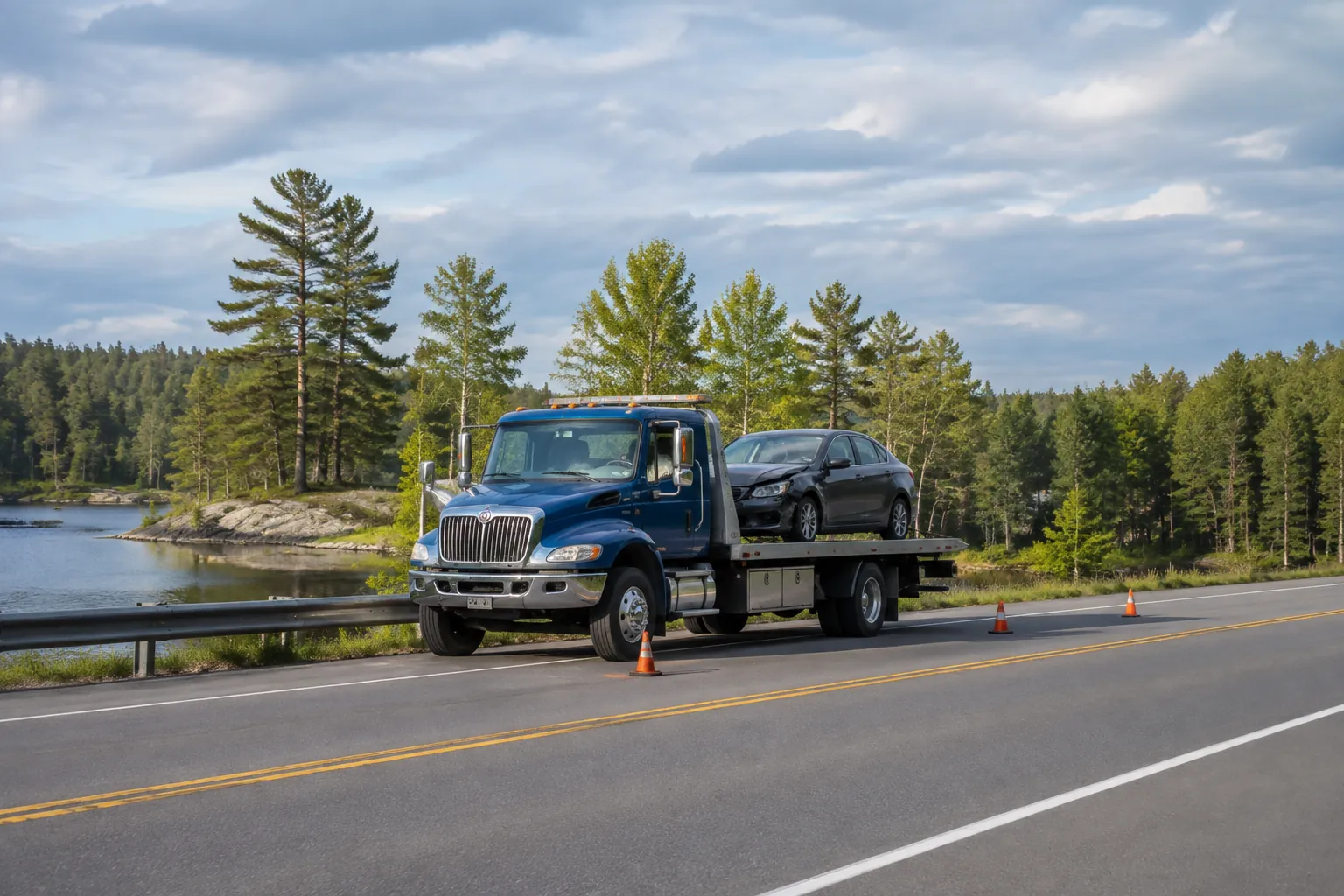
Hurt in a tow-truck incident? Get help with roadside evidence, towing equipment, company records, and insurance questions. Start with a free review of what happened in Grand Rapids.
Start with what you know: when and where it happened, how you were affected, and any reports or messages you have. You do not need a complete file before contacting us. We can explain what else may matter, which records to look for, and whether we can help.
Call about a Grand Rapids matter when a tow truck, wrecker, recovery operation, roadside scene, loaded vehicle, flatbed, wheel lift, boom, winch, cable, chain, hook, or securement event caused medical care, work loss, serious injury, or death. The first Grand Rapids review identifies the requester and dispatch, tow purpose, operator and employer, truck and loaded-vehicle owners, equipment and maintenance actors, roadside setup, public or private role, work benefits, PIP, liability, and every policy. The Michigan tow truck accident guide explains the statewide law and how it may apply to your situation.
Tow scenes and equipment change quickly. Trucks and loaded vehicles move, cables and securement are reset, private video may overwrite, and dispatch, GPS, inspection, maintenance, custody, bodycam, or contract records remain with different holders.
Read the legal detailsIt costs nothing to learn where you stand. Call (616) 591-3700 or start a free case review.
The cases. The work.
The difference it made.
$5.2M
A teacher suffered brain and spinal injuries when a Detroit city van hit his stopped car. The City offered $25,000 before trial; a Wayne County jury awarded $5.2 million.
$1.2M
The client sustained injuries to the back, neck and head in a commercial truck accident.
$550K
Keep copies of what you already have. The local records map below explains who may hold additional evidence and what we still need to confirm.
Photograph the vehicles, positions, warnings, and equipment from a safe location. Do not enter traffic or approach tensioned equipment.
Request and dispatch records may identify the participants, timing, and later movement of the vehicles. A police request or company logo alone does not establish responsibility.
Public agencies, towing companies, property owners, and equipment providers may hold separate records. A request to one holder does not preserve the others’ records.
Grand Rapids Police and city FOIA, Kent County, MSP, MDOT, and the precise road or property authority may maintain separate files. A public-record request does not preserve private video, company or vehicle data, or medical records held elsewhere.
| Evidence | Possible holder | Why it may matter |
|---|---|---|
| Call ticket, dispatch, request source, CAD, bodycam, GPS, telematics, route, arrival, customer, rotation, contract, and communication records | the city storage system when applicable, contract or private tower, dispatcher, driver, truck and loaded-vehicle owners, equipment and maintenance actors, repair or salvage facilities, and insurers | The Grand Rapids request and dispatch history may identify participants and clocks, but police direction, a contract, a rotation, or a brand does not by itself establish agency, control, fault, or insurance. |
| Truck, loaded vehicle, bed, wheel lift, boom, winch, cable, chain, hook, securement, warning-device, inspection, maintenance, and repair evidence | The operator, towing company, truck and disabled-vehicle owners, maintenance or equipment companies, repair or storage facilities, manufacturers, insurers, and retained technical experts | Condition and use must be documented before repair or movement where possible. A shift, break, or malfunction does not alone prove negligent operation, maintenance, securement, or product defect. |
| Scene photographs, positions, marks, warnings, lighting, traffic control, witnesses, public and private video, and later vehicle movement | Grand Rapids Police and city FOIA, Kent County, MSP, MDOT, and the precise road or property authority may maintain separate files. Potential private sources include downtown buildings, parking ramps, hospital campuses, event venues, storefronts, employers, dispatch systems, fleet cameras, dashcams, and involved vehicles. | Roadside positioning and the movement of both vehicles can explain a strike, loading event, separation, or secondary collision in Grand Rapids without assuming any camera or record exists. |
| Medical, wage, PIP, commercial auto, workers compensation, third-party, product, premises, government, and wrongful-death records | Corewell Butterworth, Trinity Health Grand Rapids, EMS, imaging and specialist groups, rehabilitation providers, employers, vocational professionals, family members, and benefit files; employers, insurers, benefit administrators, property actors, equipment companies, and public bodies when supported | A tow operator may have a work-benefit file and a separate supported claim against a non-employer. Every path has different parties, proof, coverage, and timing. |
The exact scene helps identify where to look for reports, video, witnesses, and other records.
Grand Rapids identifies a city vehicle-storage facility served by a contract wrecker, but that system matters only if it handled the vehicle; freeway, private-property, insurer, and owner-directed calls may follow different records. Grand Rapids publishes both a city FOIA channel and information about its vehicle-storage facility and contract-wrecker system. The storage record can help trace custody only when that system handled the vehicle; a freeway recovery, insurer dispatch, or private-property tow requires a different request and proof path.
A towing matter in Grand Rapids must identify the request, operation, people, vehicles, equipment, and custody path. In West Michigan, a logo, police request, rotation position, warning light, or equipment movement does not establish ownership, agency, breach, defect, or causation. Kent County's 17th Circuit Court, Grand Rapids' 61st District Court, and the U.S. District Court for the Western District of Michigan may be involved depending on the claim.
The correct venue, forum, and parties must be verified. The broader service area includes Grand Rapids, Wyoming, Kentwood, Walker, Grandville, Holland, Muskegon, Rockford, and Lowell.
Grand Rapids identifies a city vehicle-storage facility served by a contract wrecker, but that system matters only if it handled the vehicle; freeway, private-property, insurer, and owner-directed calls may follow different records. The Grand Rapids call ticket, requester, dispatch clock, trip purpose, operator, truck, loaded vehicle, and custody path should be confirmed before assuming who controlled the work.
Document the bed or lift, boom, winch, cable, chain, hook, securement, warning setup, truck and loaded-vehicle condition, positions, witnesses, and video. Potential custodians include the city storage system when applicable, contract or private tower, dispatcher, driver, truck and loaded-vehicle owners, equipment and maintenance actors, repair or salvage facilities, and insurers.
A motorist's PIP and liability paths, a tow operator's work benefits, a supported non-employer claim, commercial insurance, product or premises issues, and a public-entity claim each require their own facts, parties, coverage, and timing.
These are possible legal paths, not automatic claims. The answer depends on the event, defendant, policy, injuries, forum, and current law.
The requesting party, dispatch, operator, employer, towing company, truck and loaded-vehicle owners, actual control, commercial coverage, and causation should be identified rather than inferred from a logo or scene presence.
Vehicle positions, warnings, visibility, bed or lift, boom, winch, cable, chain, hook, securement, maintenance, and technical proof can answer different questions without making a movement or malfunction conclusive.
PIP and motor-vehicle liability, a tow operator’s work benefits, a supported non-employer claim, product or premises issues, and a government claim use different parties, notices, defenses, insurance, and forums.
Answer five short questions to organize the timing, harm, possible claims, evidence risk, and current status. There is no sign-up and no dollar estimate. Your answers are included only if you submit the free case review below. The result is general information, not legal advice.
Question 1 of 5
The rules below explain how a claim may work. The deadlines, available insurance and responsibility for an injury still depend on the facts of your case.
MCL 257.79c defines a wrecker, while MCL 257.698 and MCL 257.716 address warning lights and certain heavy recovery operations. The actual truck, load, equipment, road, permit, conduct, and causal role still require proof.
MCL 257.676c distinguishes law-enforcement or motorist requests from prohibited scene solicitation. A police request, rotation, permit, or contract does not automatically make a private tower a government actor or establish liability.
An operator injured in the course of work may have a workers compensation issue. Except for a person covered under MCL 500.3114(1), MCL 500.3115 directs a non-occupant PIP claim to the Assigned Claims Plan. MCL 418.827 addresses a possible third-party path, but employment, compensability, non-employer fault, insurance, and reimbursement require separate proof.
Record the precise place, date and time, people and vehicles, movements or operation, responders, report identifiers, witnesses, cameras, physical evidence, post-event handling, first care, and insurer contacts.
Send targeted requests to the specific agencies, properties, businesses, employers, carriers, platforms, vehicle or equipment custodians, providers, and insurers supported by the facts. A request to one holder does not preserve records held by another.
A logo, police request, rotation, contract, warning light, shifted vehicle, or equipment failure does not by itself establish ownership, agency, negligent operation, negligent maintenance, product defect, insurance, or causation.
Apply the correct Michigan and conditional federal rules to the verified Grand Rapids facts, parties, work or vehicle relationships, policies, medical proof, liens, functional effects, and claim-specific timing before any release.
In their own words. Read what clients and families say about working with our team.
We have not gone to trial yet, but for the past 2 years I wouldn't choose anyone else to stand behind me and my child. If you want injury lawyers and team members who actually care, CHOOSE Christopher Trainor.
Dealing with insurance companies and medical billing is always a pain in the but and didn’t want anyone taking advantage of me and my situation. This team is number 1 in my book.
I recently had the pleasure of working with Chris Trainor, Amy DeRouin and their dedicated team regarding two personal claims. I cannot recommend them highly enough! From our very first consultation, it was clear that I was in capable and caring hands. I would trust them with any personal legal matter.
Send the basics. We will check the facts, coverage, deadlines, evidence, and whether hiring us makes sense. No obligation.
Serving Grand Rapids, Wyoming, Kentwood, Walker, Grandville, Holland, Muskegon, Rockford, and Lowell.
Call before visiting so the team can confirm the right meeting location and time.
Every case at Christopher Trainor & Associates is a team effort. Our attorneys collaborate on strategy, discovery, and litigation so you get the full strength of the firm behind you—not just a single lawyer. We have built our practice on this collaborative model since 1989.
Meet Our Attorneys