
Lawmakers call for MDOC director to resign following multiple deaths at women’s prison
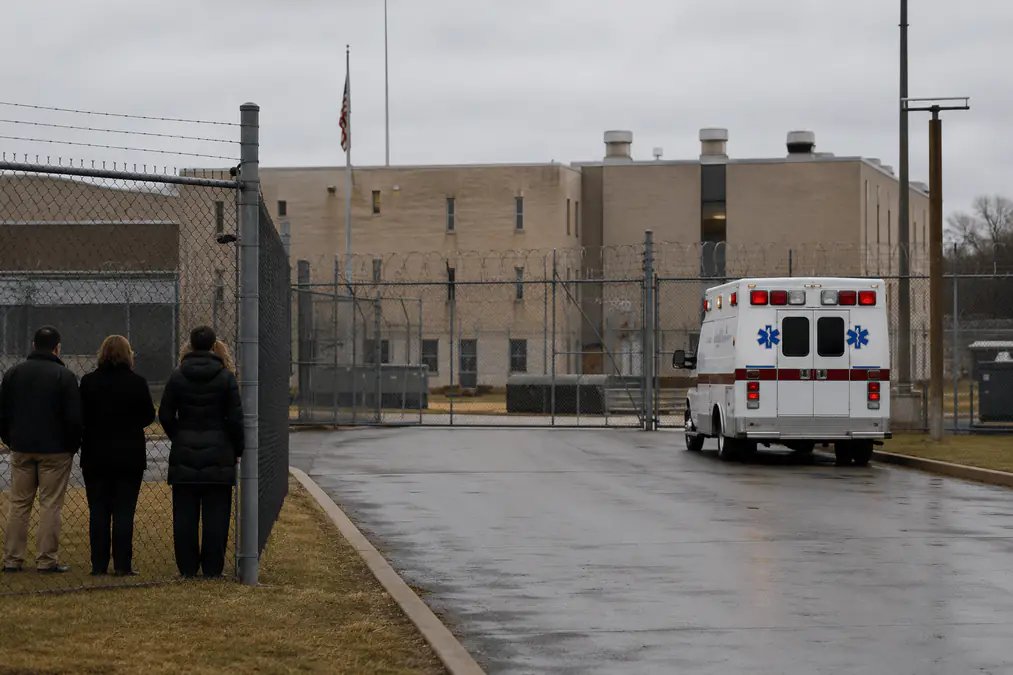
In the span of 25 days, three women incarcerated at Women’s Huron Valley Correctional Facility have died, now activists and lawmakers are speaking out.
Ashley Hoath, 36, died Saturday, June 6, at Trinity Health Hospital after being transferred from the prison’s health care unit, according to the Michigan Department of Corrections (MDOC).
Less than a month earlier, two other inmates of the same prison died. Rebecca Fackler, 57, died on May 17 and Khaira Howard, 28, died on May 13, just days before she was supposed to be released.
Women’s Huron Valley Correctional Facility is currently the only prison in Michigan capable of housing female prison inmates.
The prison is facing scrutiny of medical care, facility conditions and leadership, including calls from Michigan lawmakers for the MDOC director to resign and for Michigan Governor Gretchen Whitmer to take action at the prison.
According to department spokesperson Jenni Riehle, a corrections officer noticed that Hoath was feeling unwell on Saturday and escorted her to the medical unit in the facility. Medical staff determined that she needed more care and the inmate was transported to the hospital by ambulance.
Hoath was responsive when she left the prison but died several hours later in the hospital. Her cause of death has not been determined.
Hoath’s daughter Anala said that other prisoners told the family that Hoath had been ill for hours before she was taken for medical care. According to the family, prison staff did not take Hoath for medical care until after she collapsed.
Hoath was a Hillsdale County resident serving 25 to 40 years for a second-degree murder conviction. While in prison she earned a bachelor’s degree from Jackson College and obtained a minister’s license.
More than 30 current and former lawmakers from both parties have called for MDOC Director Heidi Washington to resign, citing what they described as longstanding failures in prison conditions, transparency and health care. State Representative Laurie Pohutsky, a Democrat from Livonia, said the recent deaths demand broader action from the department and the governor.
“The State’s response has been woefully inadequate. Legislative oversight alone is not enough. Michigan’s correctional facilities are in a crisis that demands concerted action by the Department and the attention of our Governor,” said Pohutsky in a statement on her Instagram page on Sunday.
Whitmer directed the MDOC to investigate the deaths swiftly, thoroughly and transparently, including an independent medical examiner’s review.
MDOC says that investigations into all three deaths are still ongoing and will include mortality reviews, autopsies and administrative reviews of prison procedure.
Officials said Washington and health care leadership have been regularly on-site at Huron Valley since the recent deaths and that additional clinical staff and mental health professionals have been brought in.
The Michigan State Police also have been involved in interviews and evidence collection related to the investigations.
Even before these three deaths the prison faced similar allegations about a range of issues. In February, Pohutsky testified to a Michigan House of Representatives oversight committee about the conditions at the prison and lack of medical care provided.
The House of Representatives also heard testimony from two whistleblowers who were previously employed at the prison and spoke out against the conditions they witnessed. The committee heard testimony about mold, poor ventilation and delayed medical care.
In May, after Howard died, Pohutsky called for Washington’s resignation.
Pohutsky had received communications from Howard beforehand, detailing how prisoners were being asked to clean mold without proper protective equipment and that the mold persisted despite cleaning efforts.
The department has disputed claims that dangerous mold conditions exist at the prison, though officials have said they are seeking a summary of third-party mold testing results connected to ongoing litigation.
Legal analysis
Prisons have a legal duty to provide reasonable protection, medical care and reasonable protection to inmates. When the government takes away someone’s freedom to leave or seek outside medical help, it also takes on constitutional responsibilities.
A prison may be held legally responsible for an inmate’s death if officials or medical providers failed to take legally required steps to protect the inmate, provide necessary medical care or respond to a known serious risk, and that failure caused or contributed to the death.
Ignoring serious medical symptoms, delaying emergency care and failing to protect an inmate from unsafe conditions are all things that may support a claim. Whether those facts support a legal claim depends on the evidence and the legal standard that applies.
Government immunity
In Michigan, a wrongful death lawsuit is generally brought by the personal representative of the deceased person’s estate. Family members may be beneficiaries, but they usually do not file the wrongful death case in their own names unless they have been appointed to act for the estate.
Cases against prisons, correctional officers and state employees can be legally complex because government immunity may limit state-law claims. Michigan law generally gives governmental agencies broad immunity when they are performing governmental functions, with limited statutory exceptions.
Federal civil rights claims are different. Under 42 U.S.C. § 1983, a person may sue state or local officials who violate a person’s federal rights while acting under government authority. In prison death cases, these claims often focus on whether officials were deliberately indifferent to a serious medical need, safety risk or suicide risk.
Deliberate indifference is more than ordinary negligence and usually requires proof that officials knew of a substantial risk of serious harm and failed to take reasonable steps to address it.
Types of claims
Criminal cases and civil cases are separate, the existence or lack of one does not imply the existence or lack of the other. A criminal investigation focuses on punishment for a crime. A civil case focuses on accountability and compensation for the estate and surviving beneficiaries.
Criminal investigations into prison or medical staff are rare and generally require proof of wrongdoing beyond ordinary negligence.
Depending on the facts, the estate may consider several types of civil claims after an inmate’s death depending on the facts, including wrongful death, medical malpractice, federal civil rights, failure to protect or excessive force claims.