$5.2M
Teacher rear-ended by a city work van
A teacher suffered brain and spinal injuries when a Detroit city van hit his stopped car. The City offered $25,000 before trial; a Wayne County jury awarded $5.2 million.

Flint office · Serving Genesee County
Hurt in a crash involving a dangerous road or work zone? Get help identifying who controlled the site and what evidence to preserve. Start with a free review of what happened in Flint.
Start with what you know: when and where it happened, how you were affected, and any reports or messages you have. You do not need a complete file before contacting us. We can explain what else may matter, which records to look for, and whether we can help.
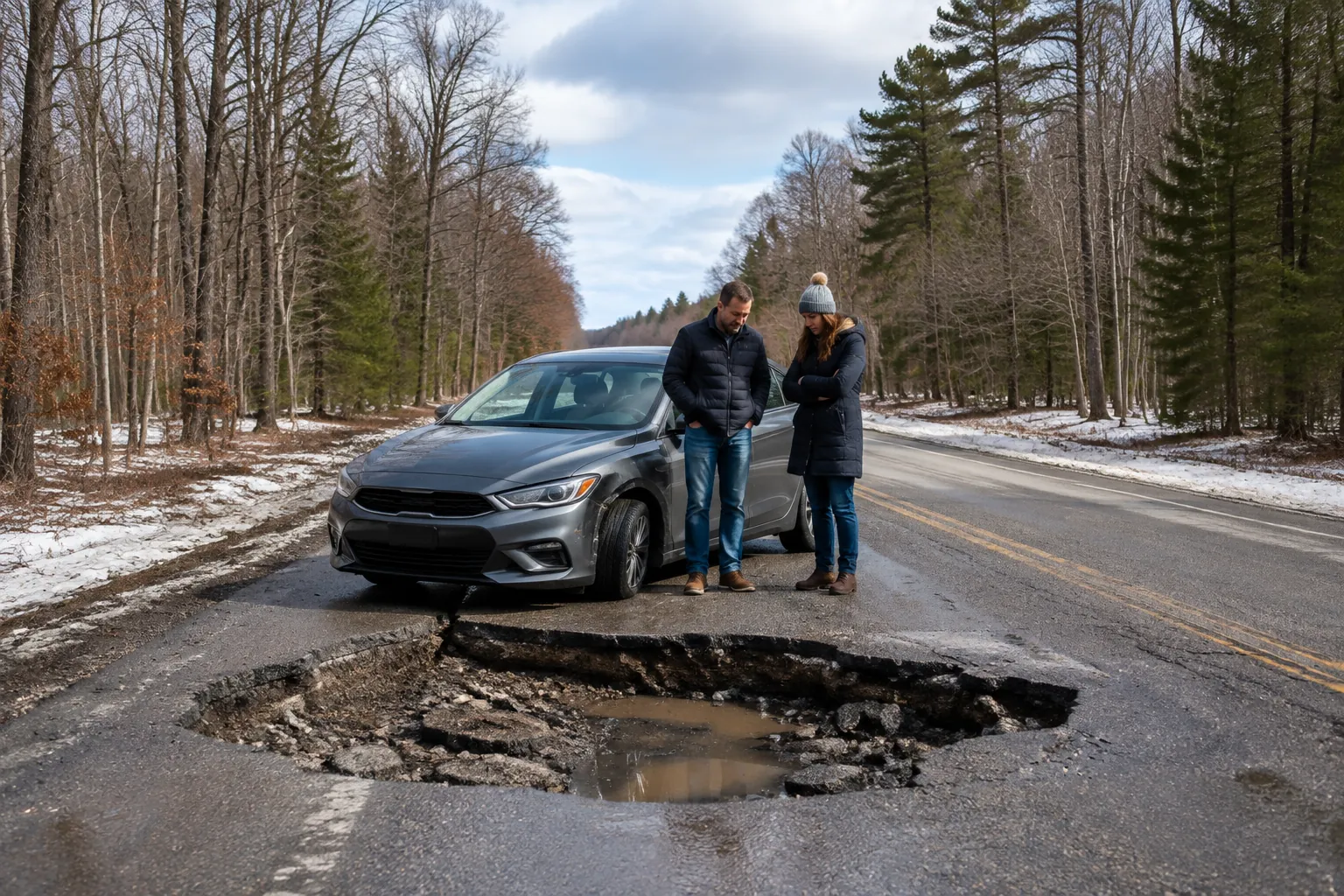
Call about a Flint matter when a pothole, shoulder, construction zone, temporary control, debris, drop-off, surface failure, sign, signal, barrier, or other road condition may have contributed to a serious crash. The first Flint review identifies the exact coordinates and crash date, jurisdiction and control, condition, project actors, traffic-control plan, complaints and inspections, actual or constructive notice, preservation, immunity, statutory notice, driver fault, and medical causation. The Michigan road defect accident guide explains the statewide law and how it may apply to your situation.
A road or work-zone condition can be repaired, paved, moved, plowed, reconfigured, or reopened; plans, permits, inspections, complaints, photographs, video, contractor data, vehicle evidence, and statutory notice may require immediate work.
Read the legal detailsIt costs nothing to learn where you stand. Call (810) 234-5678 or start a free case review.
The cases. The work.
The difference it made.
$5.2M
A teacher suffered brain and spinal injuries when a Detroit city van hit his stopped car. The City offered $25,000 before trial; a Wayne County jury awarded $5.2 million.
$520K
A dog ran into the road and struck Bobby’s motorcycle. His injuries required hip surgery; we recovered the full liability and medical-pay policy limits.
$1M
Keep copies of what you already have. The local records map below explains who may hold additional evidence and what we still need to confirm.
Photos, measurements, reports, and witnesses may help document the road or work-zone condition and the crash location.
Project, inspection, complaint, and traffic-control records may help identify who controlled the site and what was known about it.
Vehicle data, recordings, damage, and towing or repair records may help connect the condition to the crash without assuming it caused the injury.
Flint Police, city Traffic Engineering, MDOT, GCRC, MSP or sheriff records, MTA, businesses, tow and repair facilities, fleets, vehicle owners, and insurers may hold separate evidence. The file should identify exact coordinates, jurisdiction and control, condition, project and traffic-control records, complaints or inspections, notice, contractors, physical evidence, causation, and the claim-specific statutory route.
| Evidence | Possible holder | Why it may matter |
|---|---|---|
| Police, 911, dispatch, report, photographs, and witness information | Flint Police, city Traffic Engineering, MDOT, GCRC, MSP or sheriff records, MTA, businesses, tow and repair facilities, fleets, vehicle owners, and insurers may hold separate evidence. | These records can help reconstruct what happened in Flint and identify witnesses. A police report is evidence, but it does not decide civil liability. |
| Road, project, traffic-control, construction, inspection, and complaint records | Flint Traffic Engineering archives city signals, signs, markings, and work-zone closures, while MDOT or GCRC may control other segments and projects. MDOT, city or county staff, contractors, utilities, transit or campus entities, and private property operators may control different material. | Plans and project records from the crash date may show who controlled the Flint location, what work was underway, and which evidence to preserve. Those records alone do not prove negligence. |
| Vehicle, physical, digital, video, towing, and repair evidence | Video may come from MTA vehicles and facilities, downtown buildings, hospitals, schools, stores, fuel stations, residences, doorbells, dashcams, and private systems. Vehicle owners, tow yards, repair facilities, fleets, device or account providers, and insurers may hold other records. | We check whether records exist, who can preserve them, and how to obtain them lawfully. Their meaning must be assessed alongside the other crash evidence. |
| Medical, functional, employment, and household-loss proof | Hurley Medical Center, McLaren Flint, Henry Ford Genesys Hospital, and regional rehabilitation providers, follow-up providers, rehabilitation, employers, tax or wage records, and people who observed day-to-day changes | The Flint treatment and function sequence can support causation and damages, but one diagnosis, scan, symptom, or visit does not determine liability or value. |
The exact scene helps identify where to look for reports, video, witnesses, and other records.
I-75, I-69, I-475, US-23, Dort Highway, Saginaw, Miller, Corunna, Court, and active reconstruction can involve the city, MDOT, GCRC, contractors, county actors, and private property. Flint Police, city Traffic Engineering, MDOT, GCRC, MSP or sheriff records, MTA, businesses, tow and repair facilities, fleets, vehicle owners, and insurers may hold separate evidence. Flint and Genesee County cases often involve freeway crashes, industrial and commercial traffic, city or county records, civil-rights issues, and medical proof from regional trauma providers.
The service area includes Flint, Burton, Grand Blanc, Swartz Creek, Davison, Mount Morris, Flushing, Clio, and Lapeer. Hurley Medical Center, McLaren Flint, Henry Ford Genesys Hospital, and regional rehabilitation providers may document the medical sequence. Potential courts include Genesee County's 7th Circuit Court, the 67th District Court, and the U.S. District Court for the Eastern District of Michigan, but venue and forum depend on the actual parties and claim.
The file should identify exact coordinates, jurisdiction and control, condition, project and traffic-control records, complaints or inspections, notice, contractors, physical evidence, causation, and the claim-specific statutory route. Arterial speeds, freeway approaches, I-475 construction, signal queues, disabled vehicles, and lane closures can change the following and stopping analysis. Local corridors include I-75, I-69, US-23, Dort Highway, Saginaw Street, Hill Road, and Grand Blanc area corridors.
Flint Traffic Engineering archives city signals, signs, markings, and work-zone closures, while MDOT or GCRC may control other segments and projects. Potential private or transit video includes MTA vehicles and facilities, downtown buildings, hospitals, schools, stores, fuel stations, residences, doorbells, dashcams, and private systems, but a listed system is only an investigation lead and not a promise that footage exists.
A claim involving a public road, contractor, property owner, driver, or vehicle owner needs evidence of that party’s responsibility. PIP benefits and your losses also need review; the presence of a work zone does not make everyone involved liable.
The policy, PIP, driver-liability, road, contractor, vehicle-owner, employer, UM/UIM, medical-causation, and damages paths use different proof. None is automatic from the crash label, road condition, policy listing, report, citation, or impact pattern.
Jurisdiction, the improved portion designed for vehicular travel, condition, agency knowledge, statutory notice, causation, immunity, and forum require claim-specific proof.
A contractor, utility, private road or parking operator, property actor, or project participant belongs in the case only when control, conduct, contracts, condition, and causation support that path.
Another driver, vehicle owner or employer, equipment issue, No-Fault PIP, medical causation, comparative fault, and damages remain separate from any road-agency theory.
Answer five short questions to organize the timing, harm, possible claims, evidence risk, and current status. There is no sign-up and no dollar estimate. Your answers are included only if you submit the free case review below. The result is general information, not legal advice.
Question 1 of 5
The rules below explain how a claim may work. The deadlines, available insurance and responsibility for an injury still depend on the facts of your case.
MCL 691.1402 must be applied to the actual agency, jurisdiction and control, improved portion designed for vehicular travel, condition, duty, causation, and available statutory limitations. A rough or dangerous-looking location is not enough by itself.
MCL 691.1403 addresses actual or constructive knowledge, while MCL 691.1404 sets claim-specific written-notice content, timing, and service rules for highway-injury claims. State claims can also require Court of Claims analysis.
Plans, permits, contracts, temporary traffic control, actual undertakings, control, inspections, complaints, maintenance, driver conduct, causation, comparative fault, and insurance should be evaluated separately for each public or private actor.
Record the exact location, movements, impacts, road or project condition, involved vehicles and people, policy and claim contacts, responders, witnesses, cameras, tow destination, and treatment.
Target the actual insurers, agencies, road authorities, contractors, properties, vehicles, accounts, businesses, and medical providers using the correct policy, route, project, date, and time.
A claim against a public road agency needs evidence of the condition, the agency’s responsibility and knowledge, and compliance with applicable notice requirements. Highway claims can involve a 120-day notice requirement and a two-year filing period, but those are not universal deadlines. The defendant, claim, notice recipient, and applicable statutory requirements need prompt review.
Coordinate the contractual, tort, PIP, property, public/private, medical, wage, and claim-specific timing issues that the verified Flint facts actually support.
In their own words. Read what clients and families say about working with our team.
I had a rear end collision with a driver in a Ford F-150 pick up truck and I had multiple surgeries and quite a few medical bills that Ryan Ford worked with multiple providers to ensure the medical bills were paid for.
I loved everything about my experience!!! From start to finish I was always in communication with staff & any concerns or questions I had were handled adequately! Thank you so much for everything. Car accidents are scary but you all made this process so easy & fought hard for me to get paid
Christopher Trainor & Associates represented my mother in an extremely tragic car accident. The insurance company was resistant on paying out her law suit, and the team won our case! Thank you so much for your representation!!
Send the basics. We will check the facts, coverage, deadlines, evidence, and whether hiring us makes sense. No obligation.
Serving Flint, Burton, Grand Blanc, Swartz Creek, Davison, Mount Morris, Flushing, Clio, and Lapeer.
Call before visiting so the team can confirm the right meeting location and time.
Every case at Christopher Trainor & Associates is a team effort. Our attorneys collaborate on strategy, discovery, and litigation so you get the full strength of the firm behind you—not just a single lawyer. We have built our practice on this collaborative model since 1989.
Meet Our Attorneys