
Steps to Take After a Motorcycle Accident in Michigan
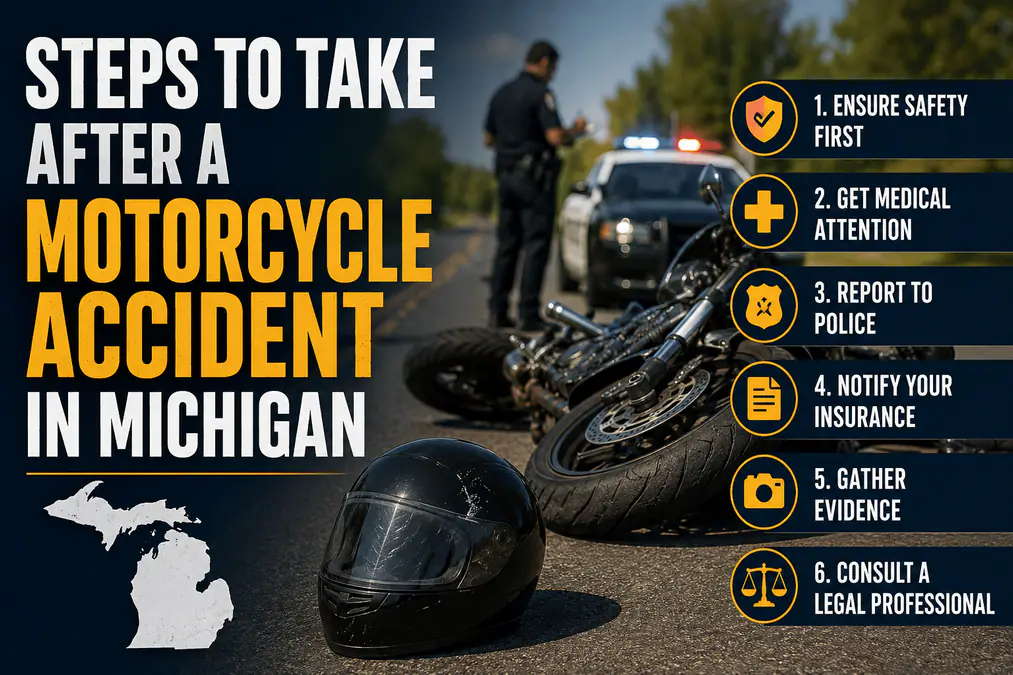
What Should I Do After a Motorcycle Accident in Michigan?
After a Michigan motorcycle accident, get to safety, call 911, and get medical care. Collect basic information, preserve the motorcycle and gear, and be careful with insurance statements or releases until the claim is reviewed.
Why it matters: Motorcycle claims in Michigan can involve different No-Fault rules compared to ordinary car-occupant claims, and evidence can disappear quickly.
Immediate Steps After a Motorcycle Crash
If you are trying to figure out what to do after a motorcycle accident, start with safety and medical care before paperwork.
- Get to safety and call 911.
- While you wait for emergency services to arrive, take photographs of the vehicles and scene, if you can.
- Report the crash when required. Michigan law requires reporting when a motor vehicle accident injures or kills someone, or when apparent property damage totals $1,000 or more. See MCL 257.622 and the Michigan State Police Traffic Crash Reporting FAQ.
- Exchange basic information. Michigan law requires drivers involved in certain crashes to provide identifying, registration, owner, and license information and to render reasonable assistance in securing medical aid. See MCL 257.619.
- Get medical evaluation. Adrenaline can hide injuries after a motorcycle crash. Follow up if pain, dizziness, numbness, confusion, or new symptoms appear.
- Get the report number. Ask which agency is investigating and how to obtain the police report later.
- Avoid blame statements. Give necessary facts to police and medical providers, but avoid guessing about speed, fault, injuries, or coverage.
The same checklist applies after what looks like a minor motorcycle accident. A low-speed crash can still involve hidden injuries, expensive bike damage, and insurance issues that are not obvious at the scene.
Medical and Documentation Steps
Medical documentation is part of the motorcycle accident injury claim. Tell providers the crash involved a motorcycle and describe every symptom, even if one injury seems worse than the others.
Keep copies of:
- Emergency room, urgent care, primary care, specialist, therapy, and imaging records.
- Discharge instructions and work restrictions.
- Medical bills, prescription receipts, mileage, and out-of-pocket costs.
- Missed work dates, reduced hours, and employer communications.
- Photos of bruising, road rash, swelling, scars, casts, braces, or surgical sites.
This documentation helps connect the crash to the injury and helps attorneys evaluate the claim without relying only on memory.
Evidence to Save
Evidence can be lost during towing, repairs, cleanup, or insurance handling. If possible, preserve the motorcycle and damaged gear until legal review.
Save:
- The motorcycle, before repairs, teardown, sale, or salvage.
- Helmet, jacket, pants, gloves, boots, eyewear, and other damaged gear.
- Photos of all sides of the motorcycle and every involved vehicle.
- Dashcam, helmet-camera, doorbell-camera, business-camera, or traffic-camera leads.
- Witness names, phone numbers, and messages.
- Police report number, tow-yard information, and repair estimates.
- Insurance cards, declarations pages, claim numbers, letters, emails, and app messages.
- Photos of potholes, gravel, oil, construction conditions, road debris, or missing signs.
If a car, truck, rideshare vehicle, commercial vehicle, hit-and-run driver, uninsured driver, or road hazard may be involved, early preservation matters even more.
Insurance Steps After a Michigan Motorcycle Accident
Filing an insurance claim after a motorcycle accident starts simply: report the crash, give truthful basic facts, keep claim numbers, save written communications, and get help before any recorded statement or release.
Michigan motorcycle insurance and No-Fault rules are different from ordinary car-occupant claims. Motorcycle owners generally carry liability security, and motorcycle insurers must offer optional first-party medical benefits in $5,000 increments. See MCL 500.3103.
If a motorcycle crash involves a motor vehicle, a separate No-Fault priority analysis may apply. MCL 500.3114 addresses motorcycle operator and passenger priority when the accident shows evidence of motor vehicle involvement, and the Michigan DIFS No-Fault FAQ explains that motorcycle PIP can depend on policy choices and available coverage. That does not mean every motorcycle crash qualifies for PIP benefits.
For a more detailed explanation of Michigan motorcycle accident coverage, read Michigan Motorcycle Accident Claims and No-Fault Benefits or start with Michigan Legal Center's motorcycle accident practice page. This article keeps the focus on first steps, evidence, and claim protection.
Speak to an Attorney Before Saying or Signing Anything
Early insurance conversations can narrow a motorcycle accident insurance claim before the full facts are known.
Be cautious with:
- Recorded statements before you understand which insurer is asking and why.
- Statements that you are "fine" before symptoms have been medically checked.
- Guessing about speed, distance, lane position, visibility, or fault.
- Signing a medical authorization that is broader than necessary.
- Signing a property-damage release that may also affect injury claims.
- Letting the motorcycle, helmet, or gear be destroyed before photos and inspection.
- Posting crash details, injury updates, or blame arguments on social media.
You can cooperate with necessary claim reporting without speculating or signing away rights too quickly.
When Should You Contact a Motorcycle Accident Lawyer?
You should consider legal review soon after a Michigan motorcycle crash. An attorney is especially important if anyone was injured, the motorcycle was badly damaged, the other driver left the scene, the other driver was uninsured, a commercial or rideshare vehicle was involved, a road hazard may have contributed, or an insurer asks for a recorded statement or release.
A motorcycle accident lawyer in Michigan can help:
- Identify possible insurers and coverage paths.
- Submit notice(s) where needed.
- Preserve the motorcycle, gear, video, and vehicle evidence.
- Review police reports, medical records, and insurance letters.
- Evaluate a motorcycle accident claim before settlement papers are signed.
Deadline language should be handled carefully. Where PIP benefits apply, MCL 500.3145 includes a one-year notice/action framework and limits on recovery of older losses. For many Michigan injury and property-damage actions, MCL 600.5805 provides a general three-year period, but exceptions, shorter notice rules, and policy deadlines can apply.