
Did a Vehicle Defect Cause Your Michigan Crash or Make Your Injuries Worse?
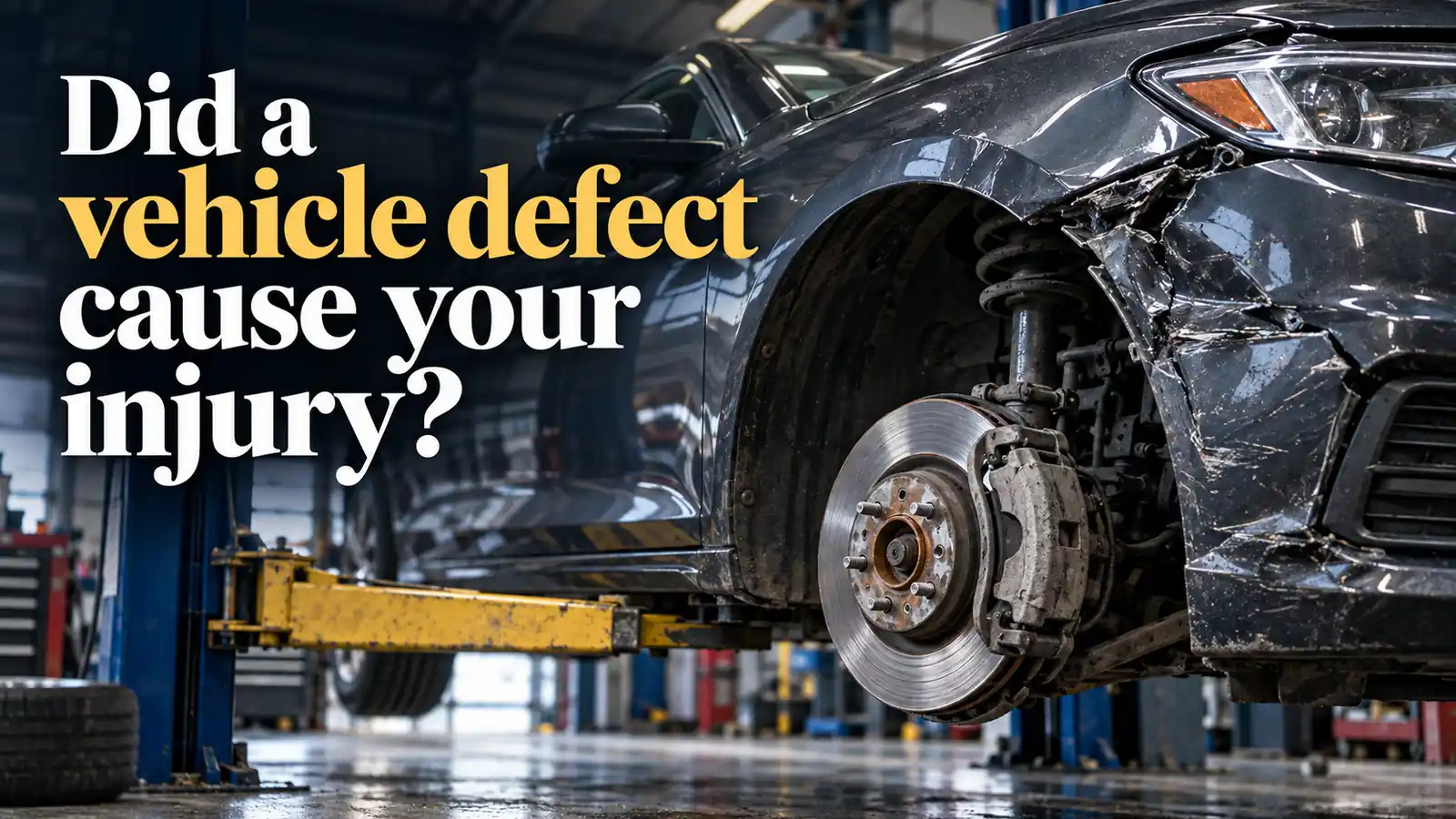
If you were injured in a crash caused or made worse by a vehicle defect, you may have an injury claim depending on the facts of the case. Another driver being partially at fault doesn’t rule out a claim against a manufacturer.
A defect can cause a crash or make the injuries worse
The specific defect might have caused the crash, caused the injury or neither, which affects how the case is handled. A brake defect could keep a driver from stopping, a seat belt defect could make the injuries worse or it could be a small defect that didn’t affect the crash at all.
Enhanced injuries refer to injuries made worse by a vehicle defect, even if the defect didn’t lead to the crash. A claim based on those injuries needs proof connecting the defect to the additional harm. The manufacturer is not automatically responsible for every injury from the crash.
What would support a vehicle-defect claim?
An investigation will try to determine what was defective, when the problem started and how it contributed to the crash. The vehicle, photographs of the crash and repair and medical records may need to be examined by a qualified expert.
A torn tire, for example, does not by itself show that a defect caused the driver to lose control, since the tire damage could have come from the crash or already been there.
For a production-defect claim, Michigan law requires proof that the product wasn’t reasonably safe when it left the manufacturer or seller. It also has to be shown that a safe alternative production method was available and technically and economically feasible at the time.
An air bag is not considered defective just because it didn’t deploy. The National Highway Traffic Safety Administration (NHTSA) says air bags are not designed to deploy in every crash. Deployment depends on the impact, sensors and system design. An expert may be needed to determine if it should have deployed or not.
A recall notice can help an investigation, but it does not prove that the recalled problem caused your injuries. Check your vehicle identification number (VIN) through NHTSA's recall search.
Michigan sets a deadline of three years to file a product liability lawsuit. Ask your attorney to determine when that period began and whether an exception affects your deadline. Evidence may need to be preserved much sooner.
Who could be responsible besides the other driver?
If a crash was caused by a defect, it could lead to a product liability claim against the vehicle or part manufacturer. Under Michigan law this includes component parts. Which company is responsible depends on the defect and the evidence connecting it to your injury.
Dealerships and other sellers that did not manufacture the product have different legal requirements. Simply selling the vehicle or part does not make them responsible.
A claim may involve the seller's failure to use reasonable care, including breach of an implied warranty, which is imposed by law even without an express promise from the seller. A separate basis is a product's failure to meet an express warranty the seller made. Either failure must be a legal cause of the injury.
Prior repairs and replacement parts can also matter to a claim if records show they affected the crash or injuries. A recent repair alone does not establish that the repair shop caused the problem.
Michigan personal injury protection (PIP) benefits are a separate question. PIP applies without regard to fault, subject to eligibility and coverage requirements. See Michigan Legal Center’s guide to who pays medical bills after a Michigan crash for that benefits question.
What should happen before the vehicle is repaired or scrapped?
Get needed medical care first. Keep the photographs, repair invoices and recall notices you already have. Tell your attorney where the vehicle is stored, who has it and whether repairs or disposal are scheduled.
Repairs or disposal can remove evidence that may need to be examined. Your attorney can coordinate with the vehicle's holder and qualified experts about preserving and inspecting it. Do not dismantle parts or try to learn the cause of the failure yourself.
Do not drive an unsafe vehicle or delay urgent safety measures to preserve evidence. Follow NHTSA’s recall safety instructions. NHTSA also says deployed air bags must be replaced before driving again. Tell your attorney about required repairs so safety and preservation can be addressed together.
If you were injured and suspect a vehicle defect, contact The Michigan Legal Center. Michigan Legal Center attorneys can help preserve the vehicle, arrange expert inspection and assess whether the evidence supports a claim against a manufacturer or another responsible party.