$1.2M
Serious injuries in a commercial truck crash
The client sustained injuries to the back, neck and head in a commercial truck accident.

Marquette office · Serving the Upper Peninsula
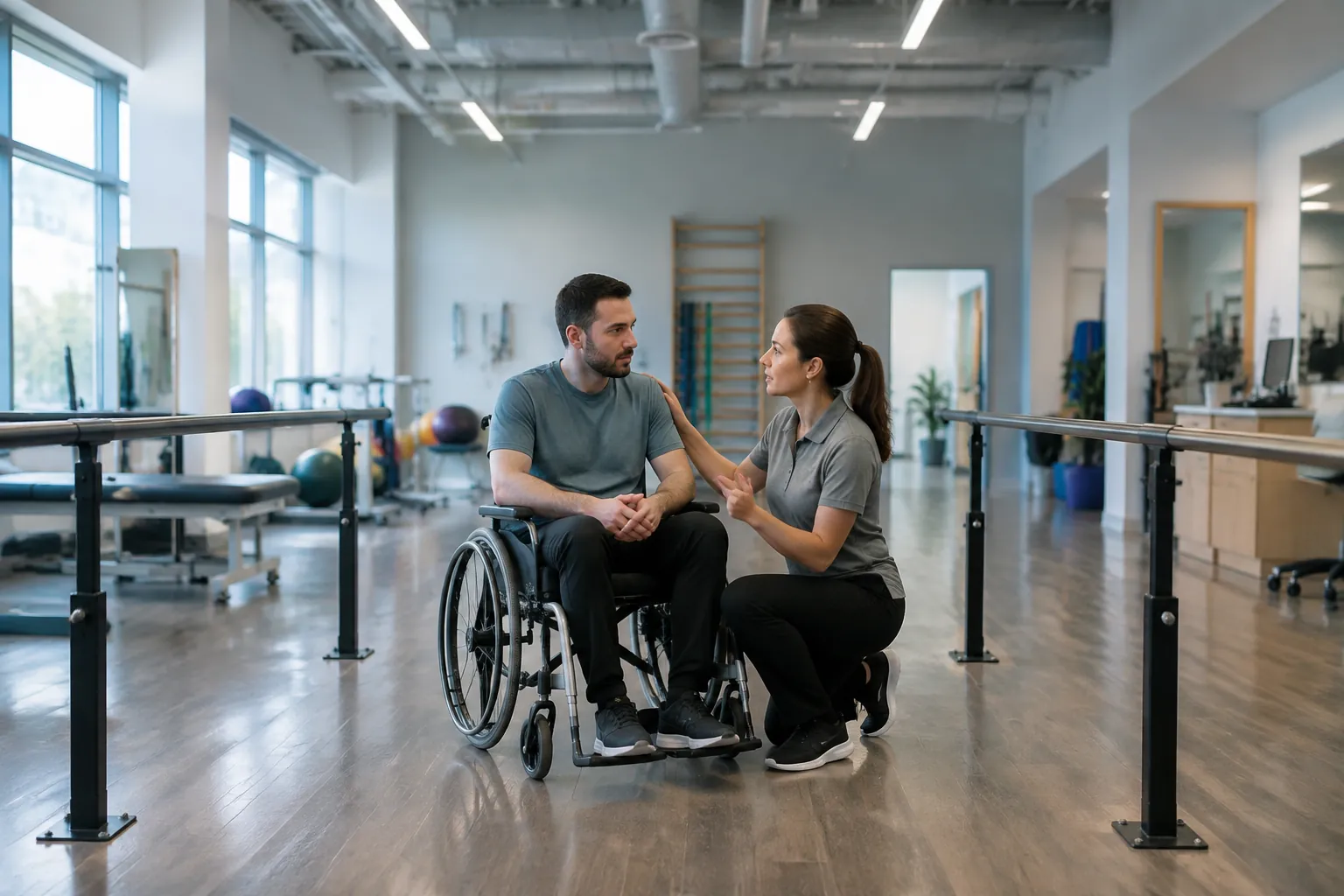
Facing life changes after a spinal cord injury? Get help organizing care records, work losses, and a possible injury claim. Start with a free review of what happened in Marquette.
Start with what you know: when and where it happened, how you were affected, and any reports or messages you have. You do not need a complete file before contacting us. We can explain what else may matter, which records to look for, and whether we can help.
Call about a Marquette matter when an accident or other incident caused a diagnosed or suspected spinal-cord injury, loss of movement or sensation, neurological dysfunction, significant rehabilitation, work loss, care needs, or a dispute about causation and coverage. The first Marquette review identifies the underlying incident and defendants, acute and prior medical records, imaging and neurological findings, rehabilitation, functional change, PIP or work benefits, liability and UM/UIM coverage, liens, future-needs proof, and claim-specific timing. The Michigan spinal cord injury guide explains the statewide law and how it may apply to your situation.
The incident file, imaging, neurological examinations, surgery, rehabilitation, prior records, work proof, daily-function evidence, benefit files, and future-needs assessments may be held in different systems. A diagnosis label alone does not prove fault, causation, permanency, care, or value.
Read the legal detailsIt costs nothing to learn where you stand. Call (800) 961-8477 or start a free case review.
The cases. The work.
The difference it made.
$1.2M
The client sustained injuries to the back, neck and head in a commercial truck accident.
$600K
A truck hit the side of our client’s car. The injuries included a cervical herniated disc and lumbar spine damage requiring surgery.
$220K
The crash left Eva with neck and back injuries that worsened over time, required surgery and disrupted her ability to work. We secured a $220,000 settlement.
The underlying incident, clinical diagnosis, medical causation, rehabilitation, changed function, insurance, benefits, liens, and future needs are separate proof questions. Gather them in one chronology without treating the injury label as proof of fault or prognosis.
The injury label does not establish fault. Preserve the crash, property, product, workplace, public-record, witness, video, physical, and insurance evidence needed to identify the event, legal duty, responsible parties, and alternative causes.
Gather the pre-injury baseline, EMS and emergency examinations, imaging, neurological findings, surgery, specialists, rehabilitation, therapy, complications, referrals, and treating opinions. A qualified clinician must diagnose and classify the injury.
Record mobility, strength, sensation, daily tasks, work or school, household services, attendant care, equipment, transportation, home changes, and caregiver observations. Future needs and costs require individual medical, vocational, and economic support.
Marquette Police and city FOIA, Marquette County, MSP, MDOT, NMU, and the exact road authority may possess different evidence. A public-record request does not preserve private video, company or vehicle data, or medical records held elsewhere.
| Evidence | Possible holder | Why it may matter |
|---|---|---|
| Incident, scene, vehicle, property, product, workplace, public-record, witness, video, and physical evidence | Marquette Police and city FOIA, Marquette County, MSP, MDOT, NMU, and the exact road authority may possess different evidence. Private sources may include NMU facilities, US-41 businesses, hospitals, industrial properties, employers, winter-service vehicles, fleet cameras, dashcams, repair facilities, and insurers. | Marquette spinal-cord claims first need proof of the underlying event, legal duty, defendants, and forces or exposure rather than relying on the injury label to establish liability. |
| EMS, emergency, imaging, neurological examinations, surgery, hospital, specialist, pharmacy, rehabilitation, therapy, and complication records | UP Health System-Marquette, UP Health System-Bell, EMS and transport providers, imaging and specialists, rehabilitation or out-of-region providers, employers, caregivers, and benefit administrators | The complete chronology can distinguish the cord injury from vertebral, disc, nerve-root, soft-tissue, and prior conditions. Only qualified clinicians diagnose and classify the individual injury. |
| Pre-injury baseline, mobility, sensation, strength, daily function, household services, attendant care, equipment, home or vehicle modification, education, and work evidence | Prior and current providers, the injured person, family or caregivers, employers, schools, rehabilitation teams, vendors, vocational professionals, and qualified experts | Before-and-after proof can document individual function and support needs without assuming paralysis, permanency, a life-care plan, future cost, or inability to work. |
| PIP, liability, UM/UIM, health, disability, work benefits, liens, reimbursement, wage, earning-capacity, expense, and future-needs files | Auto and liability insurers, health or disability plans, workers compensation actors, employers, government benefit programs, providers, lienholders, economists, vocational experts, and life-care planners when retained | The incident determines which benefit and liability tracks apply. Coverage, reasonable and necessary care, causation, threshold, future needs, liens, and damages require separate case-specific proof. |
The exact scene helps identify where to look for reports, video, witnesses, and other records.
UP Health System-Marquette or Bell may document early care; transport, out-of-region specialty treatment, rehabilitation, work, accessibility, and family-support proof must follow the actual patient rather than an assumption about local capability. Marquette publishes a city FOIA process and the county maintains a separate circuit-court system. On US-41, M-28, an NMU property, or a remote county route, the controlling agency may instead be MSP, MDOT, NMU, or another road authority, so exact coordinates and the response chain determine which winter, dispatch, scene, and transfer records to seek.
A spinal-cord claim in Marquette cannot treat cord injury as interchangeable with back pain, a disc condition, fracture, radiculopathy, or paralysis. For a claim in the Upper Peninsula, diagnosis, neurological classification, causation, prognosis, future care, and cost require individual clinical and expert support. Marquette County's 25th Circuit Court and 96th District Court, Delta County's 47th Circuit Court, and other U.P. courts may be involved.
The correct venue, forum, and parties must be verified. The broader service area includes Marquette, Ishpeming, Negaunee, Gwinn, Munising, Escanaba, Iron Mountain, Houghton, and Sault Ste. Marie.
UP Health System-Marquette or Bell may document early care; transport, out-of-region specialty treatment, rehabilitation, work, accessibility, and family-support proof must follow the actual patient rather than an assumption about local capability. For the Marquette record, compare acute findings with prior health, later neurological examinations, rehabilitation, complications, treatment gaps, and changed function with guidance from the treating clinicians.
Mobility, strength, sensation, daily tasks, work, school, household services, attendant care, equipment, transportation, home changes, and caregiver observations may show individual effects. Likely record holders include UP Health System-Marquette, UP Health System-Bell, EMS and transport providers, imaging and specialists, rehabilitation or out-of-region providers, employers, caregivers, and benefit administrators.
A motor-vehicle event, work incident, fall, product, assault, or public-property matter may trigger different PIP, liability, work, UM/UIM, notice, benefit, lien, and forum rules across Marquette, Ishpeming, Negaunee, Gwinn, Munising, Escanaba, Iron Mountain, Houghton, and Sault Ste. Marie; SCI does not decide the legal route.
These are possible legal paths, not automatic claims. The answer depends on the event, defendant, policy, injuries, forum, and current law.
The legal duty and defendants depend on whether the cause was a motor vehicle, fall, workplace event, product, assault, public property, medical event, or another supported incident; the diagnosis does not decide fault.
Acute findings, imaging, neurological examinations, prior baseline, treatment, rehabilitation, complications, changed function, prognosis, and future needs require individual clinical and expert support.
PIP, liability, UM/UIM, health, disability, workers compensation, public benefits, wages, earning capacity, liens, attendant care, equipment, modifications, and future costs are conditional and separately documented.
Answer five short questions to organize the timing, harm, possible claims, evidence risk, and current status. There is no sign-up and no dollar estimate. Your answers are included only if you submit the free case review below. The result is general information, not legal advice.
Question 1 of 5
The rules below explain how a claim may work. The deadlines, available insurance and responsibility for an injury still depend on the facts of your case.
NINDS distinguishes complete and incomplete SCI and describes possible neurological effects. Individual clinical examinations and treating opinions are needed to establish the diagnosis, prognosis, and care plan.
After a covered motor-vehicle accident, MCL 500.3107 and related provisions may involve allowable expenses, wage loss, replacement services, and care subject to occupant or non-occupant priority, policy selections, fee rules, causation, reasonableness, necessity, and limits.
Motor-vehicle threshold, premises, product, work, public-entity, UM/UIM, and other paths use different duties, defendants, notices, forums, benefits, and time rules. There is no universal spinal-cord-injury claim or deadline.
Record the precise place, date and time, people and vehicles, movements or operation, responders, report identifiers, witnesses, cameras, physical evidence, post-event handling, first care, and insurer contacts.
Send targeted requests to the specific agencies, properties, businesses, employers, carriers, platforms, vehicle or equipment custodians, providers, and insurers supported by the facts. A request to one holder does not preserve records held by another.
Do not equate back pain, a disc condition, fracture, radiculopathy, paralysis, surgery, or imaging with spinal-cord injury. Clinicians address diagnosis, classification, prognosis, and care; the evidence and governing law address causation, fault, coverage, and damages.
Apply the correct Michigan and conditional federal rules to the verified Marquette facts, parties, work or vehicle relationships, policies, medical proof, liens, functional effects, and claim-specific timing before any release.
In their own words. Read what clients and families say about working with our team.
My son has a closed head injury from an accident that happened in 2007. Christopher Trainor has helped us cope with my son’s on going issues.
We have not gone to trial yet, but for the past 2 years I wouldn't choose anyone else to stand behind me and my child. If you want injury lawyers and team members who actually care, CHOOSE Christopher Trainor.
I had a rear end collision with a driver in a Ford F-150 pick up truck and I had multiple surgeries and quite a few medical bills that Ryan Ford worked with multiple providers to ensure the medical bills were paid for.
Send the basics. We will check the facts, coverage, deadlines, evidence, and whether hiring us makes sense. No obligation.
Serving Marquette, Ishpeming, Negaunee, Gwinn, Munising, Escanaba, Iron Mountain, Houghton, and Sault Ste. Marie.
Call before visiting so the team can confirm the right meeting location and time.
Every case at Christopher Trainor & Associates is a team effort. Our attorneys collaborate on strategy, discovery, and litigation so you get the full strength of the firm behind you—not just a single lawyer. We have built our practice on this collaborative model since 1989.
Meet Our Attorneys