
Saginaw Fleeing Suspect Crash Injures Two Police Officers
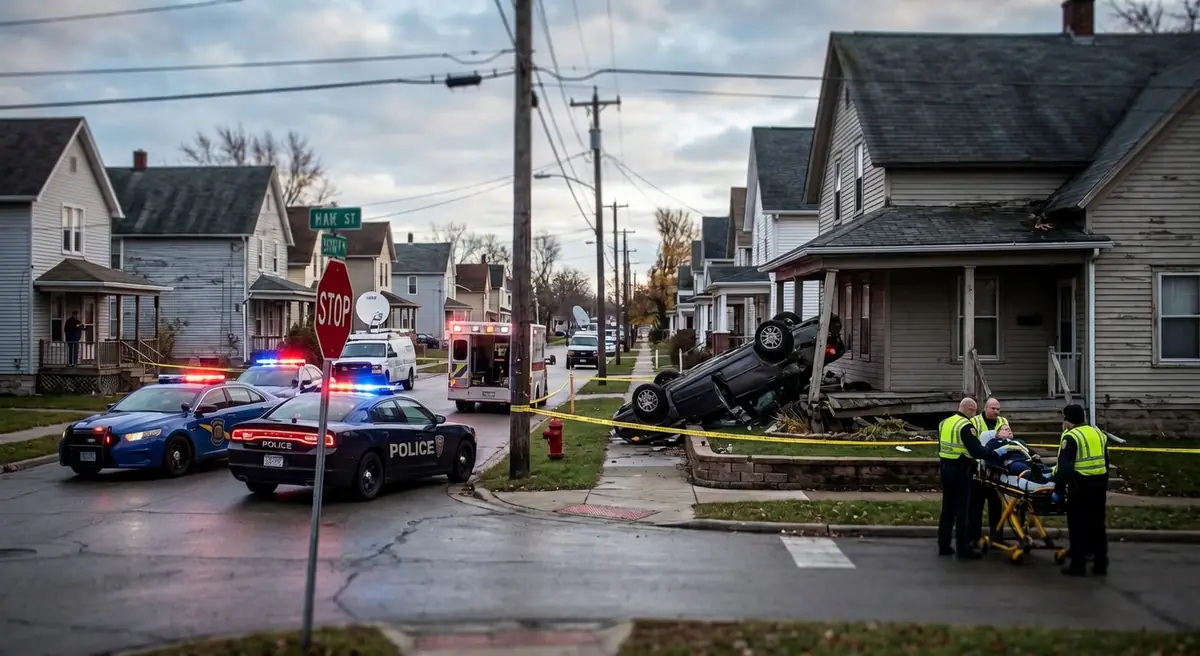
On March 29, a suspect with a suspended license fled a Saginaw traffic stop, blew through a stop sign on Cleveland Avenue, and slammed into a patrol car on North Mason Street. Both officers were hospitalized. The car rolled over and struck a house. Fleeing and eluding charges are coming. Here is what everyone affected needs to know.
Two Saginaw police officers went to work on Sunday morning and ended up in the hospital by noon.
Around 10 a.m. on March 29, a Saginaw officer pulled over a vehicle after identifying that the driver had a suspended license. Officers had also received information that the driver was armed. The stop appeared to be going smoothly. Then it was not.
The driver fled. A pursuit began through east side streets before officers terminated the chase due to unsafe speeds and erratic driving. That was the right call. The wrong call was entirely the driver's: he kept going anyway, at high speed, westbound on Cleveland Avenue, straight through a stop sign at North Mason Street, directly into a Saginaw Police patrol car.
The impact sent the suspect's vehicle rolling over. It came to rest against a house on North Mason. Both officers in the patrol car were injured. One officer and the suspect had to be cut from their vehicles by the Saginaw Fire Department. All three were transported to a local hospital.
Saginaw police confirmed that charges of fleeing and eluding will be filed against the suspect. The investigation is ongoing.
What Happened on North Mason Street
TL;DR: A driver with a suspended license fled a Saginaw traffic stop on March 29, disregarded a stop sign at Cleveland and North Mason, and crashed into a Saginaw Police patrol car. Both officers were injured and hospitalized. The suspect's vehicle rolled and struck a house. Charges of fleeing and eluding are pending.
The sequence of events, as described by the Saginaw Police Department, is important because each decision the driver made is a separate link in the chain of legal liability.
- Link 1: The driver had a suspended license and was reportedly armed. The officer had lawful grounds to initiate the stop.
- Link 2: The driver initially complied, then made the decision to flee. The moment he put the car in gear and drove away, he set everything that followed in motion.
- Link 3: Officers pursued, then terminated the chase due to dangerous conditions. This is standard protocol and demonstrates that the department acted responsibly.
- Link 4: The driver did not stop when the police disengaged. He continued fleeing at high speed, making the independent choice to keep driving recklessly after police were no longer behind him.
- Link 5: He blew through a stop sign at Cleveland and North Mason, striking a patrol car with enough force to roll his own vehicle and push it into a residential structure.
The house on North Mason was not a factor in any of this until the driver made it one. That too has legal consequences.
The police terminated the chase. The driver did not stop. That distinction matters enormously in any legal proceeding that follows.
Fleeing and Eluding in Michigan: What the Charge Actually Means
TL;DR: Michigan's fleeing and eluding statute, MCL 750.479a, carries felony exposure that escalates based on the harm caused. When a fleeing suspect injures someone, the charge upgrades. When officers are hurt, the penalties increase again.
Michigan's fleeing and eluding law, MCL 750.479a, establishes a tiered system of criminal liability based on the consequences of the flight. Here is how that tier system works in a case like this one:
- Third-degree fleeing and eluding: The base offense. A felony carrying up to 5 years in prison and a $1,000 fine. Applies when a driver willfully disregards a police signal to stop.
- Second-degree fleeing and eluding: Upgraded when the fleeing driver causes serious injury to another person, or when the driver had a suspended or revoked license at the time. Both conditions are present here. Carries up to 10 years in prison.
- First-degree fleeing and eluding: The most serious tier. Applies when the flight causes death or serious impairment of a body function to another person. If either officer's injuries rise to that threshold, the charge escalates here.
This driver had a suspended license when he fled. That alone triggers the second-degree upgrade under MCL 750.479a(4). If the officers' injuries are found to constitute a serious impairment of body function, the prosecution has grounds to pursue first-degree charges. Michigan courts have defined "serious impairment" broadly, including injuries that affect a person's ability to perform their normal activities.
Driving with a suspended license carries its own separate criminal exposure under MCL 257.904. This is not a footnote. It is an independent charge that will follow the suspect through any subsequent plea negotiations or trial proceedings.
Three Groups of People Have Legal Rights Here. Most Do Not Know It Yet.
TL;DR: The injured officers, any occupants of the house that was struck, and any other bystanders in the area of the crash all have potential civil claims against the driver. A criminal charge against the suspect is the state's case. A civil claim is yours.
Michigan's criminal justice system will pursue the driver for what he did. But the criminal case is about punishment, not about making whole the people who got hurt. That is what civil law is for.
The Injured Officers
Police officers injured in the line of duty have access to workers' compensation and duty-related benefits through their employer. But those benefits do not cover everything. When an officer is injured by the criminal conduct of a third party, as happened here, Michigan law does not strip the officer of the right to pursue a civil negligence claim against that person.
The driver's conduct clearly satisfies the standard of civil negligence: he had a duty to operate his vehicle safely, he breached that duty in every possible way, and that breach directly caused the officers' injuries. If those injuries meet the threshold under MCL 500.3135 for serious impairment of body function, the officers can pursue compensation for pain and suffering, lost wages beyond what workers' comp covers, and long-term impairment.
The Homeowner on North Mason Street
A car rolled into your house. You did not ask for that. You had no connection to any traffic stop or police pursuit. You were in the wrong place because someone else decided to keep driving after the police stopped chasing him.
That homeowner has a direct negligence claim against the driver for property damage and, if anyone was inside, for any resulting personal injuries. Michigan law does not require you to have been in the car or at the scene of the initial stop to have a valid claim. Being in the path of someone's recklessness is enough.
Other Bystanders and Passersby
Anyone who was at or near the intersection of Cleveland and North Mason Street at the time of this crash, or who was affected by the pursuit through east side streets, may have a claim if they were injured or their property was damaged. Pursuit-related crashes in Michigan are not limited in liability to the final point of impact.
The criminal case is the state's business. The civil case is yours. You do not have to wait for the criminal proceedings to begin protecting your own rights.
What charges does a driver face in Michigan for fleeing police and injuring officers?
Under MCL 750.479a, fleeing and eluding in Michigan is a tiered felony. A driver who flees police and was operating on a suspended license faces second-degree fleeing and eluding, carrying up to 10 years in prison. If the flight causes serious impairment of a body function to another person, the charge escalates to first-degree, carrying up to 15 years. In the March 29 Saginaw crash, the suspect had a suspended license, and both officers were hospitalized, placing this case squarely in the elevated tier. Civil liability for the injured officers, the homeowner whose structure was struck, and any other affected parties runs independently of the criminal charges.
When Police Terminate a Pursuit, and the Suspect Keeps Going: Who Is Liable?
TL;DR: Michigan courts have addressed pursuit liability extensively. When police properly terminate a chase, and the fleeing driver continues on their own and causes harm, liability flows to the driver, not the department. The suspect's independent decision to keep driving is the legal cause of everything that followed.
This question comes up every time a police pursuit ends badly. It is worth answering directly.
Saginaw officers terminated the pursuit. They made that call because driving conditions were dangerous and the risk to the public was escalating. That is the textbook responsible decision, and Michigan courts recognize it.
Under MCL 691.1407, Michigan's governmental tort liability act provides significant immunity to government agencies and officers for discretionary acts performed during the course of their duties. Police pursuit decisions fall within that protected discretionary zone, particularly when, as here, officers chose to disengage.
More critically, from a civil liability standpoint, the driver did not stop when the police stopped pursuing him. He kept going. He ran the stop sign. He hit the patrol car. He struck the house. Each of those acts was the driver's own choice, made independently of anything the officers did or did not do after the chase ended.
Liability follows the choices. The driver made every one of the choices that caused this crash.
Suspended License Drivers Causing Serious Crashes: A Pattern Michigan Cannot Ignore
Michigan suspends and revokes driving privileges for reasons that reflect documented danger: repeated traffic violations, operating while intoxicated (OWI) convictions, unpaid judgments, and reckless driving history. The suspension is not administrative paperwork. It is a formal legal determination that this person should not be behind the wheel. Under MCL 257.904, driving on a suspended license is itself a misdemeanor for a first offense, escalating to a felony for repeat violations.
When a person operating illegally on a suspended license flees police, disregards traffic controls, and causes serious injury, every layer of that history becomes relevant. It speaks to a pattern of disregard for road safety laws that did not begin with this traffic stop.
According to Michigan State Police traffic crash reporting, drivers with suspended or revoked licenses are significantly overrepresented in Michigan crash statistics involving serious injury and death. This is not a coincidence. People who lose their licenses for unsafe driving and then keep driving tend to drive unsafely.
If You Were Hurt Because Someone Made the Choice to Run
A traffic stop is a routine part of life in Saginaw. So is the reasonable expectation that when police pull someone over, the situation does not end with officers in the hospital and a car through a neighbor's house.
When it does end that way, it is not an accident. It is a consequence of a series of specific choices made by a specific person. Michigan law exists to hold that person accountable, not just in criminal court, but to the individuals whose lives were disrupted or upended by those choices.
We are the Michigan Legal Center, Law Offices of Christopher Trainor & Associates. We represent people across Michigan who were hurt because someone else made a reckless decision on a public road. We have done it in Oakland County courtrooms, in Wayne County, in Saginaw County. We know how these cases work. We know what insurance companies do next. And we know what it takes to make sure the people responsible are actually held responsible.
If you were injured in a crash, if your property was damaged, or if you are an officer hurt while doing your job, and you want to know what options exist beyond workers' comp, call Christopher Trainor at (248) 886-8650. Or visit michiganlegalcenter.com. We will tell you honestly what your case looks like.
No jargon. No pressure. Just answers.
Frequently Asked Questions
Can the injured officers file a civil lawsuit against the suspect?
Yes. Police officers injured by third-party criminal conduct are not limited to workers' compensation. Michigan law allows them to pursue a civil negligence or intentional tort claim against the driver who caused their injuries. If the injuries meet the serious impairment threshold under MCL 500.3135, that opens the door to compensation for pain and suffering, long-term impairment, and economic losses not fully covered by duty-related benefits.
Can the homeowner whose house was struck file a claim?
Absolutely. The driver's vehicle struck that structure due to the driver's choices. The homeowner has a direct negligence claim for property damage. If anyone inside the home was injured, they have a personal injury claim as well. Neither the homeowner nor any occupants needed to be involved in the traffic stop to have legal standing.
Does the suspect's lack of insurance affect what injured parties can recover?
Potentially, yes. Michigan's No-Fault system provides some baseline protection through your own PIP coverage regardless of the other driver's insurance status. For broader damages beyond PIP, injured parties may need to pursue uninsured motorist coverage through their own policy. An attorney can evaluate all available sources of coverage. Under MCL 500.3101, every Michigan driver is required to carry No-Fault insurance, but drivers with suspended licenses often operate without it.
Can the city of Saginaw or the police department be held liable for the pursuit?
The facts here make a municipal liability claim very difficult to establish. Officers terminated the pursuit before the crash occurred. Michigan's governmental immunity statute, MCL 691.1407, provides broad protection for government agencies acting within the scope of their discretionary authority. The decision to end a chase and the suspect's decision to keep driving after the chase ended shift legal responsibility firmly onto the suspect.
What is the maximum sentence for fleeing and eluding causing injury in Michigan?
Under MCL 750.479a, second-degree fleeing and eluding carries up to 10 years in prison and a $10,000 fine. If the officers' injuries are found to constitute serious impairment of body function, first-degree fleeing and eluding applies, which carries up to 15 years. The suspect's suspended license triggers the second-degree upgrade regardless of injury severity.
The police chase was terminated before the crash. Does that change the suspect's criminal exposure?
No. Michigan's fleeing and eluding statute applies from the moment a driver fails to comply with a lawful police signal to stop, regardless of whether a pursuit remains active. The driver's decision to keep fleeing at high speed after police disengaged is an independent criminal act. The crash itself and the injuries resulting from it occurred as a direct consequence of that continued flight.
Sources and Further Reading
- WNEM TV5, March 30, 2026: Suspect crashes into patrol car fleeing from police, injuring 2 officers
- Michigan Legislature, MCL 750.479a (Fleeing and Eluding): legislature.mi.gov
- Michigan Legislature, MCL 257.904 (Driving on Suspended License): legislature.mi.gov
- Michigan Legislature, MCL 500.3135 (Third-Party Tort Threshold): legislature.mi.gov
- Michigan Legislature, MCL 500.3101 (No-Fault Insurance Requirements): legislature.mi.gov
- Michigan Legislature, MCL 691.1407 (Governmental Tort Liability Act): legislature.mi.gov
- Michigan State Police Traffic Crash Reporting Unit: michigan.gov/msp