
Mount Clemens Youth Treatment Center Faces Safety Crisis
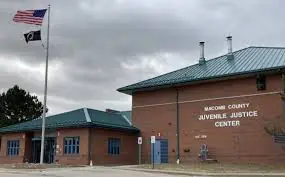
Michigan Legal Center News Desk | April 22, 2026 | Mount Clemens, Macomb County
Editorial note: This article draws on MLive's investigative reporting. Allegations from employees are unsubstantiated. The MDHHS disputes some of these characterizations. The MIOSHA investigation is still pending. This article will be updated as the investigation and legislative responses develop.
| QUICK ANSWER: What is Happening at the Michigan Youth Treatment Center? | |
|---|---|
| What is the MYTC? | The Michigan Youth Treatment Center is a state-run residential facility in Mount Clemens, Macomb County, housed at the Macomb County Juvenile Justice Center (MCJJC). It serves males ages 12–20 with at least one felony conviction who also have trauma histories or mental health challenges. It opened on June 30, 2025, replacing the Shawono Center in Grayling, which closed in February 2025. |
| What is going wrong? | According to a detailed MLive investigation published April 22, 2026, staff are being physically assaulted; at least one worker required staples after being struck with a radio; a February 2026 outside consultant assessment (UCRI) found broken locks, unsecured objects, youth-on-staff violence, and staff consistently reporting feeling unsafe; staffing ratios reached 1 staff to 9 residents despite a policy requiring 1:4 during waking hours; and an April 16 licensing investigation found the facility in non-compliance. |
| What happened on March 11? | Staff lost control of the facility and called the Michigan State Police. Four residents were arrested and charged with inciting a riot (a 10-year felony) and malicious destruction of a building. Macomb County Prosecutor Peter Lucido stated that the incident reflected what happens when chaos replaces structure in a juvenile facility. |
| What is MIOSHA investigating? | A Michigan Occupational Safety and Health Administration (MIOSHA) investigation was pending as of April 20, 2026, following a complaint filed by Michael Dedenbach, a former juvenile specialist who said he was subsequently suspended and terminated — a move he believes was retaliatory. |
| What are lawmakers saying? | Reps. John Roth (R-Interlochen) and Luke Meerman (R-Coopersville) called for immediate closure of the MYTC on March 26, 2026. MDHHS Director Elizabeth Hertel refused to close the facility. Rep. Meerman said the department needs new leadership. |
| Who does this affect legally? | Staff injured on the job may have workers' compensation claims and potentially civil claims. A worker who filed a MIOSHA complaint and was terminated may have a claim under the Michigan Whistleblowers' Protection Act. Youth placed at the facility and subjected to dangerous conditions may have constitutional due process claims. These are real legal remedies under Michigan and federal law. |
| Contact | The Michigan Legal Center, Law Offices of Christopher Trainor & Associates: (248) 886-8650 |
The state of Michigan has spent years promising to do better for the juvenile boys in its care.
It closed the Shawono Center in Grayling. It announced the Michigan Youth Treatment Center in Macomb County as the future: a modern, therapeutically grounded facility in a more populated area, closer to families, and better resourced. When it opened last June, the MDHHS stated that this was the upgrade the system needed.
Less than a year later, an MLive investigation has documented what the upgrade actually looks like: a staff member struck in the head with a radio who needed staples to close the wound. A 1-to-9 staffing ratio when policy requires 1-to-4. Broken locks on unit doors. An outside consultant reported that both the youth and staff consistently felt unsafe. The March 11 incident was so out of control that the state had to call in the Michigan State Police, resulting in four juveniles being charged with inciting a riot — a 10-year felony.
The state has no plans to close the facility.
"It was a recipe for disaster; we didn't have the resources we needed to be successful, and they knew it. It became increasingly unsafe for the youth and staff." — Tiffani Hill, former MYTC supervisor
The Michigan Youth Treatment Center opened on June 30, 2025. It was not ready.
What Happened When a State Facility Opened Before It Was Ready
The MYTC opened before cameras and TVs were installed, before meal plans were implemented, and before phone systems were operational. That means the youth inside — boys as young as 12 with felony convictions and documented trauma histories — could not make their two permitted 15-minute calls per week as late as July 24. The visitation space was not ready for families.
Residents were served sandwiches instead of hot meals. Staff members had to purchase clothing and personal hygiene products for the youth upon their arrival. At least one youth placed at the facility on August 8 was not enrolled in his year-long education program for nearly a month, despite a facility policy requiring individual education plans within five school days.
"It shouldn't have opened at the time it did," said Michael Dedenbach, a former juvenile specialist who came from Wayne County. "Staffing wasn't there. It wasn't ready."
"Dr. Moss expressed the center wasn't ready, and the state pushed to open sooner than they should have." — Current MYTC employee, speaking anonymously
Ray Moss, the MYTC's first director and former head of the Rite of Passage treatment center the state displaced to make room for this one, left in October. Several former Rite of Passage employees followed him out. These departures accelerated the staffing crisis the state was already struggling to manage.
The Violence
The MYTC was supposed to train its staff in the Mandt System, an internationally accredited program for de-escalation and restraint. Current and former employees told MLive that the training was insufficient and did not prepare staff for the physically aggressive youth the facility took in.
During incidents documented by state investigators, employees were punched, slapped, pushed, and threatened. In one incident, a male staff member was struck in the head with a radio and required staples to close his wound.
An incident on January 24 involving a three-youth physical altercation found that staff did not intervene in a timely manner, did not use approved restraint techniques, and — critically — falsely documented that no restraint was used. Michigan requires a report to be filed with the state within 24 hours of any restraint or seclusion. False documentation is not just a paperwork failure. It is the kind of institutional cover-up that makes it impossible to track, understand, or correct the conditions causing the violence in the first place.
In December, the facility accepted two high-acuity teens whom multiple staff members said it was not equipped to handle.
"The structure is gone; those boys run the facility. They know they can't be touched and what they need to do to get their way. There's no treatment going on there." — Current MYTC employee
On March 11, staff lost control and called the Michigan State Police. Four residents were arrested and charged with inciting a riot — a 10-year felony under Michigan law — and malicious destruction of a building.
Macomb County Prosecutor Peter Lucido said it plainly: "Violent disruption inside a juvenile treatment facility puts every person in that building at risk — the youth housed there, the staff responsible for their care, and the professionals working to keep the environment safe. When chaos replaces structure, it creates conditions where people can be seriously hurt, and critical safety systems break down."
Dedenbach put the accountability where it belongs: "If the facility was ran correctly, that would not have happened."
The Staffing Numbers Tell the Story
The MYTC was designed to start with 20 residents, scale to 60, and include 111 full-time employees. As of late 2025, it had 12 youths and 52 staff members. That shortfall might sound like it should produce better ratios. It did not.
An April 16 special investigation report found the center operating at ratios as high as one staff member to nine residents — more than double the 1:4 ratio required during waking hours. Staff told investigators they had been chronically short-staffed for months, working without breaks and pulling double shifts when colleagues called in sick or refused to return after being hurt on the job.
"Staff 2 said many staff are getting injured on shift and there are not enough staff in the building to respond to emergency situations on the units," the investigator wrote.
Without adequate staffing, residents were sometimes confined to their pods with nothing to do. Former supervisor Tiffani Hill said her requests to use overtime for her staff were denied because it wasn't "in the budget."
"There is strength in numbers. When you don't have enough staff, casualty events can happen." — Tiffani Hill, former MYTC supervisor
Dedenbach described days when he had to ask residents to catch him up on what had happened between shifts because the facility had not implemented the shift handoff tools and daily briefings that basic juvenile care requires.
The same April 16 inspection that documented the staffing crisis also found the facility non-compliant for another reason: locks on unit doors were frequently broken by residents, leaving staff unable to exit without a key shared across units. Broken locks. Staff trapped. Youth left unsupervised on the other side.
What the Outside Assessment Found
In February 2026, the University of Cincinnati Research Institute (UCRI), hired by the state to provide training and technical assistance for the MYTC, completed an onsite assessment. What they found was not a facility in need of minor adjustments. It was a facility in crisis.
UCRI identified:
- Youth-on-staff violence
- Staff and youth consistently reporting they feel unsafe
- Staff burnout, compassion fatigue, and reduced confidence
- Broken fixtures and unsecured objects
- Doors with non-working locks
- A lack of clarity in behavior management policy
- Staff actually escalating rather than de-escalating youth
The institute recommended the MYTC "prioritize immediate safety improvements as a foundation for all program redesign efforts." It recommended simplified behavior management guides, shift handoff tools, weekly supervisor huddles, and role clarity protocols.
These recommendations are not complicated. They are the baseline for any functional residential program serving high-needs youth. The fact that they had to be recommended from scratch eight months into a facility's operation tells you where the MYTC actually was.
The Whistleblower: Michael Dedenbach
In early February, after months of documenting conditions inside the MYTC, Michael Dedenbach filed a complaint with MIOSHA.
He was subsequently suspended. Then terminated.
He believes the sequence was retaliatory. Current and former employees told MLive they would not be surprised if it was. As of April 20, the MIOSHA investigation he triggered was still pending.
Dedenbach is 41 years old and from Southfield. He came to the MYTC from Wayne County because he wanted to work in treatment rather than detention. He believed the state would be an upgrade. He wanted to make a positive change in the lives of the youth in his care.
Instead, he was put in a position where he watched colleagues get hurt because they were not trained or supported, filed a safety complaint with the state, and lost his job.
What happened to Dedenbach is not just his story. It is a story about what happens when a state employee tells the truth about a state institution, and the institution responds by ending his career.
The Law Exists to Address Every Failure Documented in This Story
There is a tendency to feel resigned when reading stories like this one. The state did a bad job. People got hurt. Lawmakers made statements. The agency issued a letter. Nothing changed.
That resignation is exactly what institutions count on. Michigan law does not require it. What happened at the MYTC created real, actionable legal claims for real people. Those claims deserve to be named plainly.
For Staff Who Were Injured
Every employee physically assaulted at the MYTC — whether punched, struck with a radio, or injured during an improperly supervised altercation — has a Michigan workers' compensation claim for their medical expenses and lost wages. Workers' comp does not require proof of employer negligence. It is activated because the injury occurred during employment.
Workers' compensation is not the ceiling. When an employer creates or knowingly allows working conditions that are unreasonably dangerous, and those conditions cause physical injury, civil claims beyond workers' compensation may be available depending on the specific facts. MIOSHA's investigation will provide important evidence for any such claims. The UCRI assessment matters too — it establishes that dangerous conditions were known, documented, and reported to state leadership before more people were hurt.
For Michael Dedenbach and Anyone Else Who Was Punished for Speaking Up
Michigan's Whistleblowers' Protection Act, MCL 15.361 through 15.369, prohibits employers from retaliating against employees who report suspected violations of laws or regulations to a public body. Filing a complaint with MIOSHA is exactly the kind of protected activity the statute was designed to cover.
If Dedenbach's suspension and termination followed his MIOSHA complaint and were retaliatory, he has a claim under the WPA. Remedies include reinstatement, back pay, and compensation for damages. A retaliation claim requires evidence of the protected activity, adverse action, and causal connection between them. The timeline Dedenbach described — complaint in February, then suspension, then termination — is the kind of sequence that makes that causal connection visible.
Any other MYTC employee who faced adverse action after raising safety concerns, filing a complaint, or cooperating with investigators should have their sequence of events evaluated by an attorney.
For Youth Who Were Harmed
Young men placed at the MYTC are there because of a court order. They did not choose their facility. They cannot leave when the locks do not work, the staffing ratio climbs to 1:9, and the structure collapses around them. They are in the state's custody, and the state has a constitutional obligation to keep them reasonably safe.
That obligation is grounded in the Fourteenth Amendment's Due Process Clause and is enforceable under 42 U.S.C. § 1983. A state that takes a person into custody — including a juvenile committed to a residential treatment facility — assumes the duty to protect them from known and serious risks of harm. When the state has documented evidence that a facility is dangerous and continues to place youth there anyway, the legal question of whether that constitutes deliberate indifference to their constitutional rights becomes very real.
Families of youth who were injured in altercations at the MYTC, or who were subjected to improper restraint, improper seclusion, or dangerous conditions, have the right to pursue those claims. The documentation trail that MLive and the state's own investigators created is exactly the evidentiary foundation those claims require. For a deeper look at how § 1983 and institutional liability interact, see our guide: Section 1983 vs. Monell: The Legal Difference That Determines Whether the City Pays.
What the State Owes These Boys
The youth at the Michigan Youth Treatment Center are not abstract. They are boys between 12 and 20 years old who have at least one felony conviction, have experienced trauma, and were sent to a state treatment facility because the justice system determined they needed structured, therapeutic intervention.
Instead, they received a facility that opened without working phones. Without finalized meal plans. Without running educational programs. Without adequate staff. With broken locks and the kind of power vacuum that inevitably gets filled by the highest-acuity residents in the building.
One resident's grandmother told legislators that her grandson was sent home before he completed his treatment program. Rep. Meerman called that "entirely unacceptable." He is right.
Michigan made a promise to these boys when it placed them in that building. The promise was: we will keep you safe. We will help you. We have the structure, staff, programming, and intention to give you a real shot at becoming a contributing member of society. This was the language the MDHHS used in January 2025 when it announced the MYTC.
That promise has not been fulfilled. The people harmed in its failure — the staff who were hurt, the worker who was fired for speaking up, and the boys who have been living in a building the state admits is unsafe — all have the right to hold someone accountable for that.
The Michigan Legal Center: We Have Fought State Institutions Before
When a police officer fractured a man's neck outside his own home, Christopher Trainor and his team took the case to trial and won $5.8 million. When a police department violated a resident's civil rights, we won $6.2 million in damages. We have stood across the courtroom from government agencies that believed their institutional weight would make the case go away.
It didn't.
We know what § 1983 civil rights litigation looks like. We know how to build a whistleblower retaliation case. We know how to document institutional deliberate indifference and present it to a jury in a way that makes clear what the state knew, when it knew it, and what it chose to do anyway.
If you are a current or former MYTC employee who was injured, retaliated against, or who watched dangerous conditions go unaddressed after you raised them, Christopher Trainor and his team are available. If you are the family member of a young man who was harmed while in state custody at this facility, we want to hear from you. The consultation is free. The fee comes only when we recover for you.
Call (248) 886-8650 to speak with the Michigan Legal Center today.