
Michigan Work-Zone Deaths Hit 25 Before Awareness Week Begins
The Michigan Legal Center News Desk | April 21, 2026 | Statewide, Michigan
Sources: CBS Detroit (Elle Meyers), MDOT, Michigan State Police, FHWA — April 20, 2026
| QUICK ANSWER: Work Zone Crashes in Michigan — What You Need to Know Right Now | |
|---|---|
| When is Work Zone Awareness Week? | April 20-24, 2026. Theme: "Safe Actions, Save Lives." Michigan MDOT and Michigan State Police are participating statewide. |
| How dangerous are Michigan work zones? | In 2025, Michigan recorded over 6,000 motor vehicle crashes inside work zones, killing 22 motorists and three construction workers — 25 total fatalities. MSP Lt. Rene Gonzalez says crashes are trending in the wrong direction, driven by distracted driving and speeding. |
| What does Michigan law say about work zone speeds? | In Michigan, fines are doubled in work zones when workers are present. Michigan is a hands-free state; holding a phone while driving is illegal under MCL 257.602b. Work zone license plate readers are being piloted by MDOT; full implementation is planned for 2027. |
| Who can be held liable for a work zone crash? | Depending on how a crash happens, liability may fall on the distracted or speeding driver, the contractor responsible for work zone safety, MDOT for road design or signage failures, or a combination. Michigan no-fault PIP benefits cover immediate medical costs, and a third-party negligence claim can recover pain and suffering. |
| What if a construction worker was killed or injured? | Construction workers injured in work zone crashes may be entitled to workers' compensation benefits, no-fault PIP benefits if struck by a vehicle under MCL 500.3105, and a third-party civil claim against the at-fault driver. Families who have lost a worker in a work zone crash may pursue a wrongful death claim under MCL 600.2922. |
| Contact | The Michigan Legal Center, Law Offices of Christopher Trainor & Associates: (248) 886-8650 |
The numbers do not move the way they should.
In 2025, Michigan drivers crashed inside work zones more than 6,000 times. Twenty-two motorists died. Three construction workers died. Twenty-five families lost someone in a stretch of road that was supposed to be temporary.
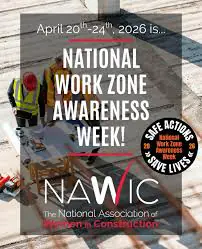
This week, April 20-24, is National Work Zone Awareness Week. The theme is "Safe Actions, Save Lives." State and federal officials gather, signs go up, press releases get sent. Michigan State Police Lt. Rene Gonzalez stated that the numbers are still heading in the wrong direction.
"They need to start paying better attention in those work zones. Last year, we had over 6,000 motor vehicle crashes inside the work zones, resulting in three workers' deaths and 22 motorists' deaths." — MSP Lt. Rene Gonzalez
The cause is not complicated. It is not infrastructure. It is not road design. It is drivers on their phones, moving at full speed through zones that are lit up, signed, and staffed with human beings who have no armor between them and a two-ton vehicle.
"People using their phones are hitting those work zones even though they're well lit up, well signed," Gonzalez said. "They're just not paying attention and slowing down, and they're striking these work zone workers or actually running into other vehicles."
MDOT communications representative John Richard put it the way it deserves to be put: "The number one safety feature in every vehicle is always the driver."
What Michigan Is Doing, and What It Plans to Do
Michigan already has tools on the books. Fines double in active work zones when workers are present. Michigan is a hands-free state, meaning MCL 257.602b prohibits holding a phone while driving. No texting. No holding the phone to your ear. You can use your infotainment screen.
What is coming: MDOT is piloting license plate reader technology inside work zones. The readers will capture the plates of vehicles speeding or behaving dangerously through construction areas. Full statewide implementation is planned for 2027. Although it is not yet live, it is a meaningful shift in how the state plans to create accountability for work zone speeding beyond the honor system.
MDOT and MSP kicked off the week with events at Dow Diamond in Midland and have been participating in ceremonies statewide. But every official quoted during Work Zone Awareness Week will tell you the same thing: the awareness campaign only matters if drivers change what they do when the orange signs appear.
The Federal Highway Administration's national work zone safety data consistently shows that driver behavior, not road design, is the leading cause of work zone fatalities nationwide. Michigan's 2025 numbers reflect that pattern.
Michigan Law and Work Zone Crashes: What the People Hurt Deserve to Know
For the families of the 25 people who died in Michigan work zones last year, and for anyone seriously injured on a Michigan highway under construction, this week is not about awareness campaigns. It is about justice. It is about whether the person responsible for what happened will be held accountable and whether the harm done to their family will be recognized in the only concrete way the law provides.
The Negligent Driver's Liability
When a driver causes a work zone crash by speeding, driving distracted, or both, Michigan's civil negligence framework applies. A driver who was operating in violation of the speed limit in a posted work zone, or who was holding their phone in violation of MCL 257.602b, creates strong evidence of negligence that can support a civil claim.
For crash victims who meet the serious impairment threshold under MCL 500.3135, meaning their injuries have affected their general ability to lead a normal life, a third-party claim against the at-fault driver is available in addition to no-fault PIP benefits. Work zone crashes at highway speed routinely produce exactly the kind of injuries that clear that bar.
Contractor and Government Liability
Not every work zone crash is caused by a reckless driver. Contractors responsible for establishing and maintaining safe work zones have their own obligations under OSHA standards and Michigan construction law. If a work zone was inadequately marked, traffic control devices were missing or improperly placed, or adequate advance warning was not provided, the contractor responsible for that zone may share liability for the resulting crash.
MDOT and local road authorities have their own duties as well. While governmental immunity under MCL 691.1401 provides broad protection to road authorities, the highway defect exception under MCL 691.1402 creates liability when a road is in a condition unreasonably dangerous for public travel and the authority knew or should have known about it. A work zone with inadequate signage, or a road defect that contributed to a crash, is a fact pattern worth examining against that standard. For a full breakdown of how governmental immunity interacts with these claims, read Michigan Governmental Immunity Exceptions: When You Can Sue a City, County, or State Agency.
When a Construction Worker Is Killed or Injured
The three construction workers who died in Michigan work zones in 2025 were people doing their jobs. They did not choose to be in dangerous situations. They were building or maintaining the roads that everyone else drives on.
A construction worker killed or injured in a work zone crash has multiple legal channels available, and navigating them together is important:
- Workers' compensation benefits through their employer's policy, covering medical expenses and a portion of lost wages regardless of fault
- No-fault PIP benefits if they were struck by a motor vehicle; Michigan's no-fault system extends coverage to pedestrians and workers hit by cars on public roads under MCL 500.3105
- A third-party civil negligence claim against the driver who struck them, separate from both workers' comp and no-fault, seeking pain and suffering and full non-economic damages
These three tracks are not mutually exclusive. Each covers different categories of harm. Workers' comp covers wage replacement. No-fault covers medical expenses. The third-party claim covers what neither of the others does: the pain, the loss, the human cost of what was done to that person.
For surviving families, Michigan's wrongful death statute, MCL 600.2922, allows the personal representative of the deceased's estate to pursue all of these damages on behalf of the family. The family of a construction worker killed by a distracted driver on a Michigan highway has the right to hold that driver fully accountable. That is not a technicality. That is what the law on wrongful death in Michigan is for.
No-Fault PIP Benefits: The Immediate Coverage
Whether the person injured in a work zone crash is a motorist, passenger, or construction worker struck by a vehicle, Michigan no-fault Personal Injury Protection benefits are the first line of financial coverage. They activate regardless of fault and cover:
- All medical expenses reasonably necessary for the injury
- Wage loss benefits for up to three years
- Replacement services for tasks the injured person can no longer perform
- Attendant care if the injuries require ongoing assistance
File promptly. The clock on no-fault claims runs from the date of the accident. Insurers can use delays to dispute coverage. An attorney can ensure that the claim is filed correctly and that the insurer is not finding ways to minimize what is owed.
Michigan's Work Zone Penalty Structure: What Drivers Face
Beyond the civil liability framework, Michigan has criminal and civil infraction penalties specifically designed to deter dangerous driving in work zones.
Under Michigan law, speeding in a work zone when workers are present incurs double the fines. The first offense of reckless driving in a work zone that causes death can result in felony charges. Distracted driving in violation of the hands-free law, MCL 257.602b, is a civil infraction on the first offense, with escalating penalties for subsequent violations.
The license plate reader program MDOT is rolling out by 2027 will add an enforcement layer that does not depend on a trooper being present to observe a violation. This matters because, as anyone who drives Michigan freeways knows, the odds of a trooper being right there when a driver speeds through an orange barrel zone are not high. The technology changes that calculus.
This Week Has a Theme. Here Is What It Misses.
Every year during Work Zone Awareness Week, officials speak at events, post statistics on social media, and remind drivers to slow down. The message is correct. The delivery is sincere.
What the awareness campaign cannot do is hold anyone accountable after the fact. It cannot undo the crash that killed a flagman near a construction site in Detroit last year. It cannot restore the twenty-two motorists who died after their vehicles entered a work zone and never came out. It cannot pay medical bills, restore lost wages, or compensate for the grief that follows when someone is taken because another driver was looking at their phone.
That accountability lives in the civil justice system. It lives in the hands of attorneys who know Michigan's no-fault law, understand the contractor liability framework, and are willing to take a case against a driver, employer, or government agency when the facts support it.
The Michigan Legal Center has won cases in the courtroom. We have taken on distracted drivers and the insurance companies that undervalue the harm they cause. We have represented construction workers and their families when the system tried to tell them that workers' comp was the end of the road. It is not.
If you or someone you love was hurt or killed in a Michigan work zone crash, whether as a motorist, passenger, or construction worker, we want to hear from you. The consultation is free. The fee is contingent. And we do not stop until the person responsible answers for what they did.
Call (248) 886-8650 to speak with Michigan Legal Center today.