
Two Children Injured in Dearborn Heights E-Bike Crashes
Michigan Legal Center News Desk | April 15, 2026 | Dearborn Heights, Wayne County
Source: WXYZ Channel 7, reporters Brett Kast and Marlon Falconer, published April 14, 2026
| QUICK ANSWER: What Happened and What Michigan Parents and Families Need to Know | |
|---|---|
| What happened | Two children were injured in separate e-bike crashes in Dearborn Heights within two days of each other. The most recent crash occurred Tuesday, April 14, 2026, at 12:30 p.m. near the Dearborn Heights city library, close to City Hall. |
| The injuries | A pre-teen boy was struck by a car while riding an e-bike. He was transported to Children's Hospital with a broken femur and a head laceration. He was not wearing a helmet at the time of the crash. He is reported in stable condition. |
| First crash | The first crash occurred the day before, Monday, April 13, near Van Houten Park. Both incidents involved children on e-bikes colliding with cars. |
| Official response | Dearborn Heights Police Chief Michael Guzowski urged parents to discuss helmet use and traffic law compliance with their children. Mayor Mo Baydoun is working with the city's legal department to enforce an age limit of 16 years old for certain e-bikes. |
| Michigan e-bike law | Michigan classifies electric bicycles in three classes under MCL 257.13e. Class 3 e-bikes can reach 28 mph. Michigan law does not currently require a license or registration for e-bike operation, but riders must follow the same traffic laws as bicycle operators. |
| Legal rights after an e-bike crash | A child injured by a motor vehicle while riding an e-bike in Michigan is entitled to no-fault PIP benefits under MCL 500.3105. A third-party negligence claim against the driver who caused the crash may also be available if injuries meet the serious impairment threshold under MCL 500.3135. A broken femur virtually always meets that threshold. |
| Contact | The Michigan Legal Center, Law Offices of Christopher Trainor & Associates: (248) 886-8650 |
Two children were injured in e-bike crashes in Dearborn Heights on back-to-back days this week, prompting city officials to call for greater parental oversight and renewed attention to Michigan's e-bike laws.
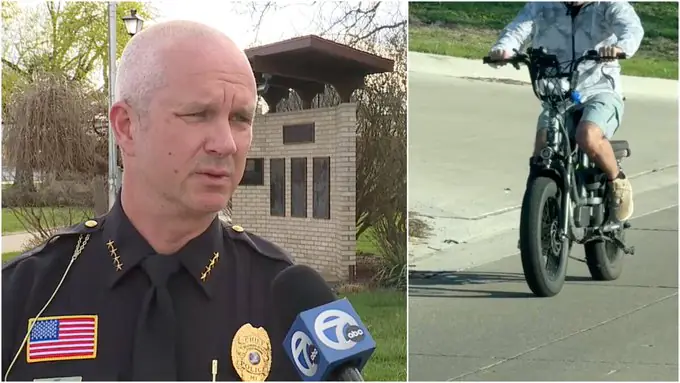
The second and more serious crash happened Tuesday, April 14, 2026, at 12:30 p.m., in the area near the Dearborn Heights city library, close to City Hall on the city's west side. A pre-teen boy riding an e-bike was struck by a car. He was transported to Children's Hospital with a broken femur and a head laceration. He was not wearing a helmet. Dearborn Heights Police Chief Michael Guzowski reported the boy was in stable condition.
The first crash occurred Monday, April 13, near Van Houten Park. Details on injuries from that crash were not released. Both incidents involved children on e-bikes colliding with cars.
"Being able to control these things, especially when you're a kid and you're not fully developed in your coordination, it can be really be an issue." -- Dearborn Heights Police Chief Michael Guzzowski
Dearborn Heights resident Kimberly Saba told WXYZ she has noticed a sharp increase in e-bikes on local streets since warmer weather arrived. "Every time I'm out, I see several of them, maybe three to four. They're speeding. Sometimes, they're speeding by me on a side street," she said. She added that she has seen children riding in left-turn lanes, which is unlawful for bicycles under Michigan traffic law.
Mayor Mo Baydoun is now working with the city's legal department to explore enforcement of a 16-year-old age minimum for certain e-bikes. Police Chief Guzowski summed up the sentiment from city leaders: "We want to see kids in the neighborhood, we want to see them at the park, we want to see them having fun and enjoying our community, but we want to see them do it safely."
Michigan's E-Bike Laws: What Parents and Riders Need to Understand
E-bikes are not toys. They are legally defined vehicles under Michigan law, and the rules governing how they are operated on public roads are real, enforceable, and directly relevant to what happened in Dearborn Heights this week.
Michigan's Three-Class E-Bike System: MCL 257.13e
Michigan defines electric bicycles in three classes under MCL 257.13e, each with different speed capabilities and operating characteristics:
- Class 1: Motor-assisted only while pedaling; cuts off at 20 mph. The most common type for everyday riding.
- Class 2: Throttle-powered whether pedaling or not; maximum assisted speed of 20 mph; motor disengages when brakes are applied.
- Class 3: Motor-assisted while pedaling; cuts off at 28 mph. These are faster, heavier machines that present significantly more risk in a crash.
All three classes require a motor of no more than 750 watts and functional pedals. A device that exceeds these specifications is no longer legally an e-bike under Michigan law. It may be classified as a moped or motor vehicle, which carries entirely different licensing and registration requirements.
Many e-bikes marketed and sold online, particularly on platforms like Amazon and through direct importers, are advertised as "capable of" speeds well above 20 or 28 mph when modifications are made or when operating modes override the legal class limits. A family that buys one of these bikes and allows a child to use it on public roads may not realize the device they have is not legally a bicycle at all under Michigan law.
E-Bike Operation Rules on Michigan Roads
Under Michigan law, electric bicycles are treated largely like conventional bicycles when operating on public roads. Riders must follow all traffic laws that apply to bicycles, including riding as far to the right as practicable on the roadway, obeying traffic signals and stop signs, and using hand signals for turns.
Class 1 and Class 2 e-bikes may be operated on bike paths and trails unless specifically prohibited by the relevant authority. Class 3 e-bikes are generally restricted to roadways and bike lanes, not multiuse paths, because of their higher speeds.
Michigan does not currently require a license, registration, or insurance to operate an e-bike. But that does not mean e-bike riders are invisible to the law when crashes happen. When a child on an e-bike collides with a car on a public road in Michigan, multiple legal frameworks activate immediately.
The Helmet Question: Michigan Law and the Reality of Head Injuries
Michigan law, under MCL 257.658, requires bicycle riders under the age of 16 to wear a properly fitted and fastened bicycle helmet on public roads. The pre-teen boy injured Tuesday was not wearing a helmet.
A broken femur is a serious and painful injury. But the head laceration documented in this crash is a reminder of what helmets are designed to prevent. Traumatic brain injuries are the leading cause of bicycle-related fatalities in the United States. A helmet does not eliminate the risk of head injury in a collision with a car, but the evidence is unambiguous that properly fitted helmets reduce the severity of head injuries substantially.
From a legal standpoint, the absence of a helmet does not automatically bar the injured child or family from pursuing a claim. Under MCL 600.2959, comparative fault generally reduces economic and noneconomic damages by the injured person's percentage, but a share greater than 50% bars noneconomic damages while economic damages remain proportionally reduced. Whether helmet nonuse is legally relevant also depends on the claim, the injury, admissibility, causation, and the evidence. No-Fault PIP is a separate path and is due under MCL 500.3105 without regard to fault. The Michigan comparative-fault guide explains these categories.
What Families of Injured Children Should Know About Michigan Law
When a child is injured in a traffic crash in Michigan, whether as a pedestrian, a bicycle rider, or an e-bike rider, the legal framework that applies is the same framework that governs all serious Michigan traffic injuries. The family needs to understand two separate tracks: no-fault benefits and a potential third-party claim against the driver. For a full explanation of how these two tracks work together, see our guide on the difference between a PIP claim and a third-party claim in Michigan.
No-Fault PIP Benefits for Children Injured by Cars
Michigan's no-fault law, under MCL 500.3105, extends Personal Injury Protection benefits to pedestrians and bicycle riders struck by motor vehicles. An e-bike qualifies under this framework because the rider was struck by a motor vehicle. PIP benefits pay for medical expenses, rehabilitation, and in appropriate cases, attendant care, regardless of who caused the crash.
For a child with a broken femur, PIP benefits will cover the immediate emergency treatment, hospitalization, surgery if required, physical rehabilitation, and any ongoing medical care related to the injury. These benefits are available from the vehicle owner's insurer and do not require proving fault.
The family should file a PIP claim promptly. Under MCL 500.3145, written notice of injury or a prior PIP payment usually matters within one year, while lawsuit timing and the one-year-back rule can affect what unpaid benefits are recoverable. Early filing helps benefits flow without unnecessary delay during what is already a difficult time.
A Third-Party Claim Against the Driver
Separately from no-fault PIP benefits, the child's family may have a third-party negligence claim against the driver who struck the boy. Michigan allows this claim when the injured person has suffered a "serious impairment of body function" as defined under MCL 500.3135 and interpreted by the Michigan Supreme Court in McCormick v. Carrier, 487 Mich 180 (2010).
A broken femur is a fracture of the largest and strongest bone in the human body. Recovery from a femur fracture in a child typically involves hospitalization, possible surgical intervention, weeks of limited mobility, and months of physical therapy. An injury of this nature may support the serious impairment threshold, but the legal analysis depends on the medical record and how the injury affects the child's general ability to lead a normal life.
The third-party claim allows the family to pursue compensation for the boy's pain and suffering, the emotional impact of the injury, and other non-economic damages that PIP benefits do not cover. The driver's negligence, the circumstances of the crash, and any traffic law violations will all be part of that analysis.
Comparative Fault and the Helmet
As noted above, Michigan's comparative-fault system under MCL 600.2959 does not treat partial fault as a universal all-claims bar. The family should not assume that the absence of a helmet, or any other factor related to how the child was operating the e-bike, closes every claim path. Any allocation must rest on legally relevant conduct, causation, and evidence, and its effect depends on the damage category and claim-specific statute.
Any attorney reviewing this case will analyze the specific circumstances of the collision: the driver's speed, attentiveness, whether traffic signals or signs were obeyed, road conditions, visibility, and whether the child was operating the e-bike in compliance with applicable traffic laws. All of those facts matter, and none of them is more important than the basic question of whether the driver exercised reasonable care before striking a child.
E-Bikes, Children, and the Growing Safety Challenge Across Michigan
What happened in Dearborn Heights this week is not an isolated problem. E-bikes have become significantly more common on Michigan roads over the past three years, driven by falling prices, the appeal of outdoor activity following the pandemic, and aggressive marketing to families and younger riders.
The speed capability of these devices, particularly Class 3 e-bikes capable of 28 mph, creates a significant mismatch between what many parents expect and what the bike can actually do. A 12-year-old on a device capable of 28 mph on a city street, without a helmet and without consistent traffic law awareness, is operating in genuinely dangerous conditions. The crashes in Dearborn Heights are a consequence of that mismatch playing out in real time.
Mayor Baydoun's effort to enforce an age minimum for certain e-bikes reflects a broader trend. Cities and townships across Michigan and the country are grappling with how to regulate e-bikes, particularly as they become more common in the hands of younger riders. The legal framework in Michigan has not fully caught up with the technology. MCL 257.13e, enacted in 2017, established the three-class system, but local enforcement tools remain limited.
That gap between the speed and power of modern e-bikes and the regulatory framework designed to protect younger riders is precisely the environment in which serious injuries happen. The families in Dearborn Heights this week are living with the consequences of that gap.
The Michigan Legal Center: We Represent Children and Families Injured on Michigan Roads
The Law Offices of Christopher Trainor & Associates represent Michigan families when a child is injured on our roads. We know how no-fault PIP claims work, we know how to build a third-party negligence case against a driver who strikes a child, and we know how to present that case in a way that accounts for every contributing factor without conceding more than the facts require.
If your child was injured in an e-bike crash, a bicycle crash, or any traffic accident in Michigan, Christopher Trainor and his team at the Michigan Legal Center are available to help you understand your rights and your options. There is no cost for the initial consultation, and no fee unless we recover for you.
Call (248) 886-8650 to speak with Michigan Legal Center today.