
Michigan Emergency Declared After Tornadoes and Flooding
Michigan Legal Center News Desk | April 15, 2026 | Statewide
Sources: WDIV ClickOnDetroit, CBS Detroit, MLive, Detroit News, WJRT ABC12, WXYZ Channel 7 — April 15-16, 2026
| QUICK ANSWER: What the Emergency Declaration Means and What Michigan Residents Should Know | |
|---|---|
| What was declared | On April 15, 2026, Governor Gretchen Whitmer declared a state of emergency for 32 Michigan counties following severe weather, including tornadoes, flooding, record rain, significant snowmelt, and straight-line winds. Combined with the earlier Cheboygan County declaration issued on April 10, a total of 33 Michigan counties are now under a state of emergency. |
| Counties covered (April 15) | Alcona, Allegan, Alpena, Antrim, Arenac, Barry, Benzie, Charlevoix, Clare, Crawford, Emmet, Grand Traverse, Gratiot, Iosco, Kalkaska, Lake, Leelanau, Manistee, Menominee, Missaukee, Montcalm, Montmorency, Newaygo, Oceana, Ogemaw, Oscoda, Osceola, Presque Isle, Roscommon, Saginaw, Shiawassee, and Wexford. |
| Tornadoes confirmed | Eight tornadoes were confirmed across Michigan. Two EF-1 tornadoes struck Metro Detroit: one near Ann Arbor (Jackson Ave near I-94, 1:44 a.m., 110 mph winds, 16-mile path) and one in the Melvindale-Lincoln Park area (100 mph winds). Michigan's total for 2026 reached at least 12 confirmed tornadoes. |
| Additional emergencies | Governor Whitmer also declared a statewide energy emergency on April 14 due to a disruption at the U.S. Energy Cheboygan terminal on the Cheboygan River. The State Emergency Operations Center was activated statewide. |
| What the declaration enables | State resources can be deployed to support local response. Eligible communities may seek financial assistance under Section 19 of Michigan's Emergency Management Act, MCL 30.419. If a federal disaster declaration follows, FEMA individual assistance programs may become available to residents. |
| Your insurance rights | Michigan homeowners, renters, and businesses with storm damage have legal rights against insurers who delay, underpay, or deny legitimate claims. Michigan law requires prompt claim handling under MCL 500.2006. A denied or disputed storm claim is not the end of the road for policyholders. |
| Contact | The Michigan Legal Center, Law Offices of Christopher Trainor & Associates: (248) 886-8650 |
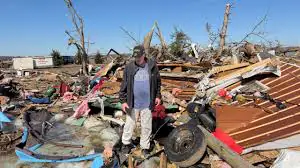
On April 15, 2026, Michigan woke up to a different landscape. Overnight storms brought tornadoes, record rainfall, severe flooding, and straight-line winds to communities from the Upper Peninsula to Metro Detroit. By mid-afternoon, Governor Gretchen Whitmer had declared a state of emergency for 32 counties, extending a state response that had already been activated for Cheboygan County five days earlier.
In total, 33 Michigan counties are now under emergency declarations. The Michigan State Police Emergency Management and Homeland Security Division is coordinating the response through the State Emergency Operations Center, with state police troopers deployed to assist local emergency responders across the affected areas.
"Significant snowmelt, record rain, flooding, straight-line winds, and tornadoes have damaged homes, roads, and businesses. This emergency declaration will help the state deploy additional resources to help local officials and first responders protect Michiganders and their property." -- Governor Gretchen Whitmer
A statewide energy emergency was declared on April 14, following a disruption at the U.S. Energy Cheboygan terminal on the Cheboygan River. Updates on the statewide storm response are being posted at michigan.gov/aprilstorms. Information on the Cheboygan dam situation is available at michigan.gov/cheboygandam.
The Storms: Eight Confirmed Tornadoes and Record Flooding
The overnight storm system that moved through Michigan between April 14 and 15 was among the most significant in the state in recent memory. The National Weather Service confirmed at least eight tornadoes across Michigan during the event, including two EF-1 twisters that struck the heart of Southeast Michigan.
Ann Arbor EF-1 Tornado
An EF-1 tornado touched down near Jackson Avenue and Interstate 94 in Ann Arbor at approximately 1:44 a.m. on April 15. The National Weather Service confirmed that the twister reached estimated peak winds of 110 mph and traveled approximately 16 miles before lifting. The storm lasted for two minutes. Widespread tree damage was reported along its path.
This was Michigan's seventh confirmed tornado of the April storm event and the 12th confirmed tornado in the state in 2026. The EF-1 scale begins at 86 mph sustained winds and extends to 110 mph, making this tornado at the upper end of its classification.
Melvindale-Lincoln Park EF-1 Tornado
A second EF-1 tornado was confirmed in the Melvindale-Lincoln Park area of Wayne County, reaching an estimated peak wind speed of 100 mph. Both Wayne County tornadoes struck in the pre-dawn hours of April 15, when most residents were asleep.
Flooding Across Mid-Michigan and Northern Michigan
Beyond the tornadoes, the storm system brought flooding, rising river levels, and extensive road damage to communities stretching from West Michigan and the Thumb north into the Upper Peninsula. Record rainfall combined with significant snowmelt overwhelmed drainage systems and caused rivers in multiple counties to approach or exceed the flood stage. Flooding impacts were the primary driver of the 32-county emergency declaration, with many affected communities spread across Northern and Central Michigan.
What the Emergency Declaration Means for Residents
A state of emergency declaration is more than just a symbolic acknowledgment of what happened. It has real legal and practical consequences for affected communities and their residents.
State Resources and Local Support
Under Michigan's Emergency Management Act, a state of emergency declaration allows the governor to deploy state personnel, equipment, and other resources to support local emergency response and recovery. State police, MDOT crews, and other state agencies can be directed to the affected areas without waiting for the normal bureaucratic process.
Section 19 Financial Assistance
The governor's declaration specifically enables eligible communities to seek financial assistance under Section 19 of Michigan's Emergency Management Act, MCL 30.419. This provision allows the state to provide financial support to local governments for emergency responses and recovery costs. Communities in declared counties that incurred extraordinary costs dealing with the storm, including overtime, equipment, debris removal, or temporary facilities, may be eligible to recoup some of those expenses.
Section 19 assistance flows to local governments and not directly to individuals. However, it matters for the affected communities because it means that local budgets are not completely drained by the cost of responding to a disaster that is, by definition, beyond normal planning parameters.
The Path to Federal Assistance
A state of emergency declaration is typically the first step toward a federal disaster declaration from FEMA. If Governor Whitmer requests a federal declaration and the President approves it, FEMA Individual Assistance programs for residents, including grants for temporary housing, home repair, personal property replacement, and other uninsured losses, will be unlocked.
Federal declarations are not guaranteed in this case. They require a formal request from the governor and a FEMA assessment of the damage. Michigan residents should watch for announcements from the governor's office and FEMA Region 5, which covers Michigan. The official FEMA resource for disaster assistance is DisasterAssistance.gov. Registration with FEMA is free. Third parties who charge fees to help with FEMA applications are neither authorized nor necessary.
Michigan Storm Damage and Your Insurance Rights
Whether or not a federal declaration follows, the most immediate legal framework protecting Michigan residents from storm damage is their homeowners, renters, or commercial property insurance policy.
Insurance companies have legal obligations when you file a storm damage claim. Those obligations are enforceable. Here is what every Michigan policyholder with storm damage should know.
Michigan's Prompt Payment Law: MCL 500.2006
Under MCL 500.2006, Michigan law requires insurers to acknowledge a claim within 10 business days, complete a claim investigation within 30 days under normal circumstances, and pay or deny the claim within 60 days of receiving sufficient proof of loss. When an insurer fails to meet these deadlines without reasonable justification, the policyholder may be entitled to interest on delayed payments and, in some cases, to other remedies.
After a large-scale storm event, insurance companies simultaneously receive an enormous volume of claims. That volume does not excuse them from their obligations under Michigan law, although some insurers use it as a cover for delays. If your claim has been sitting for weeks without meaningful movement, it is worth examining.
What Your Homeowners Policy Likely Covers
Standard homeowners policies in Michigan typically cover:
- Wind and tornado damage to the structure of the home and attached structures
- Hail damage to roof, siding, windows, and other exterior elements
- Falling tree or debris damage to the home
- Additional living expenses if the home is uninhabitable while repairs are made
- Personal property damage from covered perils
Flooding caused by rising water from the ground, including storm surges, overflowing rivers, or saturated ground, is generally not covered under a standard homeowners policy. Flood insurance is a separate policy often purchased through the National Flood Insurance Program. Residents in the affected Northern and Central Michigan counties dealing with river flooding should check both their homeowners policies and any flood coverage they may carry.
When Insurers Dispute Storm Damage Claims
After major storm events, disputes over the causes of damage are common. Insurers may argue that pre-existing deterioration, rather than the storm itself, caused the damage. They may dispute the scope of the repair needed, the appropriate contractor, or the replacement value of the property. They may cite exclusions buried in policy language.
These disputes are not automatically valid. Michigan courts have consistently held that ambiguous policy language is construed against insurers. If your insurer is disputing a claim that you believe is legitimate, you have the right to push back, demand a written explanation, and, in appropriate cases, pursue legal remedies.
Earlier this month, an Inkster family's $38,000 insurance claim with AAA for frozen pipe damage was denied over "reasonable precautions" language, which was then reversed after media attention. This story illustrates a pattern that repeats after every major weather event. Families who do not push back often do not receive what they are owed. Those who do, sometimes with legal help, frequently fare far better.
What to Do Right Now if Your Home Was Damaged
- Document everything before any clean-up or temporary repairs. Photograph and video every area of damage thoroughly.
- Contact your insurer promptly. Policies require timely notice of a claim. Waiting can lead to problems.
- Keep records of all emergency expenses: hotel stays, temporary repairs, and storage costs. These may be reimbursable.
- Get independent contractor estimates. Do not rely solely on the insurer's adjuster to define the scope of the repair.
- Do not sign any release or settlement agreement until you are satisfied that the amount covers your full loss.
- Request a written explanation if your claim is denied or reduced.
Vehicle Damage in the Storms
If your vehicle was damaged by a falling tree, hail, flooding, or wind-blown debris, those losses are covered under the comprehensive portion of a Michigan auto policy, not collision coverage. Comprehensive insurance is optional in Michigan but is widely adopted. If you do not have comprehensive insurance, your vehicle damage from the storm is not covered by your auto insurer.
If another driver caused a crash during the storm, Michigan's no-fault system governs the treatment of your injuries. Your PIP benefits cover medical costs and wage loss, regardless of fault. If your injuries are serious, you may also have a third-party claim against the other driver involved.
Business Losses and Commercial Property Claims
Businesses with property damage from the April storms have commercial property insurance rights that parallel homeowners' rights. Businesses that are forced to close due to storm damage may also have business interruption coverage, which compensates for lost revenue during the restoration period.
Business interruption claims are frequently challenged. Insurers often dispute the duration of the interruption, revenue calculations, and whether the loss triggers coverage. These claims are where legal guidance makes a measurable difference in the outcome.
The Michigan Legal Center: Here When the Storm Is Over
The Law Offices of Christopher Trainor and Associates represent Michigan families and businesses when insurance companies fail to fulfill their promises. We have seen the pattern that follows major storm events: the initial denial, the low offer, and the delay. We know how to document a claim, challenge an insurer's position, and, when necessary, take the fight to court.
If your home, property, or business was damaged in Michigan's April 2026 storms and your insurer is causing you difficulty, Christopher Trainor and his team are available to help. Consultations are free of charge. There is no fee unless we recover for you.
Call (248) 886-8650 to speak with Michigan Legal Center today.